
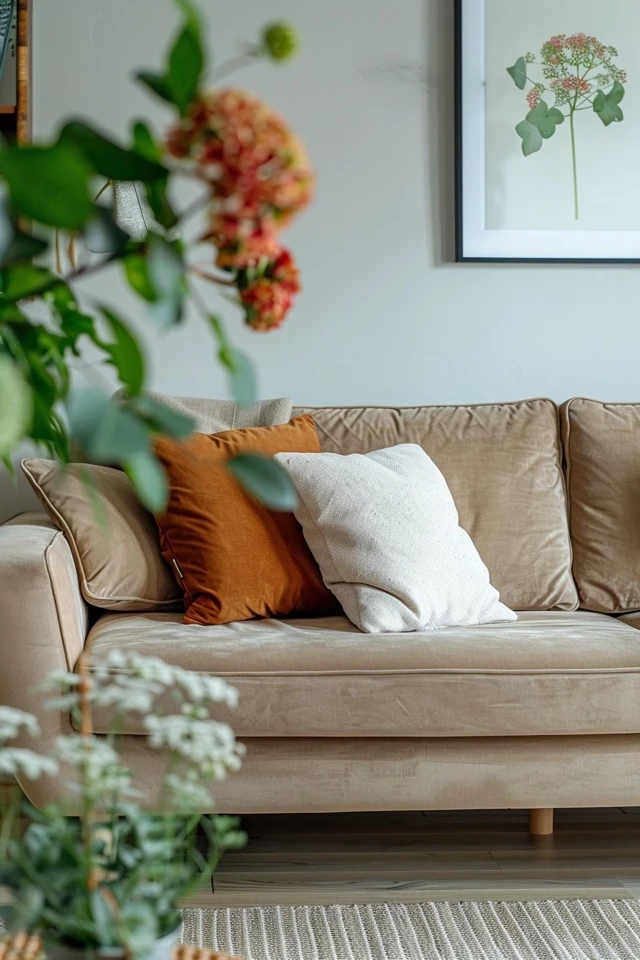
Taupe Sofa Living Room Ideas I Adore
Taupe is frequently misunderstood in the design world, often unfairly lumped in with generic beige or dated “greige” trends. However, when you treat a taupe sofa as a foundational architectural element rather than just a neutral safe choice, it becomes the anchor for a sophisticated, high-end aesthetic. If you are looking for visual inspiration, please scroll to the bottom because I have curated a Picture Gallery at the end of the blog post.
I recently worked with a client who was terrified that a taupe sectional would make her living room feel muddy or dull. We focused on texture and lighting, pairing the sofa with crisp white walls and deep charcoal accents, and the result was anything but boring. It brought a warmth that pure gray lacks and a modernity that standard beige often misses.
This guide dives deep into the mechanics of styling this chameleon color. We will cover specific measurements, lighting temperatures, and material pairings to ensure your living room feels curated and professional.
1. Decoding the Undertone: Why Your Taupe Shifts Color
The biggest complaint I hear about taupe furniture is that it “looks purple” or “looks pink” once it arrives home. This happens because taupe is essentially a brown-gray mixture that almost always carries a subtle undertone of violet or red.
As a designer, I never select a sofa fabric without testing a large swatch in the client’s specific room. You cannot rely on showroom lighting, which is usually cool fluorescent or high-intensity track lighting.
The Lighting Rule of Thumb:
- North-Facing Rooms: The light is cool and blue. This will pull out the gray/purple tones in a taupe sofa. You need to counterbalance this with warm ambient lighting (2700K bulbs).
- South-Facing Rooms: The light is warm and yellow. This neutralizes the purple and makes the sofa look browner or creamier.
Designer’s Note: The “Piece of Paper” Trick
When shopping for a sofa, take a standard sheet of bright white printer paper with you. Place the fabric swatch on top of the paper. The pure white contrast will instantly reveal if the “neutral” taupe is actually leaning pink, green, or violet. This prevents the shock of a purple-looking sofa arriving in your neutral living room.
If you already own the sofa and it reads too purple, do not paint the walls yellow or cream. It will only enhance the purple contrast. Instead, lean into cool, crisp whites or dark moody grays on the walls to neutralize the red undertones in the furniture.
2. The “Rule of Three” for Texture Layering
Because taupe is a mid-tone neutral, it runs the risk of looking flat if the surrounding textures are all similar. If you have a smooth cotton taupe sofa, smooth drywall, and a low-pile rug, the room will feel two-dimensional and “showroom generic.”
To fix this, I use a “Rule of Three” for textures in the immediate radius of the sofa. You need three distinct tactile finishes touching or near the upholstery.
A Real-World Texture Combination:
- The Base: The taupe sofa (perhaps a velvet or tight-weave linen).
- The Contrast: A bouclé or heavy-knit wool throw blanket. The nubby texture catches light differently than the flat sofa fabric.
- The Anchor: A leather ottoman or wood coffee table. You need a hard, organic surface to ground the softness of the taupe.
Performance Considerations for Families:
If you are renting or have pets, texture also hides sins. A flat-weave cotton taupe sofa will show every water ring and claw mark. I always recommend a “performance velvet” or a “crypton weave” for taupe sofas.
Performance velvet is particularly excellent because the pile changes direction when you touch it. This natural movement camouflages pet hair and small stains much better than a static, flat fabric.
Common Mistake + Fix:
Mistake: Pairing a taupe sofa with a rug of the exact same pile height and color tone.
Fix: Create separation. If the sofa is smooth, the rug should be a chunky jute or a high-pile Moroccan style. If the sofa is a textured tweed, the rug should be a lower-pile vintage style or flatweave.
3. Rug Sizing and Floor Planning Logic
A beautiful taupe sofa will look cheap if the rug beneath it is too small. This is the number one error I see in DIY living room designs. The rug anchors the “zone,” and if it floats in the middle of the room without the furniture touching it, the room feels disjointed.
Standard Designer Spacing Rules:
- The “Front Legs” Rule: At a minimum, the front two legs of your taupe sofa must sit on the rug. They should overlap the rug by at least 6 to 10 inches so the furniture feels “locked” in place.
- The Border Rule: Leave 12 to 18 inches of bare floor visible between the edge of the rug and the wall. This “breathing room” highlights the architecture of the room.
Color Coordination with Floors:
Taupe can be tricky with wood floors. If you have honey-oak floors (yellow undertone) and a taupe sofa (purple undertone), they can clash. The bridge between them is the rug.
I typically select a rug that contains a very small amount of the taupe color but is dominated by a third color, like charcoal, ivory, or olive. This separates the sofa from the wood floor so their undertones don’t fight.
What I’d Do in a Real Project:
If the room is an open-concept apartment roughly 12×14 feet, I would likely specify an 8×10 rug. I would place the taupe sofa on the long edge. I would choose a vintage-distressed style rug with hints of rust and cream. The rust compliments the warmth of taupe, while the cream ties in with the walls.
4. Pillow Formulas and “The Chop”
Styling pillows on a taupe sofa is where you introduce your personality. Since the sofa is the “quiet” element, the pillows are the “loud” element. However, sizing is critical to looking expensive.
Avoid the standard 18-inch pillows that often come with sofas. They are usually too small and filled with cheap poly-fill that goes lumpy. I almost exclusively use 20-inch or 22-inch square covers with inserts that are 2 inches larger than the cover.
My Go-To Pillow Insert Formula:
For a 20×20 inch pillow cover, use a 22×22 inch down (or down-alternative) insert. This over-stuffing technique ensures the corners are plump and the pillow stands up straight on the sofa. It also allows for the “karate chop” dent on top, which reflects light and shows off the fabric’s drape.
Color Palettes That Elevate Taupe:
- The Organic Modern Look: Cream bouclé + Cognac leather lumbar + Olive green velvet. This pulls nature tones that make taupe feel earthy.
- The Moody Luxe Look: Black linen + Navy blue print + Dark chocolate velvet. Dark colors ground taupe and make it look lighter by contrast.
- The Tonal Minimalist Look: Varying shades of beige, chocolate, and stone. The key here is varying the patterns and weaves since the colors are close.
Designer’s Note: Pattern Scale
Do not use three pillows with small-scale busy prints. It creates visual vibration. Use one solid texture, one large-scale geometric or organic print, and one small-scale stripe or dot. This hierarchy is pleasing to the eye.
5. Coffee Tables and Hard Finishes
The material you place directly in front of a taupe sofa dictates the style genre. Because taupe is a hybrid color, it is highly influenced by the hard materials around it.
Metal Finishes:
Taupe loves warm metals. Unlacquered brass, antique bronze, and matte black are stunning. Chrome or bright silver can sometimes make taupe look drab or dirty unless you are going for a very specific ultra-modern 1980s revival look.
Wood Tones:
Walnut is my favorite wood pairing for taupe. The deep, rich brown of walnut contrasts beautifully with the lighter, dustier quality of taupe. Blonde woods (like white oak) also work well for a Scandi-style look, provided the taupe isn’t too dark.
Measurements for Function:
Regardless of the finish, the placement is non-negotiable for comfort.
- Distance: The coffee table should be 14 to 18 inches away from the sofa seat edge. This is close enough to set down a drink but far enough to walk through.
- Height: The table surface should be the same height as the sofa cushion or 1-2 inches lower. Never higher.
Common Mistake + Fix:
Mistake: A tiny coffee table floating in front of a large sectional.
Fix: The coffee table should be roughly two-thirds the length of the sofa section it sits in front of. If your sofa is huge and your table is small, nest two tables together or use a large upholstered ottoman with a tray.
Final Checklist: Executing the Look
Before you finalize your living room purchases or rearrangement, run through this mental checklist. I use a version of this on installation days to ensure nothing feels “off.”
- Check the Undertone: Did I view the fabric swatch in my actual room at different times of day (morning, noon, night)?
- Verify Rug Size: Does the rug extend at least 6 inches past the ends of the sofa?
- Lighting Temperature: Am I using 2700K or 3000K bulbs to prevent the “hospital waiting room” look?
- Texture Audit: Do I have at least three different textures (wood, metal, weave, knit, leather) in the immediate seating area?
- Height Variation: Do I have a floor lamp or tall plant to draw the eye up, so everything isn’t sitting at the same 30-inch horizontal line?
- The Knee Test: Can I sit on the sofa and reach the coffee table without standing up? (14-18 inches).
FAQs
What wall color goes best with a taupe sofa?
I prefer warm whites like Benjamin Moore’s “Swiss Coffee” or “White Dove.” These creamy whites compliment the brown notes in taupe. If you want drama, a dark navy or charcoal wall creates incredible contrast. Avoid yellow-based beiges, as they can make the taupe look dirty.
Is taupe furniture out of style?
Taupe is timeless, not trendy. It is a foundational neutral. While “cool grays” have fallen out of favor recently, warm taupes are very much in style because they bridge the gap between the gray trend of the 2010s and the current beige/brown revival.
How do I keep a taupe sofa from looking boring?
Contrast is the key. If the sofa is mid-tone, ensure your pillows are significantly lighter or darker. Add black accents—a side table, a picture frame, or a lamp base—to provide a visual anchor that sharpens the room.
Can I mix gray and taupe in the same room?
Yes, but you must vary the shades. A dark charcoal gray throw looks sophisticated on a light taupe sofa. However, a medium gray pillow on a medium taupe sofa will look like a mismatch. You need a significant difference in Light Reflectance Value (brightness) for them to work together.
Conclusion
Designing around a taupe sofa offers a level of flexibility that few other colors provide. It allows you to pivot between cool and warm seasons simply by swapping out throw pillows and accessories. It hides daily wear better than white linen and feels warmer than stark gray.
By paying attention to lighting temperatures, layering diverse textures, and adhering to proper layout spacing, you can transform this humble neutral into a luxurious centerpiece. Trust your eye, test your swatches, and don’t be afraid to introduce deep, moody contrasts to make that taupe sing.
Picture Gallery


