
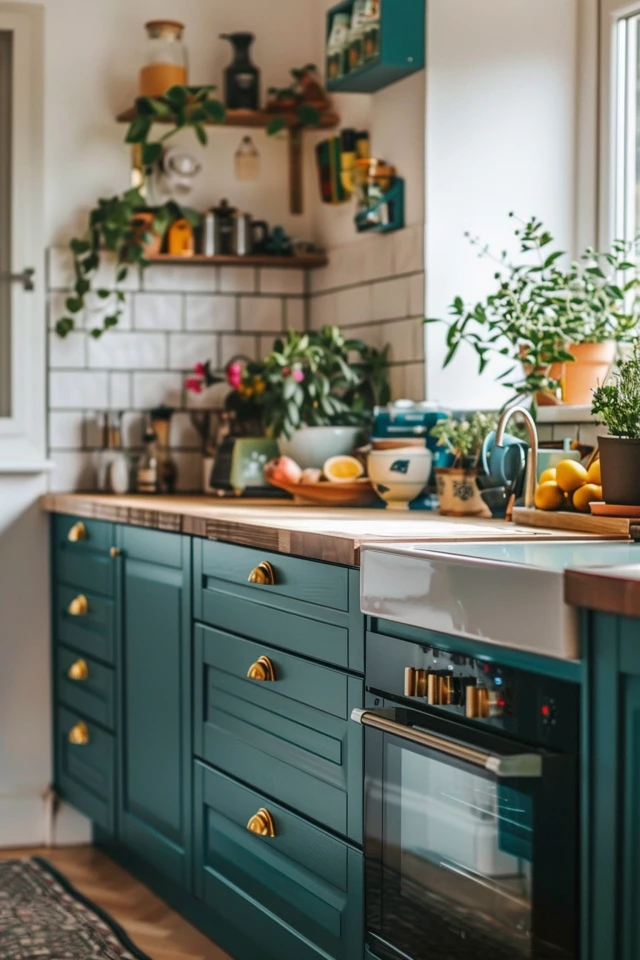
Teal Kitchen Ideas: Inspire Your Home Makeover
Introduction
Designing a kitchen is often a balancing act between timeless appeal and personal expression. For years, the industry was dominated by stark white laboratories and safe, neutral grays. While those choices are classic, I have seen a massive shift in my recent client consultations toward moody, expressive colors that actually feel like home.
Teal is the perfect bridge between a neutral and a bold statement color. It possesses the calming properties of blue and the rejuvenating energy of green. It works beautifully in coastal cottages, mid-century modern ranches, and sleek contemporary apartments alike.
However, nailing the perfect teal kitchen requires a strategic eye for undertones and lighting. For a huge dose of visual inspiration, make sure to check out the Picture Gallery at the end of this blog post.
Choosing Your Perfect Shade of Teal
The first step in your makeover is acknowledging that “teal” is a massive category. It ranges from whisper-soft duck egg blue to deep, dramatic peacock green. The success of your design depends entirely on selecting the right hue for your specific lighting conditions.
Understanding Light Reflectance Value (LRV)
In the design world, we use LRV to measure how much light a color reflects. If you have a small kitchen with one north-facing window, a deep teal with a low LRV (around 5-10) will read as black for half the day.
For low-light kitchens, look for a mid-tone teal with an LRV between 20 and 40. This ensures the color reads as blue-green rather than a dark void. If you have distinct southern exposure with abundant natural light, you can afford to go darker and richer without losing the character of the color.
The Undertone Test
Teal is a mix of blue and green, but every paint can leans one way.
- Green-leaning teal: Appears warmer and earthier. It pairs exceptionally well with natural wood tones and cream.
- Blue-leaning teal: Feels cooler and more crisp. This works best with bright white marble and polished chrome.
Designer’s Note: The Swatch Rule
Never buy gallons of paint based on a chip you saw in the store. Store lighting is usually fluorescent and cool (around 4000K-5000K). Your home lighting is likely warmer (2700K-3000K). I always insist clients paint a 2-foot by 2-foot swatch on two different walls. Watch it for 24 hours to see how it changes from morning coffee to dinner time.
Cabinetry Strategies: Layout and Application
Once you have your color, you have to decide how much of it to use. Painting every inch of cabinetry teal is a bold move that can look high-end, but it requires high ceilings to prevent the room from feeling closed in.
The Tuxedo Kitchen (Two-Tone)
This is the safest and most popular way to introduce teal. Paint your lower cabinets or just the kitchen island in your chosen teal shade. Keep the upper cabinets a creamy white or a very pale gray.
This technique grounds the space. The darker color on the bottom adds visual weight, while the lighter uppers make the ceilings feel higher. This is my go-to strategy for standard 8-foot ceilings where we want to maximize the feeling of openness.
The Full Dip
If you are committing to full teal cabinetry, consider breaking up the visual bulk. Glass-front upper cabinets are a great tool here. They allow you to showcase white or neutral dishware, which breaks up the wall of color.
Another option is to mix teal cabinetry with floating wood shelves. The natural wood tone warms up the cool teal and provides “breathing room” for the eye.
Common Mistakes + Fixes
- Mistake: Using a high-gloss finish on imperfect vintage cabinets.
- Fix: High gloss highlights every ding and scratch. If you are repainting existing wood cabinets, choose a satin or semi-gloss finish. It is durable enough to wipe down but forgiving enough to hide minor texture issues.
Countertops and Backsplash Pairings
Teal is a strong personality, so your countertop and backsplash need to be the supporting actors. The goal is harmony, not competition.
Countertop Materials
White Quartz or Marble:
Crisp white countertops with grey veining (like Carrara or Calacatta layouts) are the classic choice for teal. The coolness of the grey veins ties into the blue notes of the cabinetry. If you cook often and worry about staining, opt for a quartz composite rather than natural porous marble.
Butcher Block:
If your teal leans green, wood countertops are magic. Walnut or White Oak brings out the organic, earthy feel of the color. This combination is particularly effective in farmhouse or cottage-style kitchens.
Soapstone or Black Granite:
For a moody, dramatic look, pair deep teal with matte black soapstone. This creates a very sophisticated, “library” feel. It is less common but incredibly striking.
Backsplash Logic
If you have teal cabinets and busy countertops, keep the backsplash simple. A standard white subway tile is a safe bet, but you can elevate it by changing the layout. Try a herringbone pattern or a vertical stack to modernize the look.
For a more artisanal look, consider Zellige tiles. These are Moroccan-style tiles with an imperfect, handcrafted surface. They shimmer in the light and add incredible texture without introducing a new color that might clash.
Designer’s Note: The 4-Inch Rule
Avoid the “builder grade” mistake of using a 4-inch backsplash made of the countertop material and then painting the wall above it. It creates a visual line that chops up the wall. Run your tile from the counter all the way to the bottom of the upper cabinets (usually 18 inches).
Hardware and Metallic Accents
The metal finish you choose acts as the “jewelry” of the kitchen. Because teal is on the cool side of the color wheel, you have two distinct paths for metals.
Warming it Up: Brass and Gold
Unlacquered brass, brushed gold, or champagne bronze are my top recommendations for teal kitchens. The yellow/orange undertones of gold sit opposite blue on the color wheel. This creates a natural, pleasing contrast that warms up the entire room.
If you choose brass, ensure you buy all your hardware from the same manufacturer if possible. “Aged Brass” varies wildly between brands.
Cooling it Down: Chrome and Nickel
Polished chrome or polished nickel creates a very sleek, clean, and modern aesthetic. This works well if you are aiming for a mid-century modern look or a very contemporary vibe. It is generally a more affordable price point than brass, which helps with budget constraints.
Matte Black
Matte black hardware is the modern choice. It looks fantastic against a lighter, dustier teal. It provides a graphic punch and works well if you have other black accents, like window frames or light fixtures.
Pro Rule: Hardware Scale
Don’t use dinky knobs on large drawers.
- Drawers under 24 inches: Use a single knob or a 3- to 4-inch pull.
- Drawers 24 to 30 inches: Use a 5- to 8-inch pull.
- Drawers over 30 inches: Use two knobs or a pull that is at least 8 to 12 inches long.
Lighting and Flooring Considerations
A teal kitchen dies in the dark. Proper lighting is not just functional; it brings the pigment to life.
Lighting Temperature
I cannot stress this enough: check your bulb temperature. For a kitchen, you want 3000K (Kelvin).
- 2700K: Too yellow. It will turn your teal cabinets muddy or greenish.
- 4000K+: Too blue. It will make the kitchen feel like a dentist’s office.
- 3000K: The sweet spot. Crisp white light that renders color accurately.
Pendants and Placement
If you have an island, hang pendants in odd numbers (usually 2 large or 3 medium). The bottom of the pendant should sit 30 to 36 inches above the countertop surface. Since teal absorbs light, choose fixtures with clear glass or wide metal shades that direct light downward onto the work surface.
Flooring Options
White Oak: The gold tones in white oak flooring neutralize the cool tones of teal. This is the most popular pairing in current design trends.
Tile: If you are using tile floors, avoid beige or yellow-toned travertine. Stick to slate, white marble, or a patterned encaustic tile that incorporates the teal color in small amounts.
Checklist: Rugs and Runners
A vintage-style runner rug is crucial for breaking up the floor space. Look for a rug that contains rust, terracotta, or cognac colors. These warm, earthy tones complement teal perfectly and hide kitchen crumbs effectively.
Final Checklist: What I’d Do in a Real Project
If I were managing your renovation, this is the checklist I would run through before we ordered a single material.
1. The Sample Test
I would order a door sample in the exact teal finish from the cabinet maker. I would hold it up against the floor sample and the countertop sample in natural daylight.
2. The “Walkway” Check
I would measure the distance between the island and the perimeter counters. The minimum for a comfortable workflow is 36 inches, but 42 to 48 inches is ideal, especially if you have a dishwasher opening into that space.
3. The Appliance Audit
I would decide on stainless steel vs. panel-ready appliances. Stainless steel cools the room down. Panel-ready (where the fridge matches the cabinets) creates a seamless wall of teal. If the budget allows, panel-ready is superior for this look.
4. The 60-30-10 Rule
I would ensure the colors are balanced.
- 60% Main Color: Your cabinets or walls (Teal).
- 30% Secondary Color: Your backsplash and countertops (White/Grey).
- 10% Accent Color: Your hardware and lighting (Brass/Gold).
5. The Budget Buffer
I would set aside a 15% contingency fund. Unexpected electrical or plumbing issues happen in every kitchen remodel, regardless of the color scheme.
FAQs
Is teal a trendy color that will go out of style?
Teal has been used in interiors for centuries, from Victorian drawing rooms to Mid-Century Modern kitchens. While specific shades fluctuate in popularity, the color family is established and timeless. To ensure longevity, lean toward muted, dustier shades rather than neon or primary brights.
Can I use teal in a small kitchen?
Absolutely. The idea that small rooms must be white is a myth. A deep teal can blur the corners of a room, making the boundaries of the space feel infinite rather than cramped. Just ensure you have adequate under-cabinet lighting.
What wall color goes with teal cabinets?
If your cabinets are teal, keep the walls neutral. A warm white (like Benjamin Moore Swiss Coffee) or a very pale “greige” works best. Avoid yellow-based creams, as they can look dingy next to clean teal.
How do I clean dark teal cabinets?
Darker paints show fingerprints and oil smudges more than white paints. Use a microfiber cloth and a mild solution of water and dish soap. Avoid abrasive sponges that can dull the paint finish over time.
Conclusion
Choosing a teal kitchen is a declaration of confidence. It moves your home away from the generic and into the realm of the personal. Whether you opt for a soothing coastal vibe with pale aqua or a moody sanctuary with deep peacock, the key lies in the balance of elements.
Remember to validate your lighting, invest in warm metallic accents, and test your swatches relentlessly. A kitchen renovation is a significant investment, but when executed with these design principles, it yields a space that feels curated, cozy, and distinctly yours.
Picture Gallery


