
Teenage Hangout Room Ideas for Epic Spaces
Designing for teenagers is one of the most unique challenges in interior design. You are transitioning a space from a toy-filled playroom into something sophisticated enough for high schoolers, yet durable enough to handle snacks, spills, and rowdy gaming sessions. It is a delicate balance of “cool factor” and extreme practicality.
I remember a project where the parents wanted a pristine, white-oak study lounge, but their 15-year-old son just wanted a blacked-out cave for video games. The solution was finding the middle ground: a moody, dark charcoal media room with high-end acoustic paneling that satisfied both the design aesthetic and the teen’s functional needs. For a visual breakdown of how we balance style and function, be sure to check out the Picture Gallery at the end of the blog post.
In this guide, I will walk you through the exact formulas I use to create teenage hangout spaces. We will cover layout logistics, durable materials, and the lighting secrets that instantly make a room feel “approved” by the younger crowd.
1. The Layout Logic: Creating Social Circles
The biggest mistake I see in DIY teen rooms is pushing all the furniture against the walls. While this maximizes open floor space, it kills the social vibe. Teens do not sit in rows; they sprawl, lounge, and gather in clusters.
You need to anchor the room with a central seating group. In a standard 12×14 foot room, float the sofa at least 12 to 18 inches off the wall if space permits. This makes the room feel intentional rather than sparse.
If you are working with a basement or a large bonus room, use the “zone” approach. Dedicate one corner to gaming, one area to homework or snacking, and the main area for lounging.
Designer’s Note: The Traffic Path Rule
In my floor plans, I always map out the walking paths first. You need a clear 30 to 36-inch pathway for main traffic areas. If a teen has to squeeze sideways to get past a bean bag to reach the door, the layout is too cluttered.
Common Mistakes + Fixes
- The Mistake: Buying furniture that is too small for the room scale.
- The Fix: Avoid “apartment size” sofas unless the room is tiny. Teens are essentially adult-sized. Use painter’s tape to outline furniture on the floor before buying to ensure it fills the volume of the room correctly.
2. Seating Strategies: The “Sprawl” Factor
When selecting furniture for a hangout room, structure is less important than depth. Teenagers rarely sit upright with their feet on the floor. They sit cross-legged, lay sideways, or drape over the arms of chairs.
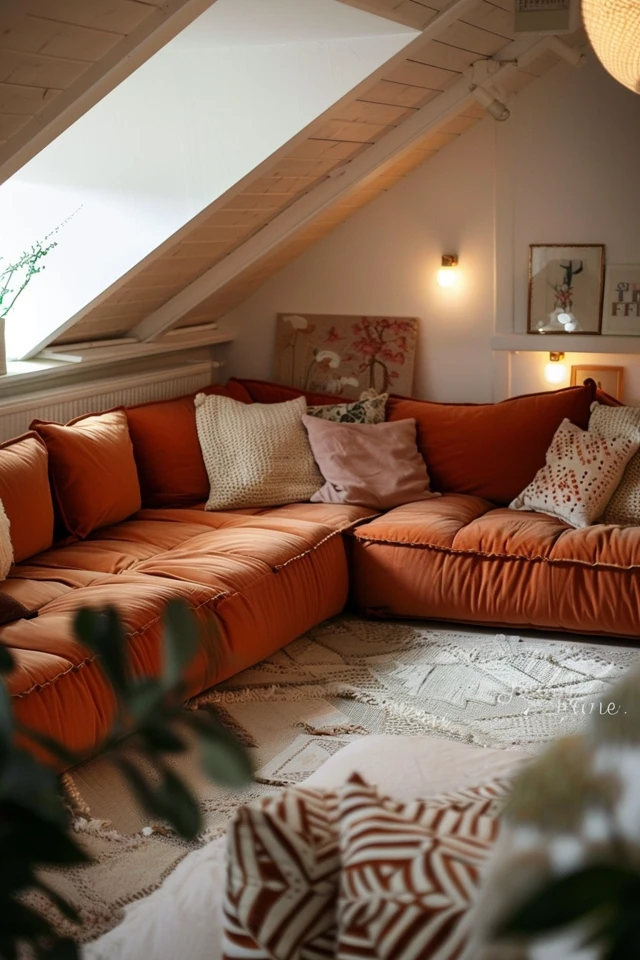
I almost exclusively specify modular sectionals for these spaces. Modular pieces allow the teens to rearrange the room themselves. They can push ottomans together to form a “pit” for movie nights or separate them for board games.
Look for a seat depth of at least 24 inches (interior depth). Anything shallower than that will feel like a formal reception room, not a lounge. If you are tight on space, ditch the accent chairs and use large floor cushions or high-quality bean bags that can be stacked in a corner when not in use.
Material Matters
Fabric choice is critical. I recommend performance velvets or tightly woven poly-blends. Avoid linen (it stains) and cheap bonded leather (it peels and feels cold). A heavy-duty velvet is cozy, cleans easily with water, and hides claw marks if the family dog hangs out there too.
What I’d Do in a Real Project
- Main Sofa: A low-profile modular sectional in a charcoal or navy performance fabric.
- Accent Seating: Two swivel chairs rather than stationary armchairs. Swivels allow teens to turn toward the TV or toward the sofa for conversation.
- Overflow: Two large poufs stored under a console table, ready to be pulled out for extra guests.
3. Lighting: The Enemy of the “Big Light”
If you want a teen to actually use the room, do not rely on a central ceiling fixture. Teens generally hate overhead lighting because it feels clinical. The goal is to create a moody, ambient atmosphere.
You need three layers of light: ambient, task, and accent. For ambient light, use floor lamps with warm bulbs (2700K to 3000K). Avoid anything cooler than 3000K, or the room will look like a dentist’s office.
Accent lighting is where you get the “cool” points. LED strip lighting hidden behind the TV or under the sofa creates a glow that teens love. It allows them to change the color of the room based on their mood or the game they are playing.
The Dimmable Rule
Every light source in a hangout room should be on a dimmer. This is a non-negotiable in my designs. It allows the room to transition from a brightly lit homework space in the afternoon to a movie theater environment at night.
Designer’s Note: Managing Screen Glare
Check the position of your windows relative to the TV. If the window is directly opposite the screen, you will get terrible glare during the day. Install blackout curtains or top-down/bottom-up shades to control natural light without making the room pitch black at noon.
4. Surfaces and Storage: The “Drink Drop” Radius
One of the most practical rules in interior design is that every seat needs a surface within arm’s reach. If a teen has a soda in hand and nowhere to put it, that soda is going on the floor. And eventually, it will spill.
I avoid large, heavy coffee tables in teen rooms because they block legroom. Instead, I prefer a cluster of smaller nesting tables or C-tables that slide over the sofa cushions. This brings the surface to them.
For storage, open shelving usually becomes a mess. I prefer closed cabinetry or media consoles with solid doors. This allows teens to shove controllers, board games, and blankets inside and close the door for a clean look.
The Snack Station
If the room is far from the kitchen, consider a dedicated snack zone. This can be as simple as a mini-fridge tucked into a cabinet or a rolling cart. Just ensure you put a mat or tray underneath the fridge to catch any condensation drips that could ruin the flooring.
Common Mistakes + Fixes
- The Mistake: Using glass-topped tables.
- The Fix: Use wood, metal, or stone. Glass shows every fingerprint and is a breakage risk during rowdy VR gaming or pillow fights.
- The Mistake: Forgeting trash cans.
- The Fix: Place a decent-looking trash bin in the corner. If you don’t provide one, trash will accumulate on the side tables.
5. Tech Integration and Acoustics
A modern hangout room is often a media room. This brings two challenges: cable management and noise control. Nothing ruins a design faster than a tangle of black wires hanging from a wall-mounted TV.
Use in-wall cable kits to hide cords behind the drywall. If you are renting or cannot cut into the wall, use paintable cable raceways that run along the baseboard. They blend in surprisingly well when painted the same color as the trim.
Acoustics are vital, especially if the room has hard floors. Sound bounces off hard surfaces, creating an echo that amplifies shouting and gaming noises.
Rug Sizing Logic
The rug is your primary sound absorber. It needs to be big. The rule of thumb is that the front legs of all seating furniture should sit on the rug. In a typical setup, an 8×10 or 9×12 rug is standard. High-pile or shag rugs are great here because they add texture and dampen sound significantly better than flat-weave rugs.
Designer’s Note: Wall Treatments
If noise is a major issue, look into felt acoustic panels. They have come a long way from the ugly foam wedges of the past. You can buy geometric felt tiles in various colors that look like modern art but function as sound absorbers.
Final Checklist: The Designer’s Blueprint
Before you buy a single item, run through this checklist to ensure you are treating this like a professional project.
1. Measure Everything
- Measure the room length and width.
- Measure doorways and stairwells to ensure the sofa can actually fit into the room.
- Mark the location of outlets and cable jacks.
2. Establish the Palette
- Pick one main neutral color for large items (sofa, rug).
- Pick two accent colors for pillows and art.
- Choose a metal finish (matte black or brushed nickel) and stick to it.
3. Select the Big Pieces
- Order the sofa and rug first. These take the longest to ship and dictate the layout.
- Ensure the rug is large enough (at least 6-12 inches wider than the sofa on both sides).
4. Layer the Lighting
- Install dimmers.
- Purchase floor lamps and LED strips.
- Check for glare issues.
5. Accessorize for Durability
- Buy pillows with removable, washable covers.
- Set up the “drink drop” surfaces.
- Add a trash bin and cable management ties.
FAQs
How do I design a hangout room on a tight budget?
Focus on the seating and the paint. A fresh coat of dark, moody paint can transform a room for under $100. Spend the bulk of your budget on a comfortable sofa or high-quality bean bags. You can find great side tables and decor at thrift stores, but bad seating ruins the room.
What is the best wall color for a teen room?
Teens usually prefer darker, cozier vibes. Charcoal gray, navy blue, or forest green are excellent choices. If the room is small, painting the ceiling the same color as the walls can actually make the room feel larger and more infinite, like a theater.
How do I fit a hangout spot in a small bedroom?
If you don’t have a separate room, look at loft beds. Elevating the bed creates a “living room” footprint underneath where you can fit a loveseat or a gaming desk. Alternatively, use a daybed that functions as a sofa during the day and a bed at night.
Conclusion
Creating an epic teenage hangout room is about respecting their need for autonomy while maintaining the standards of a well-designed home. It doesn’t have to be a space filled with neon signs and plastic furniture. By focusing on deep, modular seating, layered lighting, and smart acoustic solutions, you can build a space that they are proud to bring their friends to.
The best feedback you can get is when your teen starts spending more time in the “family” space than in their bedroom. That is the sign of a successful design.
Picture Gallery


