
Title: Teenage Playroom Ideas: Creating Cool Teen Spaces
Introduction
Transitioning a home from a toddler-centric space to a teenage haven is one of the most significant shifts a family makes. The bright primary colors and toy bins that once defined the playroom eventually become obsolete, replaced by a need for privacy, technology, and genuine comfort. I recently worked with a client who realized her son was spending hours sitting in the driveway in his car simply because the “playroom” inside felt too childish for him to relax in.
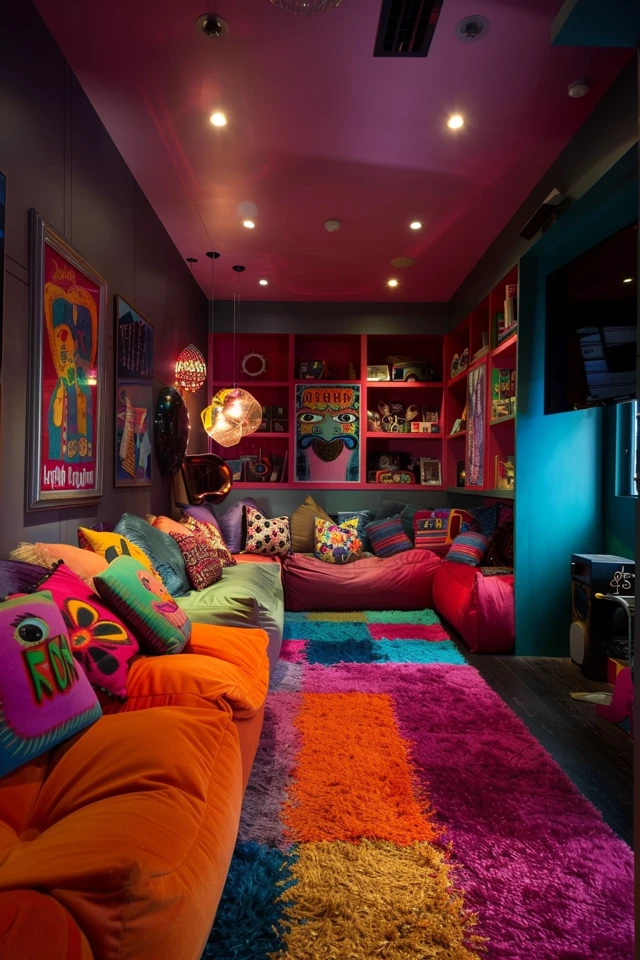
Designing for teenagers requires a distinct shift in mindset. You are no longer creating a floor-level play area; you are designing a lounge that functions closer to a hospitality space than a nursery. If you are looking for specific visual examples, be sure to check out the Picture Gallery at the end of this article.
This guide will walk you through the practical steps of designing a teen space that balances parental requirements for durability with the teen’s desire for independence. We will cover everything from ergonomic gaming setups to lighting plans that set the right mood, ensuring the room gets used for years to come.
1. Zoning the Room: The Lounge, The Station, and The Void
When designing a room for teenagers, the concept of an open floor plan often fails. Teens prefer “zones” where they can retreat. In professional design, we look at traffic patterns and functional clusters. For a teen playroom, you generally need three distinct zones: a lounge area for socializing, a tech/work station, and open floor space (the void).
The lounge area is the anchor of the room. This is where the television or projector lives. Unlike a formal living room where conversation is the primary goal, the focus here is usually a screen. However, you must ensure the furniture arrangement encourages face-to-face interaction when the screens are off. I recommend placing the sofa facing the media wall but adding two swivel chairs perpendicular to the sofa. This allows the chairs to turn toward the TV for movies or toward the sofa for conversation.
The “tech station” or desk area needs to be separated from the lounge to create a mental boundary between high-energy gaming or studying and relaxing. If the room is small, use a physical divider. An open bookshelf placed perpendicular to the wall is an excellent way to partition space without blocking light.
Designer’s Note: The “Void” is Essential
In my years of designing family homes, the biggest mistake I see is over-furnishing. Teens are sprawling creatures. They will lie on the floor, wrestle, or play VR games that require movement. You must leave a “void”—an open patch of carpet or rug roughly 5 feet by 7 feet—free of coffee tables or ottomans. This negative space makes the room feel larger and accommodates the physical way teens inhabit space.
2. Seating: Durability Meets the “Slouch Factor”
Teenagers do not sit; they slouch, sprawl, and lounge. If you put a stiff, mid-century modern sofa with a low back in a teen room, it will never be used. The priority for this demographic is seat depth and fabric durability.
The Rules of Deep Seating
When sourcing a sofa or sectional for a teen room, look for a seat depth of at least 24 inches (standard is often 21-22 inches). This extra depth allows them to pull their legs up or lie down comfortably. Sectionals are usually the best choice because they maximize corner space. If you are working with a tight budget or a renter-friendly space, modular sectionals are fantastic because you can reconfigure them as the room’s function changes.
Fabric Selection for Real Life
Let’s be honest: there will be snacks, soda, and possibly pets in this room. I exclusively recommend performance fabrics for teen spaces.
- Performance Velvet: This is my top pick. It is incredibly durable, cats tend not to scratch it because it lacks a weave to hook their claws into, and liquid beads up on the surface.
- Microfiber: A budget-friendly alternative to velvet that cleans easily.
- Distressed Leather (or Faux): This works well because scratches add character rather than ruining the piece. Avoid pristine white linens or delicate cotton blends.
Alternative Seating Options
Bean bags have come a long way since the 90s. Look for “structure bean bags” or foam-filled sacks (like Lovesac) rather than polystyrene bead fillers. These retain their shape and provide actual back support. Place these in corners or as movable seating for when friends come over.
3. Lighting Strategy: Mood Over Function
If there is one thing teenagers universally detest, it is the “big light”—the central ceiling fixture. To create a space they actually want to hang out in, you must layer your lighting. This is where you can have the most fun with the design without spending a fortune.
The Three Layers of Teen Lighting
- Ambient Lighting: This is your general light. Instead of a bright overhead fixture, use dimmable recessed cans or a ceiling fan with a covered light kit. Install a dimmer switch immediately; it is the single most effective upgrade for changing a room’s vibe.
- Task Lighting: This is specific to the desk or gaming station. A flexible architect lamp is great for homework. For gamers, bias lighting (LED strips placed behind the monitor or TV) reduces eye strain and looks incredible.
- Accent/Mood Lighting: This is what makes the room “cool.” LED strip lights along the crown molding or baseboards allow them to change the color of the room with a remote. Neon signs or “infinity mirrors” also act as art pieces while providing a low-lumen glow that teens love.
Common Mistakes + Fixes
Mistake: Using daylight (5000K) bulbs that make the room feel like a cafeteria or a hospital.
Fix: Stick to 2700K (warm white) or 3000K (soft white) for all lamps and overheads. This color temperature is cozy and relaxing. Save the color-changing LEDs for the accent strips.
4. Acoustics and Soundproofing
Teen playrooms are noisy. Between video game explosions, music, and group laughter, sound control is a practical necessity for the sanity of the rest of the household. While you may not be able to tear down walls to install sound-rated insulation, you can use interior design elements to dampen the noise.
The 30% Rule
To stop an echo, you need to cover roughly 30% of the hard surfaces in the room with soft materials.
- Rugs: A thick high-pile or shag rug is excellent for sound absorption. Ensure you use a thick felt rug pad underneath. It adds comfort for floor-sitting and significantly deadens sound transmission to the floor below.
- Window Treatments: Skip the blinds. Use heavy velvet or lined linen curtains. The fabric acts as a sound trap. Extend the curtain rod 10 to 12 inches past the window frame on both sides to cover more wall space.
- Acoustic Panels: You no longer have to use ugly egg-crate foam. There are now felt acoustic tiles available in geometric shapes and various colors that look like modern art. Install a cluster of these on the wall opposite the TV or speakers to catch the bouncing sound waves.
5. The Tech Wall and Media Management
The focal point of a teen playroom is almost invariably the screen. Whether it is for gaming or streaming movies, how you integrate technology determines how polished the room looks. Nothing ruins a design faster than a nest of tangled black cables.
Designing the Media Console
Choose a media console that is at least 6-10 inches wider than the TV on both sides. This ensures the visual weight is balanced. If the TV is wider than the furniture beneath it, the room will feel top-heavy and precarious.
Cable Management Checklist
- Cord Cover Raceways: If you wall-mount the TV and cannot run wires behind the drywall, use paintable cord covers. Paint them the exact wall color to make them disappear.
- Velcro Ties: Bundle cords together behind the console. Never use zip ties, as you will inevitably need to cut them to change a cable.
- Charging Stations: Teens live on their phones. Incorporate a designated charging station on a side table or inside a drawer. Pop-up outlets that can be installed into table surfaces are a great pro touch that reduces clutter.
Viewing Distance Standards
For the most comfortable gaming or viewing experience, the distance from the sofa to the TV should be roughly 1.5 to 2.5 times the diagonal screen size. For example, if you have a 65-inch TV, the sofa should be placed between 8 and 13.5 feet away. If the room is small, consider a smaller screen to prevent motion sickness or eye strain.
6. Sophisticated Styling: Moving Past Themes
When decorating for younger children, parents often lean on themes (dinosaurs, princesses, space). For teens, avoid themes entirely. Instead, aim for a “style.” Think Industrial Lofts, Bohemian Lounge, or Minimalist Tech.
Wall Treatments
Paint is the easiest way to change the atmosphere. Teen rooms are the perfect place to experiment with dark, moody colors.
- Dark Walls: Colors like charcoal, navy, or forest green (e.g., Benjamin Moore “Hale Navy” or “Salamander”) make a room feel cozy and enveloped. Dark walls also make screens look better by reducing glare.
- The Fifth Wall: Consider painting the ceiling the same color as the walls. This blurs the boundaries of the room and makes it feel like an infinite, cozy cave.
Gallery Walls and Personalization
Allow the teen to personalize the space, but provide the framework. Install picture ledges where they can lean framed posters, vinyl records, or awards. This allows them to swap out the art as their tastes change without putting new holes in the wall every month.
Storage That Hides the Mess
Teens have “stuff”—controllers, headsets, textbooks, hoodies. Open shelving often looks messy in a teen room. Prioritize closed storage. Sideboards, ottomans with storage inside, and cabinets are superior to open bookcases. If you must use open shelving, use opaque baskets to corral loose items.
Final Checklist: What I’d Do in a Real Project
If I were walking into your home today to transform a room for your teenager, this is the exact mental checklist I would run through to ensure success.
1. Check the Power
- Are there outlets near where the sofa will go? If not, can we run a flat extension cord under the rug?
- Do we need a WiFi extender? Gamers need high speeds; a laggy room will not be used.
2. Measure the Access
- Can the new sectional fit through the doorway or down the basement stairs? (I have seen many sofas get stuck in stairwells—always measure the diagonal clearance).
3. Audit the Lighting
- Is there a dimmer switch? If not, buy one immediately.
- Is there a light source at eye level (lamp) to offset the overhead light?
4. Surface Test
- Are there enough flat surfaces for drinks? Every seat needs a surface within arm’s reach. If a side table doesn’t fit, use a C-table that slides over the sofa arm.
5. The “Snack Factor”
- Is there a designated spot for trash? A small, stylish trash can is mandatory to prevent garbage from accumulating on the floor.
- Consider a mini-fridge. It is the ultimate luxury for a teen room and keeps them happy in their space.
Frequently Asked Questions (FAQs)
What if the room is very small?
In a small room, vertical space is your best friend. Use a loft bed if it is a bedroom/playroom combo, putting the desk or a loveseat underneath. Use wall-mounted shelving to keep the floor clear. Choose furniture with exposed legs; seeing the floor underneath the furniture makes the room feel wider.
How can I make the room gender-neutral?
Focus on texture rather than color. Leather, wood, metal, and linen appeal to everyone. Use a neutral base palette—greys, creams, woods—and let the accessories (pillows, throws, LED lights) introduce color. This makes the room adaptable for siblings of different genders.
Is a basement a good place for a teen room?
Basements are ideal because they are naturally darker and sound-isolated. However, they can be damp. Ensure you run a dehumidifier to protect electronics and soft furnishings. Use warm lighting (2700K) to counteract the lack of natural light.
How do I involve my teen without letting them make bad design choices?
Give them a curated selection. Don’t ask, “What sofa do you want?” Instead, find three sofas that fit your budget and durability standards, and ask, “Which of these three do you prefer?” Let them have full control over low-stakes items like posters, throw pillows, and the color of LED strips.
Conclusion
Creating a teenage playroom—or rather, a teen lounge—is about respecting the transition from childhood to young adulthood. It is about creating a container that can hold their noise, their friends, and their growing need for independence. By focusing on deep, durable seating, moody lighting, and smart tech integration, you can build a space that they will be proud to show off to their friends.
Remember that this space does not need to be perfect; it needs to be comfortable. If you provide a room that feels safe, private, and relaxing, you will find that your teen (and their friends) will naturally gravitate toward home.
Picture Gallery


