
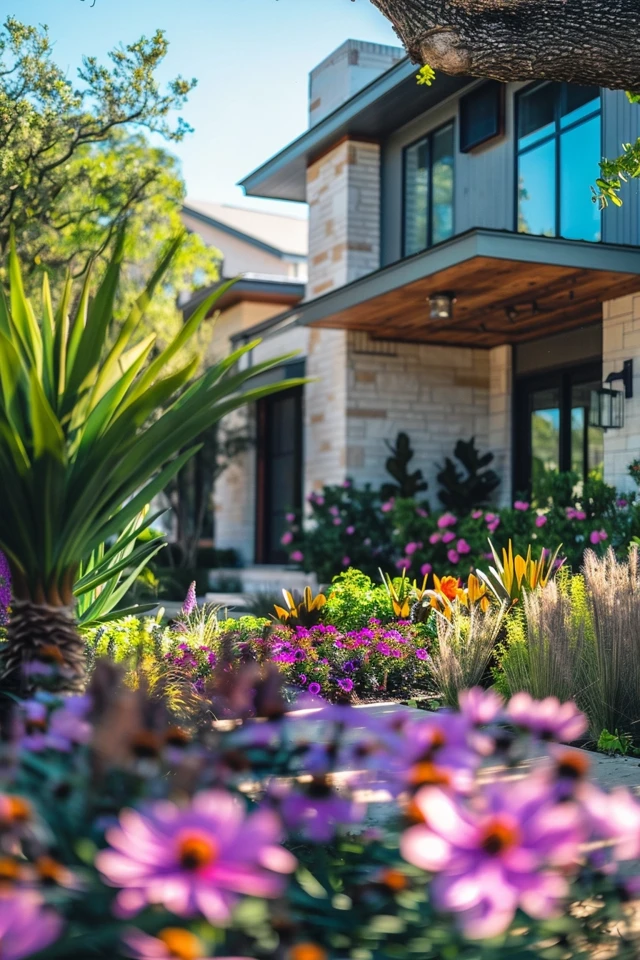
Texas Front Yard Landscape Ideas: My Top Picks
Designing a landscape in Texas is a unique challenge that requires a distinct set of rules compared to the rest of the country. Between the scorching July heat, sudden freezes, and soil that ranges from sticky clay to rocky limestone, your front yard has to be a survivor. I have seen too many clients try to force a delicate English cottage garden into a Texas lot, only to watch it wither away by mid-summer.
The key to a successful Texas front yard is working with the climate rather than fighting against it. You want curb appeal that looks lush and inviting but doesn’t require a water bill that rivals your mortgage. We want to blend architectural structure with native softness. Check out the Picture Gallery at the end of the blog post for visual inspiration.
In this guide, I am sharing my top design strategies for Texas landscapes. These are the same principles I use when consulting on residential projects from Austin to Dallas. We will cover hardscaping, plant selection, layout logic, and the finishing touches that elevate a home’s exterior.
1. The Modern Hill Country Aesthetic
The “Hill Country” look has transcended its geographic roots to become a staple of Texas landscape design. It relies heavily on a mix of native stone, architectural plants, and negative space. This style works beautifully because it acknowledges the rugged nature of the environment while keeping lines clean and contemporary.
The Materials
I almost exclusively specify Lueders limestone for my Texas projects. It offers a cleaner, cooler gray-to-cream palette than the generic orange-toned flagstone you see in older subdivisions.
When selecting stone for walkways, I adhere to strict scale rules. If you are doing stepping stones, they need to be large—at least 24 inches by 24 inches. Anything smaller looks like clutter rather than a deliberate design element.
Plant Layering
The secret to this look is avoiding the “soldier row” of hedges. Instead, we group plants in clusters of three, five, or seven.
I love using Texas Sage (Cenizo) as a foundational shrub. It provides a dusty silver-green backdrop that pops against modern white or dark brick exteriors. When it rains, the purple blooms are a showstopper.
Designer’s Note: The Mulch Trap
One common mistake I see homeowners make is using dyed red or black mulch. In the intense Texas sun, dyed mulches fade unevenly and can look cheap within months.
The Fix: Always use native hardwood mulch or crushed cedar. It breaks down naturally, improves the soil quality, and maintains a neutral, earthy aesthetic that grounds the house.
2. Hardscaping and Entry Sequencing
Your front yard is not just a picture to look at; it is an experience to walk through. The path from the sidewalk or driveway to your front door establishes the rhythm of the home. In Texas, where we often have expansive lots, a narrow sidewalk feels stingy and unwelcoming.
Width and Proportion
A main entry path should never be less than 48 inches wide. This allows two people to walk side-by-side comfortably. If you have the space, I prefer expanding this to 60 inches.
If you are pouring concrete, consider a salt finish. It adds a slight texture that provides grip during rainy seasons and looks far more custom than a standard broom finish.
Using Steel Edging
To get those crisp, clean lines separating grass from flower beds, metal edging is non-negotiable. I recommend using 14-gauge steel edging.
Plastic edging eventually warps and cracks under the Texas sun. Steel develops a beautiful rust patina that disappears into the landscape or creates a nice architectural line. It holds back aggressive runners like Bermuda grass much better than a trench alone.
Common Mistakes + Fixes
Mistake: Planting too close to the walkway.
Fix: Account for the mature size of the plant. If a Salvia gets 3 feet wide, plant it 20 inches from the edge of the path. You should never have to turn sideways to walk to your front door because a Rosemary bush is attacking your shins.
3. Xeriscaping Without the “Zero” Look
Xeriscaping has a bad reputation for looking like a pile of rocks with a single cactus. That is not design; that is just gravel. True xeriscaping is lush, colorful, and vibrant—it just happens to be low water.
Zoning Your Water Use
I organize landscapes into “hydro-zones.” High-water plants go near the front door or in pots where you can hand-water them easily. The further you get from the house, the more drought-tolerant the plants should be.
Texture Over Flowers
In the heat of August, flowers will struggle, but texture endures. I rely heavily on ornamental grasses for this. Mexican Feather Grass softens hard edges and catches the wind beautifully.
Warning: Mexican Feather Grass can be invasive in some areas. A great alternative is Gulf Muhly, which produces spectacular pink clouds of seed heads in the fall.
Gravel Selection
If you are replacing turf with gravel, avoid pea gravel in high-traffic areas. It acts like a ball pit, and you will sink into it.
Instead, use decomposed granite or crushed basalt (3/8 inch or 5/8 inch size). These pack down tighter and provide a stable walking surface. Always lay a commercial-grade weed barrier fabric underneath. Do not rely on the thin plastic stuff from big-box stores; weeds in Texas are tenacious and will punch right through it.
4. Lighting: Safety Meets Ambience
Lighting is the most underutilized tool in curb appeal. In Texas, where we use our outdoor spaces late into the evening to escape the day’s heat, lighting is essential.
The Kelvin Rule
The color temperature of your bulbs makes or breaks the design. I strictly use LEDs between 2700K and 3000K.
2700K mimics warm incandescent light and makes stone and brick look rich. Anything over 3000K looks blue and clinical, like a hospital parking lot.
Placement Strategy
Don’t just light the path. Uplighting trees adds drama and depth to the yard at night.
For a large Live Oak or Cedar Elm, I place two to three uplights around the base, aiming up into the canopy. This highlights the architectural branch structure.
Path Light Spacing
A common DIY error is placing path lights too close together, creating a “runway effect.”
My Rule of Thumb: Space path lights 6 to 8 feet apart. You want pools of light that guide the eye, not a continuous line. The goal is to see the effect of the light, not the fixture itself.
5. The “Soft” Scape: Turf and Trees
Texans love their lawns, but we need to be realistic about them. Reducing the amount of sod in your front yard reduces maintenance and water usage.
Turf Selection
If you have full sun (6+ hours), Bermuda is the standard, but Zoysia is the upgrade. Zoysia creates a dense, carpet-like feel that feels amazing under bare feet.
For shady areas under those big oaks, St. Augustine is usually the only grass that stands a chance. However, if the shade is deep, stop fighting nature. Replace the struggling grass with beds of Asian Jasmine or Mondo Grass.
Tree Placement
When planting a new tree, consider the distance from your foundation. Texas clay soil expands and contracts, which already stresses foundations. Large tree roots drawing out moisture can exacerbate this.
Guideline: Plant large shade trees at least 15 to 20 feet away from the house structure. This also protects your roof from overhanging branches and potential storm damage.
What I’d Do in a Real Project
If I were designing a standard suburban Texas front yard today, here is my go-to formula:
- Foundation: 4-foot deep beds curving around the house.
- Base Layer: Dwarf Yaupon Holly or Boxwood for evergreen structure.
- Middle Layer: Red Yucca or Texas Lantana for color and drought resistance.
- Accents: A large limestone boulder grouping near the driveway entrance to anchor the space.
- Tree: A Texas Redbud or Desert Willow for a focal point that doesn’t get too massive.
Final Checklist
Before you buy a single plant or bag of mulch, run through this checklist to ensure your plan is viable.
- Sun Mapping: Have you tracked the sun for a full day? “Full Sun” means 6+ hours of direct light. Texas afternoon sun is different from morning sun; it is much harsher.
- HOA Check: Have you reviewed your HOA guidelines? Many Texas communities have strict lists of approved plants and restrictions on gravel width.
- Water Source: Do you have hose bibs or irrigation heads near where you want to plant pots?
- Soil Prep: Have you budgeted for soil amendments? You cannot plant directly into caliche or heavy clay. You need to mix in compost and expanded shale (for clay) to ensure drainage.
- Scale Check: Are your flower beds deep enough? A 2-foot bed is useless. Aim for 4 to 6 feet deep to allow for layering.
- Hardscape Drainage: If you are pouring concrete, where does the water go? Ensure a 1-2% slope away from your home’s foundation.
FAQs
What is the best time to plant in Texas?
Fall is the absolute best time. Planting in October or November allows root systems to establish during the cooler months before the brutal heat of the following summer hits. If you plant in May or June, you will be watering constantly just to keep the plant on life support.
How do I stop deer from eating my front yard?
If you live in the Hill Country or outer suburbs, deer are a reality. While no plant is 100% deer-proof, some are highly resistant. Stick to Esperanza, Texas Sage, Lantana, and Rosemary. Avoid Hostas and Roses unless you want to feed the local wildlife.
My soil is solid rock/clay. What do I do?
For heavy clay, expanded shale is your best friend. It creates air pockets in the soil. For rocky areas, your best bet is often raised beds. Build up rather than digging down. Using steel edging to create a raised bed 6-12 inches high and filling it with quality garden soil is often easier than jackhammering into limestone.
Can I mix gravel and grass?
Yes, but you need a distinct barrier. Grass will grow into gravel immediately without a deep border. Use steel edging or a concrete mow strip to separate them. Also, keep gravel levels slightly lower than the grass soil level so your lawnmower doesn’t fling rocks at your windows.
Conclusion
Creating a beautiful front yard in Texas is about balancing resilience with aesthetics. It requires respecting the climate and choosing materials that age gracefully under the sun.
Don’t be afraid to reduce your lawn size in favor of expanded flower beds or gravel courtyards. It adds architectural interest and reduces your weekly maintenance. Remember to focus on scale—wide paths, large planting groups, and substantial hardscaping make a home feel custom and luxurious.
By following these guidelines, you can create a landscape that survives the summer and welcomes you home every day.
Picture Gallery


