
The Complete Guide to Backyard Birdhouses: Attracting Feathered Friends
Introduction
When I design a sunroom or a kitchen breakfast nook, I always tell my clients that the design doesn’t stop at the window glass. The view outside is just as important as the rug under the table. Incorporating wildlife elements into your landscape design creates a dynamic, living artwork that changes with the seasons.
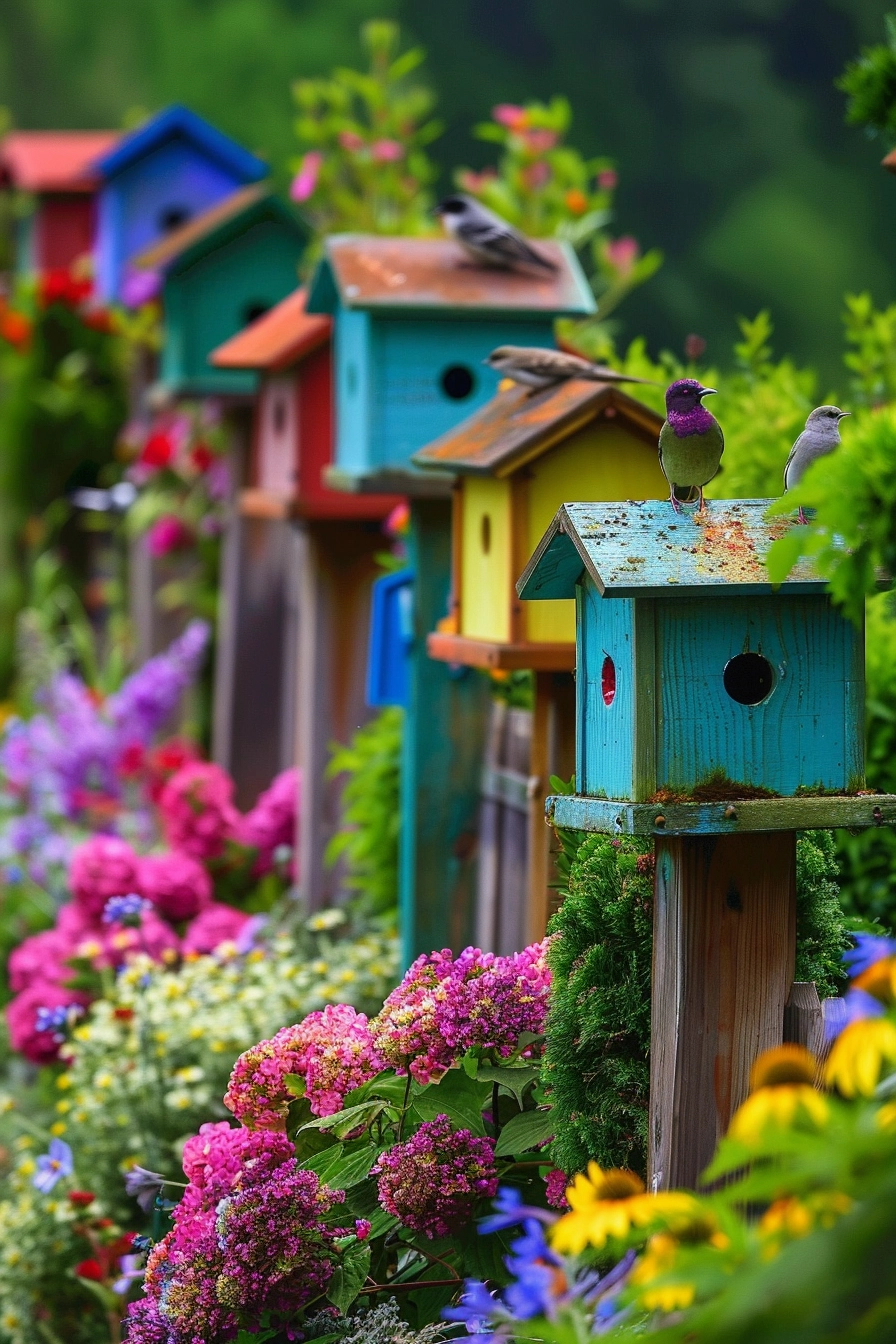
Birdhouses are the perfect intersection of architecture and nature. They provide a focal point in the garden while serving a critical function for local ecology. However, placing a birdhouse isn’t just about nailing a box to a tree; it requires the same attention to scale, placement, and functionality as any interior layout. For visual inspiration on how to integrate these structures into your garden, make sure to browse the Picture Gallery at the end of this blog post.
Whether you are working with a sprawling estate or a compact urban balcony, attracting nesting birds requires specific knowledge. In this guide, we will move beyond the aesthetics and dive into the specific dimensions, materials, and placement rules used by landscape professionals. We will turn your backyard into a sanctuary that is both beautiful to look at and safe for its inhabitants.
Understanding the Architecture: Form vs. Function
As designers, we love things that look good. However, in the world of birdhouses, function must always dictate form. I have seen countless decorative birdhouses sold at high-end home decor stores that are actually dangerous for birds.
Many “cute” cottages lack ventilation or drainage. Others have entry holes that are too large, inviting predators rather than songbirds. When selecting or building a house, you must prioritize the biological needs of the bird over the style of the roofline.
That said, you can absolutely find houses that achieve both. I recommend looking for structures that echo the architectural style of your main residence. A sleek, mid-century modern home pairs beautifully with a simple, cedar box with clean lines. A traditional farmhouse looks great with a rustic, pitched-roof design.
Designer’s Note: The Perch Problem
One of the most common design mistakes I see is the addition of a little wooden dowel perch below the entry hole. While it looks classic in cartoons, never buy a birdhouse with a perch. Nesting birds do not need them. Unfortunately, predators and invasive species use perches to gain easy access to the eggs inside. If you have a house with one, I recommend sawing it off and sanding the spot down.
Location Strategy: The Floor Plan of Your Garden
Placement is where most homeowners get it wrong. Just as you wouldn’t put a sofa facing a blank wall, you shouldn’t place a birdhouse without considering the sightlines and environmental factors.
Orientation Matters
In the Northern Hemisphere, the golden rule is to face the entry hole away from prevailing winds. Usually, this means facing the house East or Southeast. This orientation catches the morning sun to warm the birds after a cold night but avoids the scorching afternoon heat of the West.
Height and Spacing
Different species have different “zoning” requirements for their neighborhoods.
- Bluebirds: Prefer open spaces. Mount houses 5 to 6 feet off the ground, facing an open field or large lawn.
- Wrens: These birds are less picky and don’t mind being closer to human activity. They like hanging houses 6 to 10 feet up, often near brush or cover.
- Chickadees and Titmice: These species prefer the edge of the woods. Mount their houses 5 to 15 feet high in a tree or on a post near a tree line.
- Purple Martins: These are the high-rise dwellers. They need apartment-style housing on tall poles, usually 10 to 15 feet high, in the middle of a very open area.
Common Mistake + Fix
Mistake: Placing a birdhouse too close to a bird feeder.
Fix: This is the equivalent of putting a nursery in the middle of a busy kitchen. High traffic at feeders stresses nesting birds and attracts predators. Keep birdhouses at least 25 to 30 feet away from your feeding stations.
Materiality: Selecting Finishes That Last
In interior design, we talk about “honest materials.” This concept is critical for birdhouses. The material needs to breathe, insulate, and age gracefully without releasing toxins.
The Best Woods
Cedar: This is the gold standard. Rough-sawn cedar is naturally rot-resistant and insect-repellent. It weathers to a beautiful silvery-gray patina that blends with any landscape design.
Cypress: Similar to cedar, cypress is highly durable in wet conditions and repels water naturally.
Pine: An affordable option, but it will not last as long as cedar or cypress unless it is painted on the exterior.
Finishes and Paint
I generally advise clients to leave birdhouses natural. If you must paint them to coordinate with your exterior trim, follow these strict rules:
- Use water-based, non-toxic exterior latex paint.
- Only paint the exterior walls and roof.
- Never paint the inside of the house.
- Never paint the rim of the entry hole.
- Avoid dark colors like black, navy, or hunter green. These absorb heat and can cook the hatchlings during a hot summer. Stick to light grays, tans, or whites.
Metal and Plastic
Avoid metal roofs unless they are shaded or insulated with wood underneath. Metal acts as a radiator and can make the interior unbearable. Plastic houses generally lack breathability, leading to mold growth inside the nest, though some high-end recycled plastic lumber is becoming an acceptable, durable alternative if properly ventilated.
Species-Specific Dimensions: The Specs
In kitchen design, we have standard clearances for appliances. In birdhouse design, we have standard dimensions for specific birds. If the hole is too big, starlings or house sparrows will invade. If the floor is too small, the brood will be overcrowded.
Here are the standard “building codes” for the most common backyard tenants:
Eastern Bluebird
- Entry Hole: 1.5 inches in diameter.
- Floor Size: 5 inches by 5 inches.
- Height from Floor to Hole: 6 to 7 inches.
House Wren
- Entry Hole: 1 to 1.125 inches in diameter.
- Floor Size: 4 inches by 4 inches.
- Height from Floor to Hole: 3 to 6 inches.
Black-Capped Chickadee
- Entry Hole: 1.125 inches in diameter.
- Floor Size: 4 inches by 4 inches.
- Height from Floor to Hole: 6 to 8 inches.
Tree Swallow
- Entry Hole: 1.375 to 1.5 inches in diameter.
- Floor Size: 5 inches by 5 inches.
- Height from Floor to Hole: 6 to 7 inches.
Designer’s Note: The Renovation
If you have an existing birdhouse with a hole that has been chewed open by squirrels, you don’t need to throw it away. You can buy a metal “portal protector” at hardware stores. This is a metal plate sized correctly for specific birds that screws over the entrance, restoring the correct dimensions and preventing further damage.
Installation, Safety, and Maintenance
Once you have selected the perfect house and the right location, installation is the final step. This phase is about stability and predator proofing.
Mounting Systems
While hanging a birdhouse from a tree branch with a chain looks picturesque, it is not always the best choice. Houses that swing violently in the wind can damage eggs.
I prefer mounting houses on dedicated metal poles or 4×4 wooden posts. This allows for total stability. If you do hang a house, ensure it is heavy enough to minimize swaying, or use a wire to secure the bottom of the house to the trunk or another branch.
Predator Proofing
This is the unglamorous part of nature design that is absolutely vital. Raccoons, snakes, and cats are major threats.
- Baffles: Install a stovepipe baffle (a cylindrical metal tube) on the pole beneath the birdhouse. This physically prevents raccoons and snakes from climbing up.
- Roof Overhang: Ensure the roof extends at least 2 inches over the entry hole to make it difficult for cats or raccoons to reach in from above.
The Cleaning Schedule
A birdhouse is not a “set it and forget it” installation. Old nests can harbor mites, bacteria, and parasites.
- When to clean: late winter (February or March) before the new nesting season begins.
- How to clean: This is why you must buy a house with a hinged side or bottom. Open it up, remove the old nesting material, and brush out the interior.
- Sanitizing: If you suspect disease, wash with a solution of one part bleach to nine parts water, rinse thoroughly, and let it dry completely in the sun before closing it back up.
Final Checklist: What I’d Do in a Real Project
If I were hired to install a bird habitat in your backyard today, this is the exact workflow I would follow.
1. Site Analysis
I would stand inside your main viewing windows and identify the “view corridors.” I want the birdhouse to be visible from your favorite chair but located in a biologically appropriate zone (edge of woods or open lawn).
2. Selection
I would source a rough-sawn cedar birdhouse. I would check for drainage holes in the floor (at least four 1/4-inch holes) and ventilation slots under the roof eaves. I would verify the entrance hole size is exactly 1.5 inches for general songbird versatility.
3. The “Furnishings”
I would not just install the house; I would plant native shrubs nearby (about 10 feet away) to provide a “staging area.” Birds love to land in a bush to check for safety before flying into the nest. Serviceberry or Dogwood are excellent choices.
4. Installation
I would drive a metal pole into the ground, ensuring the house sits 5 feet high. I would install a cylindrical raccoon baffle immediately.
5. Finish
I would add a layer of mulch at the base of the pole to keep grass down, so you don’t have to use a weed whacker near the pole, which scares the birds.
FAQs
Q: Can I put multiple birdhouses in my yard?
A: Yes, but respect their territory. Most species are territorial and won’t nest close to a neighbor of the same species. Keep bluebird houses at least 300 feet apart. However, you can place a bluebird house and a wren house closer together (30 to 50 feet) as they don’t compete for the same food sources.
Q: How long does it take for birds to move in?
A: Patience is key. It often takes a full season for birds to trust a new structure. If the house is empty after two years, reconsider the location. It might be too sunny, too shady, or too close to traffic.
Q: Should I put food or nesting material inside the house?
A: No. Birds are very particular architects. They prefer to find their own twigs, grass, and moss. Putting material inside usually signals that the space is already occupied or dirty. Keep the interior completely empty.
Q: What do I do if I find a baby bird on the ground?
A: If it has feathers, it is a fledgling and is learning to fly. The parents are likely watching nearby. Leave it alone. If it is naked and eyes are closed, you can gently place it back in the nest if you can reach it safely. The myth that parents will reject a baby touched by humans is false; birds have a poor sense of smell.
Conclusion
Integrating birdhouses into your landscape design is one of the most rewarding home improvements you can make. It adds a layer of life and motion to your garden that static plants simply cannot provide.
By following these professional guidelines regarding scale, placement, and materials, you are doing more than decorating your yard. You are participating in habitat restoration and helping local populations thrive.
Start with one high-quality cedar box, mounted correctly. Watch the light, check the angles, and wait for the arrival of your first tenants. It brings a sense of accomplishment that rivals any kitchen renovation.
Picture Gallery


