
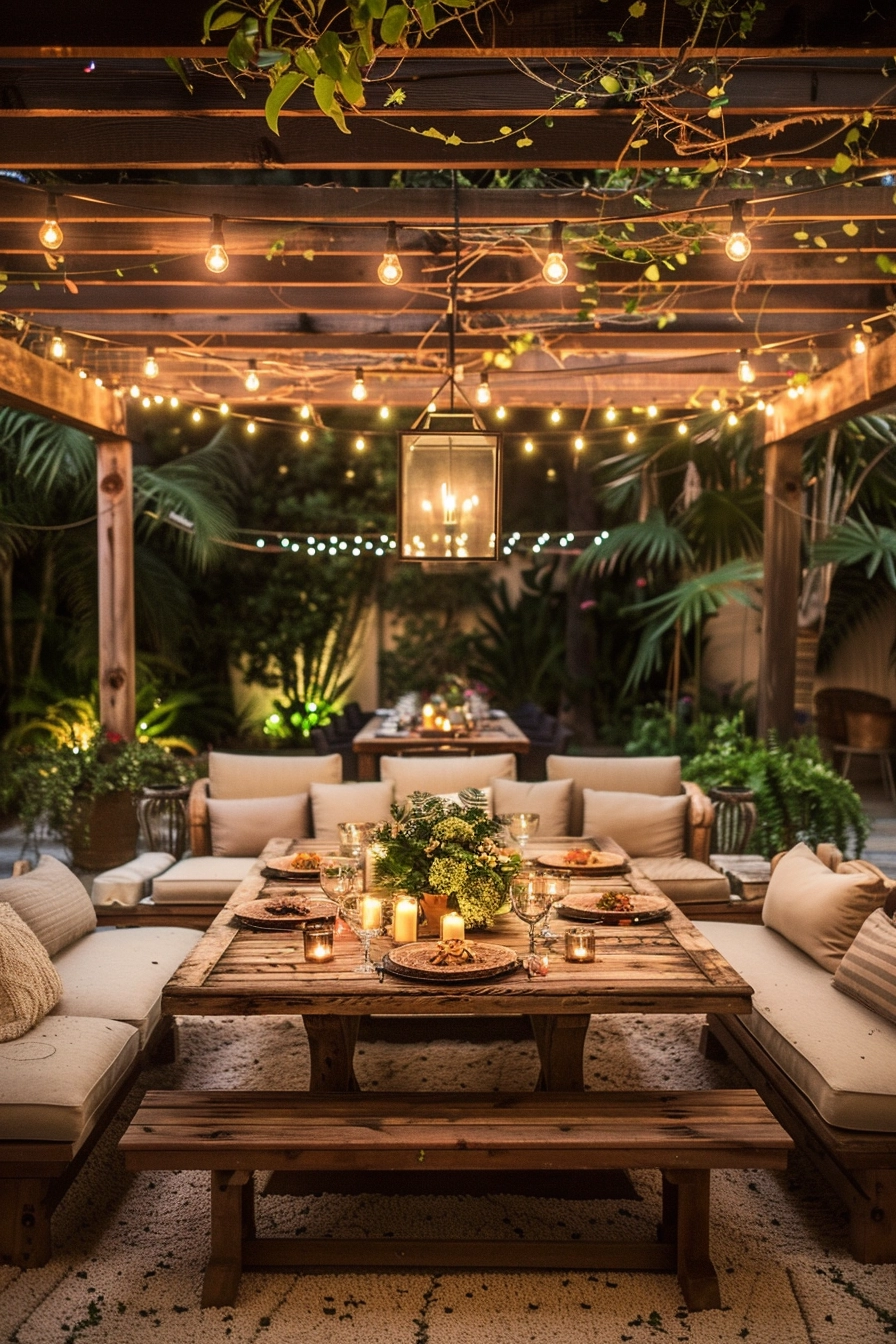
The Future of Backyard Design: Trends to Watch
Over the last decade, I have watched the concept of the “backyard” undergo a complete metamorphosis. We are no longer looking at a simple patch of grass and a concrete slab for a barbecue grill. Clients now approach me with floor plans that treat the exterior exactly like the interior, demanding the same level of comfort, zoning, and aesthetic rigor.
This shift is driven by a desire to reclaim square footage; when you design the outdoors correctly, you effectively add another room to your home without the cost of a structural addition. I recently worked with a family in a modest 1,500-square-foot home who felt cramped. By turning their small yard into a multi-tiered living space with a covered lounge and a dining zone, we changed how they lived entirely.
It is about intentionality, sustainability, and blurring the lines between where the house ends and nature begins. If you are looking for visual inspiration to go along with these tips, remember that a curated Picture Gallery is waiting for you at the end of this blog post.
Trend 1: The Seamless Indoor-Outdoor Transition
The biggest request I get in modern renovations is to make the transition from the living room to the patio invisible. We used to accept a clunky step down and a heavy sliding door as the standard. Now, the goal is flush thresholds and visual continuity.
To achieve this, material selection is paramount. If you have engineered white oak floors inside, I often recommend a porcelain paver outside that mimics that wood tone or a light travertine that matches the color temperature. This optical illusion makes the interior feel twice as big.
However, a major technical note here is the “flush threshold.” To have your indoor floor level perfectly match the outdoor deck or patio, you must account for drainage. You cannot simply pour concrete up to the door sill, or you will flood your living room during the first rainstorm.
Designer’s Note: The Drainage Reality
In a real project, achieving a flush look requires a linear drain (often called a slot drain) installed directly between the door track and the exterior hardscape. This captures water before it hits the interior subfloor.
Additionally, standard patio slope rules apply. We always grade the hardscape away from the house at a pitch of 1/4 inch per foot. If you skip this math, you will have puddling against your foundation.
Common Mistakes + Fixes
Mistake: Using indoor tiles outside to force a match.
The Fix: Never do this. Indoor tiles become ice rinks when wet. You must look for an outdoor-rated tile with a slip resistance rating of R10 or R11. Many manufacturers now make the same tile in two finishes: “Lappato” (smooth) for inside and “Grip” (textured) for outside.
Trend 2: The “Rewilding” and Anti-Lawn Movement
The days of the manicured, water-guzzling Kentucky Bluegrass monoculture are fading fast. Homeowners are realizing that a perfect green carpet requires immense chemical maintenance and water, which is neither budget-friendly nor environmentally sound.
The trend is moving toward “wildscaping.” This involves replacing turf with native ground covers, pollinator-friendly perennials, and clover mixes. This look is softer, more organic, and significantly lowers your maintenance hours.
From a design perspective, this adds incredible texture. Instead of a flat green plane, you get varying heights and seasonal color changes. It frames the hardscape much better than grass ever could.
Realistic Constraints: Kids and Pets
If you have high-energy dogs or toddlers, a pure wildflower meadow might not be practical. In these cases, I recommend “zoning” the softscape. Keep a dedicated patch of durable sod or high-quality artificial turf (look for thatch layers for realism) for play.
Surround that play zone with deep garden beds filled with native grasses like Fountain Grass or Sedge. This gives you the aesthetic of the rewilding trend without losing the utility of a play surface.
What I’d Do in a Real Project
- Layer the heights: I use the “thriller, filler, spiller” concept even in ground beds. Tall native shrubs in the back, mid-height perennials in the middle, and creeping ground cover (like Creeping Thyme) along the path edges.
- Choose clover: For a lawn alternative that can still take foot traffic, Microclover is fantastic. It requires less mowing, fixes nitrogen in the soil (free fertilizer), and stays green longer during droughts.
- Hardscape balance: Reduce the planting area by widening pathways. I like to use crushed granite or pea gravel walkways that are at least 48 inches wide. This reduces the amount of “lawn” you need to maintain while adding a lovely crunch underfoot.
Trend 3: Destination Zoning and Micro-Architecture
We are moving away from pushing all furniture up against the back of the house. The future of backyard design is about creating “destinations” further out in the property. This draws people into the landscape and maximizes the use of the entire lot.
Think of it as creating distinct rooms without walls. You might have a dining zone near the kitchen for convenience, but a lounge area with a fire pit positioned in the back corner.
To make these floating zones feel grounded, we use micro-architecture. This includes pergolas, shade sails, or even vertical slat walls to define the space. A couple of chairs on a lawn feels temporary; a couple of chairs under a pergola on a gravel pad feels like a room.
Pro-Level Rules of Thumb: Spacing
When laying out these zones, spacing is critical for flow. Here are the numbers I use in my CAD drawings:
- Dining Clearance: You need 36 inches of clearance from the edge of the dining table to the edge of the patio. This allows guests to slide their chairs back without falling off the pavers.
- Walkways: Main traffic paths should be 48 inches wide to allow two people to walk side-by-side. Secondary paths (like to a shed) can be 30–36 inches.
- Fire Pit Distance: For a wood-burning fire pit, keep seating 24–30 inches away from the flame edge. For gas, you can scoot closer, around 18–24 inches.
Designer’s Note: The Rug Rule
Just like indoors, an outdoor rug anchors the zone. The rule is the same: the front legs of all furniture pieces should sit on the rug. If you have a standard sofa and two club chairs, an 8×10 rug is usually the minimum. A 5×7 rug will look like a postage stamp and make the furniture feel disconnected.
Trend 4: The Rise of the Outdoor Wellness Spa
Since 2020, the demand for at-home wellness amenities has skyrocketed. We aren’t just talking about a swimming pool anymore. We are seeing requests for cedar saunas, cold plunge tubs, and dedicated yoga decks.
This trend is about privacy and sensory experience. The design challenge here is integration. A standalone hot tub often looks like a bulky plastic appliance dropped in the yard.
To fix this, I always recommend “building it in.” If budget allows, recess the hot tub partially into a deck so the rim sits about 18 inches above the floor. This makes it easier to get in and looks custom. If you can’t recess it, wrap it in the same material as your deck or a vertical timber slat screen to hide the acrylic shell.
Privacy Screening Techniques
You cannot relax if you feel like the neighbors are watching. However, installing a massive fence can feel claustrophobic.
Layered Screening: Instead of one tall fence, use layers.
1. The Backdrop: A standard 6-foot cedar fence.
2. The Green Screen: Plant clumping bamboo (non-invasive) or columnar hornbeam trees 2 feet in front of the fence.
3. The Foreground: A partial timber slat wall or a metal trellis closer to the spa area.
This creates depth and shadows, making the space feel larger while blocking sightlines from second-story windows next door.
Trend 5: “Dark Sky” Lighting and Smart Ambiance
The future of backyard lighting is subtle, warm, and smart. The old approach was blasting the yard with high-wattage security floodlights. The new approach is “moonlighting.”
Moonlighting involves placing fixtures high up in trees, aiming downward through the branches. This creates dappled, natural-looking shadows on the ground, mimicking the effect of a full moon. It provides safety without the harsh glare.
We are also seeing a move toward warm color temperatures. LED technology has improved, so we don’t have to settle for blue-white light.
Technical Specs for Lighting
- Color Temperature: Always specify 2700K or 3000K bulbs. Anything higher (4000K+) looks like a hospital operating room and is terrible for evening ambiance.
- Voltage: Low-voltage (12V) systems are the industry standard. They are safer to install and consume a fraction of the energy of line-voltage systems.
- Zoning: Put different lights on different circuits. Your path lights should be on a separate switch (or smart zone) from your dining pendant. You want the ability to dim the overhead lights while keeping the garden uplights bright.
Common Mistakes + Fixes
Mistake: The “Runway Effect.”
The Fix: This happens when you place path lights evenly on both sides of a walkway, looking like an airport landing strip. Instead, stagger the lights. Place one on the left, then move 6-8 feet down and place one on the right. Ideally, hide the fixture in a planting bed so you see the light pool on the path, not the hardware itself.
Final Checklist: What I’d Do in a Real Project
If I were consulting on your yard today, this is the exact order of operations I would follow to ensure the design is successful.
Phase 1: Analysis & Function
- Check the sun path. Where does the light hit at 5:00 PM (cocktail hour)? Place your lounge chair there.
- Identify the “ugly” views. Locate AC units, pool pumps, or neighbor’s windows that need screening.
- Determine the primary wind direction. This dictates where the fire pit goes so smoke doesn’t blow in your face.
Phase 2: Hardscape & Zoning
- Draw the zones on paper. Ensure the BBQ is close to the kitchen door (no one wants to carry raw meat 50 feet).
- Select materials that coordinate with the interior. If the house is brick, don’t introduce three new types of stone. Stick to a limited palette.
- Plan for utilities. Run conduit for electricity, gas, and irrigation before you pour any concrete.
Phase 3: Softscape & Decor
- Plant trees for shade and privacy first.
- Fill in with shrubs and perennials using the “Rule of Three” (plant in odd numbers for a natural look).
- Install furniture and lighting last. Ensure furniture fabrics are Solution-Dyed Acrylic (like Sunbrella) for fade resistance.
FAQs
How do I handle backyard design if I am a renter?
Focus on “lift-and-shift” landscaping. Use large planter pots to create privacy screens (bamboo in pots works great). Use outdoor rugs to cover unsightly concrete. String lights on shepherd’s hooks add ambiance without drilling into walls. Invest in high-quality furniture that you can take with you when you move.
What is the best budget-friendly material for patios?
Pea gravel or crushed granite is significantly cheaper than pavers or concrete. It provides a chic, European courtyard look. However, you must install proper edging (steel or stone) to keep the gravel contained, and lay down a heavy-duty weed barrier fabric underneath.
How do I design for a very small backyard?
Think vertically. Use the fences for vertical gardens or hanging herbs. Build bench seating into the perimeter walls to save space on bulky chairs. Use a large mirror on a fence (weatherproofed) to reflect light and trick the eye into thinking the space continues.
How often should I seal my outdoor wood furniture?
If you have Teak, you can let it weather to a silvery gray with zero maintenance. If you want to keep the honey-brown color, you need to seal it once a year. For softer woods like cedar or acacia, you must seal or stain them annually to prevent rot.
Conclusion
The future of backyard design is not about high-tech gadgets or expensive showpieces; it is about livability. It is about treating the outdoors with the same respect for flow, scale, and texture as the indoors.
Whether you are tearing up a lawn to plant a meadow, installing a slot drain for that seamless transition, or simply upgrading your lighting to a warmer hue, the goal is to create a space that pulls you outside. When done right, your home doesn’t just get bigger—it gets better.
Picture Gallery


