
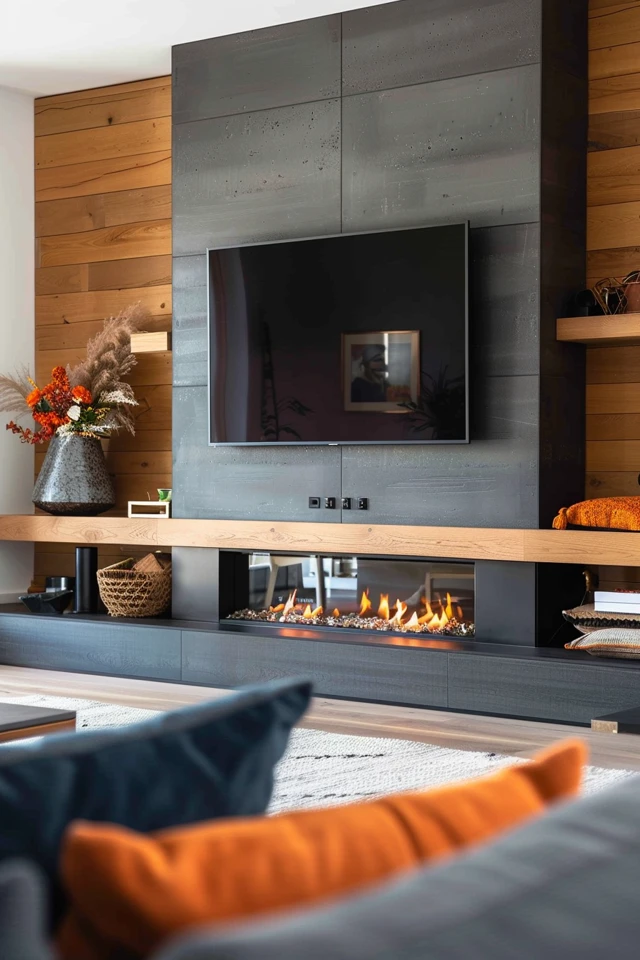
Transform Your Space with TV Fireplace Wall Ideas
Combining a television and a fireplace on the same wall is one of the most requested layout features in modern interior design. It solves the age-old dilemma of having two competing focal points in a single living room. However, executing this design requires careful planning to ensure the space feels cohesive rather than cluttered.
I remember my first project where a client insisted on mounting a massive screen directly above a roaring wood-burning hearth without a mantel. We had to have a serious conversation about heat displacement and neck strain, which are the two biggest killers of this design trend. For plenty of visual inspiration on how to balance these elements correctly, don’t miss the complete Picture Gallery included at the very end of this post.
Whether you are working with a sprawling open-concept living room or a cozy apartment den, the principles of scale and safety remain the same. This guide will walk you through the structural and aesthetic choices necessary to create a stunning media wall.
1. Mastering the Ergonomics: Height and Distance
The most common failure in TV fireplace walls is mounting the television too high. This creates an uncomfortable viewing angle that interior designers often jokingly refer to as the “front row at the movie theater” effect.
Your goal is to keep the center of the TV as close to eye level as possible. When seated, the average eye level is between 42 and 48 inches from the floor.
The Mounting Math
If you have a standard linear gas fireplace or an electric insert, you can keep the unit low to the ground. This allows the TV to sit at a comfortable height of roughly 60 inches on center. If you are dealing with a traditional wood-burning fireplace with a raised hearth, the TV will inevitably sit higher.
In these cases, I recommend a tilting mount. This allows you to angle the screen downward by 5 to 10 degrees, alleviating neck strain.
Viewing Distance Rules
The distance between your sofa and the wall dictates how large your screen can be without overwhelming the design.
- Minimum Distance: Place seating at least 1.5 times the diagonal measurement of the screen away from the wall.
- Example: For a 65-inch TV, your sofa should be roughly 8 to 9 feet back.
- Traffic Flow: Ensure you have at least 30 to 36 inches of walkway space between the coffee table and the fireplace hearth.
2. Selecting Materials for Visual Impact and Safety
The material you choose for the fireplace surround sets the tone for the entire room. This is where you can bridge the gap between the technology of the TV and the warmth of the fire.
Natural Stone and Tile
Large-format porcelain tile or slab stone (like granite or quartz) creates a sleek, modern aesthetic. Using large slabs minimizes grout lines, which keeps the visual noise low behind the TV screen.
If you prefer a rustic or farmhouse vibe, stacked stone is a classic choice. However, be mindful of the texture depth. Extremely jagged stone can make it difficult to mount the TV bracket flush against the wall.
Wood Slats and Shiplap
Vertical wood slats are currently trending for a reason. They add height to a room and provide texture without introducing chaotic patterns.
- Safety Note: If you are using combustible materials like wood directly above the firebox, you must check the manufacturer’s clearance requirements.
- The Fix: Often, you need a non-combustible mantel (like stone or metal) to deflect heat away from the wood and the television.
Drywall Bump-Outs
For a minimalist look, a simple drywall build-out painted the same color as the surrounding walls is effective. This is also the most budget-friendly option. It allows the firebox and the TV to be the stars of the show without competing with expensive cladding.
3. Managing Heat and Protecting Your Tech
Electronics and heat are enemies. When placing a TV above a heat source, you are risking damage to the screen’s internal components unless you take precautions.
The Mantel Defense
A mantel is not just decorative; it acts as a heat shield. It deflects the rising hot air out into the room rather than letting it roll directly up the wall and behind the TV.
I generally specify a mantel depth of at least 6 to 8 inches. This creates a sufficient barrier for most gas and electric fireplaces.
Recessing the TV
One of my favorite pro techniques is constructing a niche for the TV. By framing a recess into the wall, the front of the TV sits flush with the surrounding wall surface.
- Benefit 1: It looks custom and high-end.
- Benefit 2: The wall itself shields the edges of the TV from rising heat.
- Constraint: You need to ensure your wall framing is deep enough, usually requiring 2×6 studs or a false wall build-out.
Designer’s Note:
I once worked on a renovation where the client skipped the mantel to achieve a “seamless” look. Within two months, the bottom bezel of their expensive OLED TV began to warp from the heat of the gas fireplace. We had to retrofit a floating concrete shelf to save the screen. Always prioritize the manufacturer’s clearance specs over aesthetics.
4. Storage and Asymmetry: Breaking the Mold
While the stacked “TV-over-fireplace” look is symmetrical and orderly, it is not the only option. In fact, asymmetrical layouts often feel more organic and interesting.
The Offset Layout
If you have a very wide wall, consider placing the fireplace on one side and the TV on the other. This keeps the TV at the perfect eye-level height without heat concerns.
Balance the two elements by using visual weight. For example, if the fireplace is on the left, place the TV on the right, but add a floating hearth or a bench that runs the entire length of the wall to connect them.
Built-In Cabinetry
Storage is essential for hiding cable boxes, gaming consoles, and routers. Flanking the fireplace with built-in cabinetry is a timeless solution.
- Base Cabinets: Use closed doors at the bottom (approx. 30 inches high) to hide messy electronics.
- Open Shelving: Use the upper section for styled decor, books, and family photos.
- Depth: Ensure the cabinets are at least 15 to 18 inches deep to accommodate standard AV equipment.
The “Tech Closet”
For ultra-modern homes, we often route all HDMI and power cables through the walls to a completely different closet or pantry. This allows for a zero-clutter look where the TV appears to float with no visible boxes nearby.
5. Lighting the Feature Wall
Lighting makes or breaks a feature wall. You want to highlight the texture of your fireplace surround without creating glare on the TV screen.
Sconces
Wall sconces add a layer of ambient light and fill the dead space on either side of the TV.
- Placement: Mount sconces so the center of the fixture aligns with the center of the TV screen, or slightly above.
- Scale: Avoid tiny fixtures. If you have a 75-inch TV, you need substantial sconces (15+ inches tall) to hold their own.
LED Strip Lighting
If you are building a floating wall or shelves, integrate LED channels. Placing an LED strip behind the TV (bias lighting) reduces eye strain and improves perceived contrast on the screen.
Ensure you choose LEDs with a color temperature of 2700K to 3000K. Anything higher (4000K-5000K) will look like a sterile hospital waiting room and clash with the warm glow of the fire.
Recessed Directional Cans
Use gimbal (adjustable) recessed lights in the ceiling to wash light down the front of the fireplace stone. Position them roughly 18 to 24 inches away from the wall to emphasize the texture of the material.
Common Mistakes + Fixes
Mistake: The “Black Box” Dominance
When the TV is off, it looks like a giant black void that sucks the energy out of the room.
The Fix: Use a television that displays art when idle, such as the Samsung Frame. Alternatively, paint the wall behind the TV a dark charcoal or navy. This camouflages the screen and makes the room feel moodier and cozier.
Mistake: Ignoring Cable Management
Dangling wires are the fastest way to ruin a high-end design.
The Fix: Install a “smurf tube” (conduit) inside the wall before drywall goes up. This creates a permanent tunnel for you to fish HDMI cables through. If you are renting or can’t cut into the wall, use paintable cord covers that run along the corner of the mantel.
Mistake: Wrong Rug Size
Often, people push the rug right up to the hearth, which looks cramped.
The Fix: Leave about 12 to 18 inches of exposed floor between the hearth and the edge of the area rug. This defines the “fire zone” and prevents the rug from becoming a tripping hazard or getting damaged by stray embers (if wood-burning).
What I’d Do in a Real Project: A Mini Checklist
If I were designing your living room today, here is the exact mental checklist I would run through to ensure success:
1. Verify the heat source.
Is it a cool-touch electric unit, or a high-BTU gas unit? This dictates the mantel requirement immediately.
2. Check the stud locations.
The TV mount and the mantel need to be anchored into solid wood, not just drywall anchors. I would mark these out with blue tape before buying anything.
3. Select the “Feature” material.
I would choose a matte finish tile or stone. Polished surfaces reflect the light from the TV and the windows, creating distracting reflections.
4. Plan the power.
I would hire an electrician to install a recessed outlet box directly behind where the TV will mount. I would also add an outlet inside the lower cabinetry for the cable box.
5. Scale the decor.
I would place only 2 or 3 large items on the mantel. A collection of twenty small trinkets looks like clutter next to a large TV.
Frequently Asked Questions
How high should a mantel be above a fireplace?
The National Fire Protection Association (NFPA) and local codes dictate this, but generally, a mantel should be at least 12 inches above the firebox opening. However, if the mantel projects further out into the room, it often needs to be mounted higher. Always check your specific fireplace manual.
Can I put a TV above a wood-burning fireplace?
Yes, but it is the riskiest option. Wood fires produce soot, ash, and inconsistent heat spikes. You absolutely need a deep, non-combustible mantel. I also recommend inspecting your chimney flue to ensure no smoke back-drafts into the room, which will ruin the TV electronics instantly.
What do I do if my room is narrow?
If you have a narrow room, avoid a deep built-out fireplace. Choose a linear electric fireplace that can be recessed into a standard 2×4 wall. This saves you 15 to 20 inches of floor space compared to a traditional masonry build.
Is it okay to put a TV in front of a window if I don’t have wall space?
While not ideal, sometimes it is necessary. If you must do this, do not block a fireplace. If the fireplace is on the only solid wall, use the layout ideas above. If you must block a window, use floor-to-ceiling drapes behind the TV to frame it and control the daylight entering the room.
Conclusion
Creating a feature wall that houses both a TV and a fireplace is about finding the sweet spot between function and beauty. You want the warmth and ambiance of the fire without sacrificing the comfort of your Netflix binges.
By focusing on the correct mounting height, managing heat output, and choosing materials that complement your home’s style, you can transform a plain wall into the heart of your home. Remember to plan your wiring early and keep the styling simple to let the architecture speak for itself.
Picture Gallery


