
Transforming Basements: Very Low Ceiling Ideas
Walking into a basement with a low ceiling can instantly make you feel like you need to duck, even if you have plenty of clearance. I recently worked on a 1920s bungalow renovation where the basement height was barely six feet, eight inches. The homeowner wanted a media room, but the space felt more like a storage bunker than a cozy retreat.
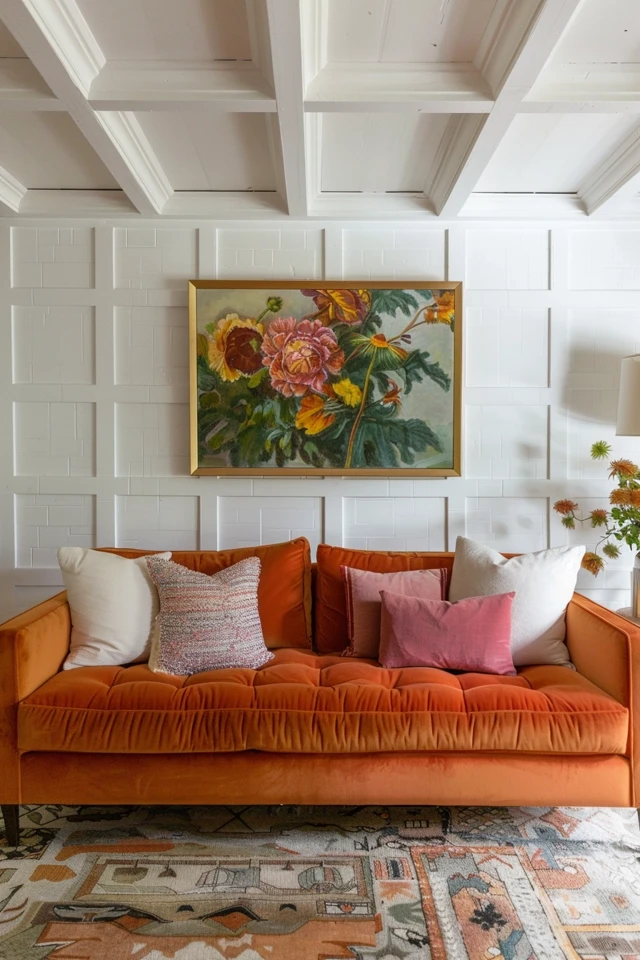
The secret to fixing this isn’t physically raising the roof, which is often structurally impossible or prohibitively expensive. The solution lies in manipulating scale, lighting, and vertical lines to trick the eye. For visual inspiration on how these concepts come together, be sure to check out the Picture Gallery at the end of this blog post.
We turned that cramped bungalow basement into the family’s favorite room by focusing on “low-slung” living and strategic lighting. If you are dealing with drop ceilings, bulky ductwork, or just a naturally short room, you can still create a space that feels airy and premium. It requires strict adherence to design rules regarding proportion and a refusal to use standard “big box” furniture layouts.
1. Structural Strategies: Manipulating the Envelope
Before we bring in furniture, we have to address the shell of the room. In a low-ceiling basement, every inch of vertical space is currency. The biggest mistake I see is homeowners installing thick drywall ceilings or traditional drop ceilings that steal another three to four inches of height.
If your ceiling is under seven feet, consider exposing the joists. This is often called an “industrial” or “loft” look, but when painted correctly, it works for farmhouse and modern traditional aesthetics too. By removing the drywall, you often gain six to eight inches of visual height between the beams.
The “Mechanical Camouflage” Technique
If you choose to expose the joists, you will likely see pipes, wires, and ductwork. The best approach is to spray paint the entire ceiling—joists, subfloor, pipes, and wires—in a single matte color.
- Matte White: This reflects the most light and makes the ceiling disappear, making the room feel significantly taller.
- Matte Black or Charcoal: This creates an “infinity effect.” Because the eye cannot easily define where the ceiling stops, the darkness creates a sense of depth rather than compression. This is ideal for theater rooms.
If you must use a finished ceiling for soundproofing, look into “direct mount” ceiling tiles or simply drywalling directly to the joists with 1/4-inch drywall rather than the standard 1/2-inch or 5/8-inch, provided local fire codes allow it.
Designer’s Note: The Bulkhead Dilemma
You will inevitably have bulkheads (boxed-in ductwork) that hang even lower than the main ceiling. Do not paint these a contrasting color. Paint them the exact same color as your walls, not the ceiling. If you paint a low bulkhead white like the ceiling, it visually brings the ceiling down. If you paint it like the wall, it feels like a structural architectural element rather than an intrusion.
2. Lighting: The Game Changer
Lighting is the single most critical factor in a basement with low clearance. You absolutely cannot use standard pendants or chandeliers. Anything hanging down into the sightline will chop the room in half and induce a subconscious “ducking” reflex in your guests.
We rely on “canless” recessed LED wafer lights. These are ultra-thin (often less than half an inch) and do not require bulky housing in the ceiling joists. This allows you to install lights exactly where you need them, even right under a duct.
The Layering Rule
Relying solely on overhead cans causes harsh shadows that highlight the low ceiling height. You must layer your lighting to draw the eye horizontally.
- Wall Sconces: Install uplighting sconces. These shoot light up toward the ceiling, bouncing it back down and visually lifting the roof.
- Floor Lamps: Use lamps that are proportional (around 58-60 inches tall). Avoid towering 70-inch lamps that touch the ceiling.
- LED Strip Lighting: Hide LED strips on top of cabinetry or bookshelves to cast a glow upward.
Common Mistakes + Fixes
Mistake: Using 5000K “Daylight” bulbs to make the basement brighter. This creates a clinical, hospital-like waiting room vibe.
Fix: Stick to 3000K (warm white) bulbs. They are bright enough to see but warm enough to feel like a living room. Use dimmers on every single switch. Basements need versatility.
3. Furniture Scale and “Low-Slung” Profiles
Scale is where most DIY basement projects fail. If you put a standard, overstuffed sectional with a high back into a room with a seven-foot ceiling, the furniture will look massive, and the room will look miniature. You must trick the brain by altering the scale of the furnishings.
We use what I call “Low-Slung” design. By keeping the furniture profile low, you increase the amount of empty space between the top of the sofa and the ceiling. This negative space is what your brain interprets as “room height.”
Key Measurements for Furniture
- Sofa Back Height: Look for sofas with a back height of 28 to 32 inches. Avoid anything over 34 inches.
- Seat Height: Standard is 18 inches, but 16 or 17 inches works well here to keep the profile low.
- Media Consoles: Choose long, low consoles (under 22 inches high). This emphasizes the width of the room rather than the lack of height.
This approach is particularly friendly for renters who cannot change the lighting or ceiling structure. Changing the furniture profile is completely non-invasive.
What I’d Do in a Real Project
If I am designing a basement lounge, I almost always spec a modular “pit” sectional with a low back. I pair this with a coffee table that sits slightly lower than the sofa seat (around 14-16 inches high). This forces the center of gravity down, making the ceiling feel feet away rather than inches.
4. Verticality and Wall Treatments
Since we lack vertical space, we have to manufacture it. We do this by emphasizing vertical lines on the walls. Your eye naturally follows lines; if the lines go up, your brain registers “height.”
Vertical shiplap or beadboard is a fantastic tool here. Unlike horizontal shiplap, which widens a room, vertical paneling draws the eye upward. Even a subtle pinstripe wallpaper can achieve this effect without structural work.
Window Treatments
Basement windows are usually small, high rectangles. Do not treat them strictly as they are. Install curtain rods as close to the ceiling as possible—literally touching the crown molding or ceiling paint line.
The drapes should hang all the way to the floor, “kissing” the carpet or laminate. This creates a long vertical column of fabric. Even if the window is only 18 inches tall, the curtain implies a full-height window exists behind it.
Art Placement
Hang art slightly lower than you would upstairs. Upstairs, we hang art so the center is at 57-60 inches. In a low basement, dropping that center point to 54-56 inches keeps the art connected to the low furniture and leaves more breathing room above the frame.
5. Flooring Choices to Maximize Inches
In a basement, you are fighting for every fraction of an inch. Traditional hardwood requires a subfloor and the plank thickness, which can eat up to 1.5 inches of height. While that sounds negligible, it matters when you are clearing a doorway header.
Luxury Vinyl Plank (LVP) is the industry standard for basements now. It is incredibly thin (usually 5mm to 8mm), waterproof, and floats directly over the concrete slab (with a vapor barrier).
Rug Strategy
Do not skip rugs just because it’s a basement. A rug defines the zone. However, keep the rug pile low. A thick shag rug adds visual bulk.
Sizing Rule: Ensure the front legs of all furniture sit on the rug. The rug should extend 12 to 18 inches beyond the sofa on the sides. A rug that is too small (floating in the middle of the room) creates a “postage stamp” effect that makes the room feel cheaper and smaller.
6. Color Theory: The Box Effect
There is a prevailing myth that small or low rooms must be painted white. While white reflects light, it also highlights shadows in the corners, which define the limits of the room.
For a cozy, den-like atmosphere, consider “color drenching.” This involves painting the baseboards, walls, and potentially even the ceiling the same color. When the trim matches the walls, you remove the visual “racing stripes” that outline the room’s dimensions.
The Monochromatic Approach
If you aren’t ready to paint the ceiling a color, try painting the walls and trim a mid-tone gray, greige, or blue, and keep the ceiling bright white. However, ensure your wall paint extends all the way up. Do not install wide crown molding. Wide crown molding draws a heavy line at the top of the room, instantly capping the height.
If you must use crown molding, paint it the same color as the walls, not the ceiling. This tricks the eye into thinking the wall continues higher than it actually does.
Final Checklist for Low-Ceiling Basements
Before you start buying paint or furniture, run your plan through this checklist to ensure you aren’t accidentally shrinking your space.
- Lighting Check: Have I removed all hanging fixtures? Am I using 3000K recessed wafer lights?
- Furniture Height: Is my sofa back height under 32 inches? Is my media console low profile?
- Verticality: Do I have vertical elements (drapes, paneling, tall mirrors) to draw the eye up?
- Ceiling Finish: If exposed, is it sprayed one color? If drywalled, is it free of heavy textures?
- Curtain Rods: Are they mounted at the ceiling line, not just above the window frame?
- Door Clearance: Have I checked that my new flooring won’t jam the doors or reduce clearance too much?
FAQs
Can I put a ceiling fan in a low basement?
It is difficult but possible. You must use a “flush mount” or “hugger” ceiling fan specifically designed for low clearance. Look for fans with a total drop height of less than 10 inches. For safety, the blades should be at least 7 feet off the floor. If your ceiling is lower than 7’6″, consider using oscillating wall-mounted fans or floor fans instead to avoid safety hazards.
What creates the illusion of height better: light or dark floors?
Generally, a lighter floor reflects more light, which helps the overall airiness of a basement. However, a slightly darker floor can “ground” the room, allowing the furniture and walls to feel lighter in comparison. I usually recommend a medium-tone white oak LVP. It hides dust better than dark floors and feels warmer than stark white floors.
How do I handle support columns in the middle of the room?
Do not try to hide them with oversized drywall boxes; this makes them look thicker. Wrap them tightly in wood or paint them to match the walls. If you have two columns, you can build a bar or a high-top table between them to turn the structural annoyance into a deliberate design feature.
Is it okay to use large artwork in a small basement?
Yes, absolutely. One large piece of art is far better than a “gallery wall” of small cluttered frames in a low room. A large canvas acts like a window, providing a focal point that distracts from the ceiling height. Just ensure the frame is sleek and not overly ornate.
Conclusion
A low ceiling does not condemn your basement to being a storage locker. By shifting your mindset from “hiding the flaws” to “embracing the cozy factor,” you can create a space that feels intentional and high-end. The goal is to direct the eye where you want it to go—toward beautiful lighting, comfortable low-profile furniture, and vertical accents—rather than letting it dwell on the ceiling height.
Start with your lighting plan, as that will make the biggest immediate impact. Then, select furniture that respects the scale of the room. With these adjustments, you will find that the lack of height actually contributes to a sense of warmth and security that you just can’t get in a vaulted living room.
Picture Gallery


