
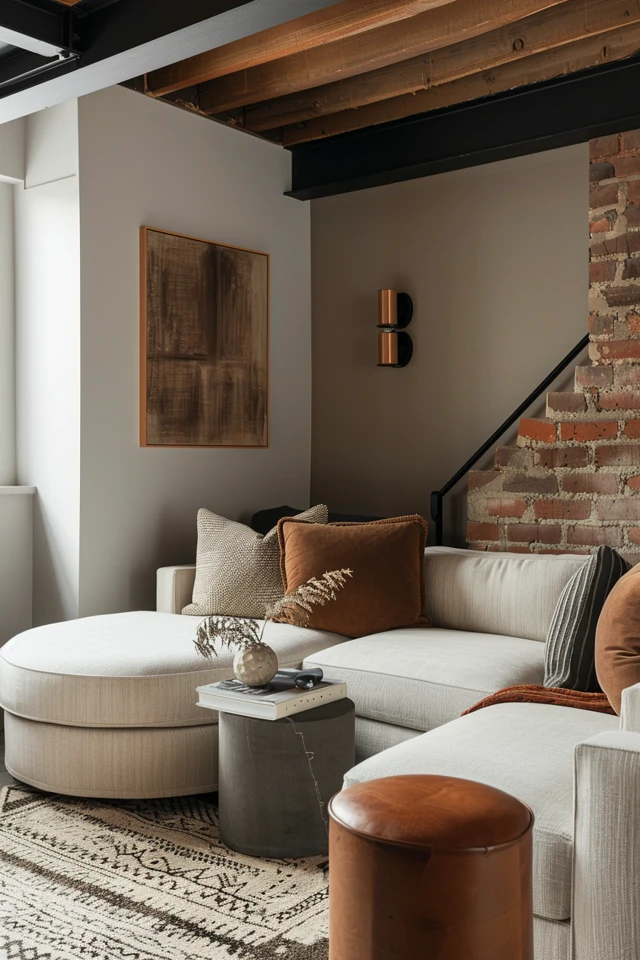
Transforming Tiny Basements: Low Ceiling Small Basement Ideas
Introduction
I once walked into a client’s basement project that felt more like a utility tunnel than a living space. The ceilings were barely seven feet high, visible ductwork ran aggressively through the middle of the room, and the single egress window let in a sliver of gray light. The homeowner was convinced the space was destined to remain a storage dungeon, but I saw an opportunity to create something intimate and grounded.
The secret to basement design isn’t fighting the architecture; it is about manipulating the eye and understanding human scale. When you stop trying to force a standard living room layout into a subterranean space and start designing for the specific constraints of height and light, the results can be incredibly cozy. If you want to see completed examples of these transformations, be sure to check out the Picture Gallery at the end of this blog post.
In this guide, I will walk you through the exact methods I use to trick the eye into perceiving more height and space. We will cover everything from the specific paint finishes that blur boundaries to the furniture measurements that prevent a room from feeling crowded. Let’s turn that cramping constraint into your favorite room in the house.
Strategic Paint and Finish Selection
The most common question I get regarding low basements is whether to paint the ceiling white or dark. The answer depends entirely on your goal, but there is a third option that often works best for small footprints: color drenching.
The Case for Color Drenching
Color drenching involves painting the walls, the baseboards, the crown molding (if you have it), and the ceiling the exact same color. When you have a sharp contrast between a wall color and a white ceiling, you draw a hard line that highlights exactly where the room ends.
By wrapping the room in a single hue, you blur those boundaries. In a small basement, I often use a soft, warm neutral like a “greige” or even a moody charcoal if we are aiming for a media room vibe. This technique makes the corners disappear and creates an enveloping, infinity effect.
Managing Sheen Levels
In a basement with low ceilings, light reflection is your friend, but glare is your enemy. A glossy ceiling will reflect light, but it will also highlight every imperfection in the drywall and every undulation in the joists.
For the walls, I recommend a high-quality matte or eggshell finish. For the ceiling, stick to a flat finish. This absorbs the “texture” of the ceiling while allowing the color to recede visually. If you are painting exposed pipes or ductwork, use a dry-fall flat paint in the same color as the ceiling to make them disappear into the background.
Designer’s Note: The “White Box” Trap
A common mistake is assuming that painting everything bright white will make a basement feel bigger. In a space with little natural light, white paint can actually look gray, dingy, and shadowy.
The Fix: If you want a light color, choose a white with warm undertones (like Sherwin Williams Alabaster or Benjamin Moore Swiss Coffee). The warmth compensates for the cool, blue-tinted light that typically filters into basements.
Lighting Layers for Height and Depth
Lighting is the single most critical element in a low-ceiling basement. If you rely on a single grid of recessed pot lights, you will create the dreaded “Swiss cheese” effect on your ceiling and cast harsh shadows that make the floor feel lower.
Recessed Lighting Rules
You likely need recessed lighting for general illumination, but the placement matters. Avoid placing cans in a grid pattern that highlights the center of the room. instead, push them toward the perimeter of the room to wash the walls with light.
Use 3-inch or 4-inch gimbal fixtures rather than the standard 6-inch cans. Smaller fixtures feel more proportional to a lower ceiling. Ensure you are using 3000K (warm white) bulbs; 4000K or 5000K often feels too clinical and reminiscent of an office or hospital.
The Power of Uplighting
Since we cannot rely on pendant lights or chandeliers that hang down and eat up headspace, we must use light to push the ceiling up visually. Uplighting is my secret weapon here.
Floor lamps that direct light toward the ceiling bounce illumination off the surface, making the room feel taller. Sconces are also excellent, but mount them slightly higher than standard—about 66 to 70 inches off the floor—to draw the eye upward.
Common Mistakes + Fixes
Mistake: Installing a ceiling fan with a light kit in a 7-foot room.
Fix: If air circulation is non-negotiable, use a “hugger” style fan that mounts flush to the ceiling. Better yet, rely on a high-quality floor fan and keep the ceiling plane clean.
Mistake: Using only overhead lighting.
Fix: Layer your lighting. Aim for three sources: overhead (ambient), table/floor lamps (task), and accent lights (picture lights or LED strips in shelving).
Furniture Scale and “Low-Slung” Profiles
In a room with limited vertical space, standard furniture can look like it is hulking over you. To make the ceiling feel higher, you need to bring the furniture lower. This changes the ratio of empty space above the furniture, tricking the brain into perceiving a taller room.
The “Low-Slung” Aesthetic
Look for sofas and armchairs with a back height of 28 to 32 inches. Mid-century modern designs are particularly good for this, as they tend to have lower profiles and clean lines.
Avoid overstuffed, marshmallow-style sectionals. They eat up visual volume. Instead, choose pieces with tight backs (no loose cushions to fluff) and track arms.
Legs vs. Skirts
In a small basement, you want to see as much floor as possible. Furniture that sits on legs allows light to pass underneath it, making the footprint feel larger.
Avoid skirted sofas or heavy recliners that sit directly on the floor. Seeing the flooring continue under the sofa helps the brain register the full dimensions of the room.
What I’d Do in a Real Project
- Sofa: I would source a low-profile sectional with a back height of 30 inches.
- Coffee Table: I would choose a glass or acrylic table, or a set of nesting tables. Transparency reduces visual clutter.
- Media Console: I would mount a floating unit on the wall rather than buying a heavy cabinet. This keeps the floor clear.
Verticality and Optical Illusions
Since we lack actual height, we have to manufacture it through vertical lines. Your eye naturally follows lines; if you emphasize the horizontal, the room feels wider but shorter. If you emphasize the vertical, the ceiling lifts.
Window Treatments
Even if you have small, high “hopper” windows, do not install short curtains or blinds that sit inside the frame. This highlights how small the window is.
Install a curtain rod as close to the ceiling (or bulkhead) as possible. Run the drapery panels all the way to the floor. Even if the window is only 18 inches tall, the floor-to-ceiling fabric creates a strong vertical column that adds elegance and height.
Wall Treatments
Vertical shiplap, beadboard, or wood slats are excellent choices for basements. The vertical grooves act as arrows pointing upward.
If you prefer wallpaper, choose a subtle vertical stripe or a pattern with upward movement (like climbing vines). Avoid heavy horizontal stripes, which will make the room feel like it is crushing down on you.
The Magic of Large Mirrors
Mirrors are the oldest trick in the book, but they work. In a basement, do not just hang a small mirror over a console. Lean a large, floor-length mirror against a wall.
This serves two purposes: it acts as a “fake doorway” or window, suggesting space beyond the wall, and it bounces light around the dark room.
Flooring and Rugs: Grounding the Space
The floor is the foundation of your design, and in a basement, it presents specific challenges regarding temperature and moisture.
Material Selection
I almost exclusively use Luxury Vinyl Plank (LVP) for basement projects. It is waterproof, durable, and thin. Why does thinness matter? Hardwood or engineered wood requires a subfloor that can eat up to an inch or more of your precious ceiling height. LVP can often be installed directly over concrete with a vapor barrier, saving you headroom.
Select a light to medium wood tone. Dark floors can be cozy, but in a small, low room, they can create a “black hole” effect that absorbs all your light.
Rug Sizing Rules
A common error in small rooms is using small rugs. A 5×7 rug floating in the middle of a room makes the space look disjointed and smaller.
Rule of Thumb: Choose a rug large enough that at least the front legs of all your seating furniture sit on it. Ideally, leave about 10 to 12 inches of bare floor visible around the perimeter of the room. This border defines the zone without cramping it.
Designer’s Note: Pattern Play
If you keep your walls and large furniture neutral, the rug is a great place to introduce pattern. However, keep the scale of the pattern in mind. A massive, sprawling pattern can overwhelm a small room. A tight, geometric pattern or a vintage-style faded weave adds texture without dominating the space.
Final Checklist: The Basement Transformation Plan
Before you buy a single gallon of paint or order a sofa, run through this checklist to ensure you are addressing the unique constraints of your low-ceiling basement.
1. Assessment Phase
- Measure the lowest point of the ceiling (usually under ductwork). This is your maximum clearance.
- Identify moisture issues. Tape a 2×2 foot piece of plastic to the concrete floor for 24 hours. If it’s wet underneath, seal the concrete before installing flooring.
- Map out the lighting grid to avoid casting shadows in prime seating areas.
2. Design Phase
- Select a paint palette. Decide between light/bright (warm whites) or moody/cozy (color drenching).
- Choose low-profile furniture. Check spec sheets for heights under 32 inches.
- Plan for vertical storage. Tall, shallow bookcases utilize height without eating floor space.
3. Styling Phase
- Mount curtain rods at the ceiling line, not the window line.
- Place mirrors opposite light sources (windows or sconces).
- Layer lighting with floor lamps and table lamps to banish dark corners.
FAQs
Q: Can I use dark paint in a basement with no windows?
A: Absolutely. In fact, dark paint can be more effective than white in a windowless room. White paint needs natural light to bounce around to look “bright.” Without it, white looks gray. A deep navy, charcoal, or forest green embraces the lack of light and creates a sophisticated, theater-like atmosphere.
Q: How do I hide ductwork without lowering the whole ceiling?
A: Build “soffits” or bulkheads only around the ducts, rather than dropping the entire ceiling. Alternatively, paint the exposed ducts the same matte color as the ceiling. This camouflage technique is very effective and preserves the maximum height in the rest of the room.
Q: What is the best flooring for a cold basement?
A: While carpet is warm, it traps moisture and allergens. I recommend Luxury Vinyl Plank (LVP) with a cork underlayment for warmth. You can then add large, high-pile wool rugs for softness and warmth underfoot where you actually sit.
Q: My basement feels damp. Will that ruin my design?
A: It can. Before bringing in furniture, run a high-capacity dehumidifier to stabilize humidity levels between 30-50%. Avoid materials like untreated wicker or natural jute, which can harbor mold. Stick to synthetic blends or treated wool for rugs.
Conclusion
Transforming a small, low-ceiling basement is not about pretending it is a soaring loft; it is about leaning into the coziness that a smaller volume provides. By respecting the scale of your furniture, layering your lighting to lift the ceiling, and using vertical lines to guide the eye, you can create a space that feels intentional rather than compromised.
Remember that some of the best rooms in interior design are the ones that feel enveloping and secure. Your basement has the potential to be the most relaxing retreat in your home—a place where the architecture hugs you rather than cramps you. Take these rules, measure twice, and reclaim your square footage.
Picture Gallery


