
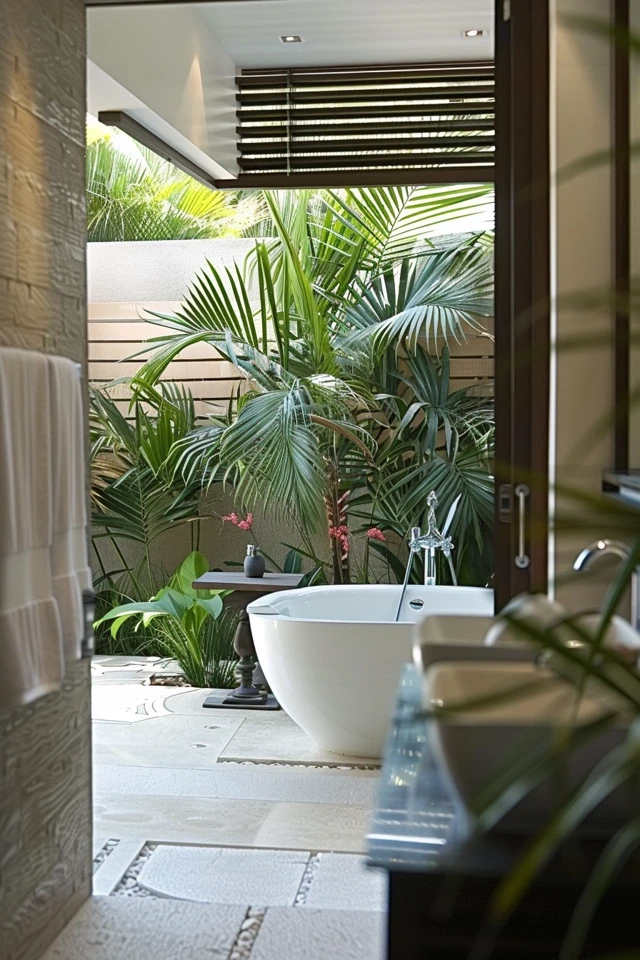
Tropical Bathroom Ideas for a Serene Home Oasis
There is something undeniably restorative about stepping into a bathroom that feels like a private villa in Bali or a secluded retreat in Costa Rica. By blending natural textures, lush greenery, and spa-like features, you can transform a strictly utilitarian space into a daily escape. For a visual dose of inspiration, be sure to scroll to the bottom of this page where I have curated a stunning Picture Gallery of tropical bathroom concepts.
Achieving this look requires more than just slapping up some palm-leaf wallpaper; it requires a thoughtful balance of hard and soft materials. You want to evoke warmth and humidity without creating a maintenance nightmare or a space that feels kitschy.
In this guide, I will walk you through the structural and decorative elements required to build a sophisticated tropical sanctuary. We will cover everything from selecting humidity-resistant woods to lighting schemes that mimic the golden hour of the tropics.
1. Laying the Foundation: Materials and Color Palettes
The difference between a high-end tropical design and a themed room often comes down to the base materials. In a tropical bathroom, the goal is to blur the lines between indoors and outdoors using organic textures.
Start with your hard surfaces. Natural stone, such as travertine, slate, or limestone, provides an earthy, grounded feel that porcelain simply cannot replicate. If natural stone is out of the budget, look for large-format porcelain tiles (24×24 inches or larger) with a high-definition stone print and a matte finish to minimize slip hazards.
For the color palette, move beyond standard white. Deep forest greens, terracotta oranges, and sandy beiges create a warm envelope. I often recommend painting the ceiling a shade darker than the walls in high-ceilinged bathrooms to create a cozy, canopy-like effect.
The Role of Wood
Wood is essential for warming up the cool surfaces of a bathroom, but moisture is its enemy. In a tropical design, you want to use dense, oily woods that naturally repel water. Teak, Ipe, and Bamboo are your best options here.
If you are renovating, a floating teak vanity is a showstopper. If you are renting or on a budget, incorporate wood through accessories like a bamboo bath mat or a teak shower bench.
Designer’s Note: The Reality of Wood in Bathrooms
I learned this the hard way early in my career: never use standard pine or oak in a bathroom without heavy marine-grade sealing. The humidity fluctuations will cause warping within a year. Always verify that your vanity is constructed from solid teak or a high-quality marine-grade plywood with a moisture-resistant veneer. Solid wood moves; engineered wood stays stable.
Common Mistakes + Fixes: Material Selection
- Mistake: Using polished marble on floors.
- Fix: While it looks luxurious, polished marble is a slipping hazard and etches easily with acidic cleaners. Swap it for honed limestone or textured ceramic tile with a DCOF (Dynamic Coefficient of Friction) rating of 0.42 or higher for safety.
- Mistake: Overusing “tropical” colors.
- Fix: Avoid painting every wall bright turquoise. Use neutrals for 80% of the room (walls, floors) and save the bold greens or corals for the remaining 20% (cabinetry, towels, accent tiles).
2. Bringing the Outdoors In: Plant Selection and Placement
You cannot have a tropical bathroom without living greenery. Plants not only reinforce the aesthetic but also thrive in the naturally humid environment of a bathroom. However, not all plants will survive the unique lighting conditions of this space.
Placement is just as important as selection. You want to create layers of height. Place a tall plant in a corner, trailing plants on shelves, and a small potted plant on the vanity. This mimics the dense, multi-level growth found in a rainforest.
Low-Light Champions
Most bathrooms have small windows or frosted glass, meaning light levels are low. For these spaces, rely on the Snake Plant (Sansevieria) or ZZ Plant. Both are virtually indestructible and add vertical architectural interest.
Pothos and Heartleaf Philodendron are excellent for high shelves or hanging baskets. They will trail down, softening hard edges of mirrors or cabinetry.
Bright-Light Beauties
If you are lucky enough to have a skylight or a large window, you can support true tropical heavyweights. A Monstera Deliciosa loves bright, indirect light and humidity. Its massive split leaves are the ultimate symbol of tropical design.
Another excellent option is the Majestic Palm, but ensure you have the floor space. You generally need a 3-foot diameter clearance for a healthy floor plant so it does not crowd the walkway.
What I’d do in a real project:
- Shower Ledges: I always design a shower niche specifically for a fern or eucalyptus bunch. The humidity keeps them happy.
- Hanging Systems: I prefer ceiling-mounted hooks anchored into a stud. A wet hanging plant is heavy; a drywall anchor often isn’t enough.
- Planters: Use pots with drainage holes, but always place a deep saucer underneath to protect your tile or wood surfaces from water damage.
3. Fixtures and Hardware: The Jewelry of the Room
The hardware you choose sets the era and the vibe of the bathroom. For a tropical oasis, avoid standard chrome, which can feel too cold and clinical.
Warm Metals
Unlacquered brass or brushed gold fixtures are ideal. They age beautifully, developing a patina that looks established and organic. This warmth complements the greens and woods typical in tropical palettes.
Matte black is another strong contender. It provides a modern, graphic contrast against light stone and green plants. It feels grounded and contemporary without being sterile.
The Shower Experience
To truly capture the resort feel, a rainfall showerhead is non-negotiable. Mount it directly from the ceiling if plumbing allows, or use a high-arching gooseneck arm.
If you have the space for a freestanding tub, look for organic shapes. Stone resin tubs in matte white or even deep charcoal feel like natural river stones. Avoid clawfoot tubs, which lean too Victorian for this aesthetic.
Sinks and Faucets
Stone vessel sinks are a hallmark of tropical design. Carved from river rock, granite, or marble, each one is unique.
However, be aware of the height. A vessel sink sits on top of the counter, so your vanity needs to be lower than standard (around 30-32 inches rather than 36 inches) to keep the rim at a comfortable height.
Designer’s Note: Faucet Reach
When using a vessel sink, the biggest error I see is buying a standard faucet. You need a “tall vessel filler” faucet. Furthermore, check the spout reach. The water should hit the drain, not the side of the bowl, or you will have splashing every time you wash your hands.
4. Lighting Schemes for Resort Vibes
Lighting makes or breaks the “serene” aspect of your oasis. A single overhead light fixture is the quickest way to kill the mood. You need layered lighting to transition from bright morning routines to relaxing evening soaks.
Color Temperature
Stick to a color temperature between 2700K and 3000K. This range mimics warm sunlight. Anything over 3500K will look blue and clinical, making your wood tones look gray and your skin look washed out.
Layering Light
Start with recessed cans for general cleaning and visibility. Put these on a dimmer switch.
Next, add sconces at face level flanking the mirror. This is the most flattering light for grooming. For a tropical look, choose sconces with woven rattan shades, seeded glass, or brass detailing.
Finally, consider ambient accent lighting. Waterproof LED tape light tucked into a shower niche or under a floating vanity creates a magical, resort-like glow at night.
Placement Rules of Thumb
- Sconce Height: Mount sconces so the center of the bulb is roughly 60 to 66 inches from the floor (eye level).
- Spacing: Sconces should be about 28 to 30 inches apart to evenly illuminate your face without shadows.
- Pendant Lights: If hanging a pendant over a tub, building codes usually require the bottom of the fixture to be at least 8 feet above the tub rim unless the fixture is low-voltage or moisture-rated. Always check local codes.
5. Textures and Textiles: The Finishing Touches
Once the hard elements are in, textiles add the softness required for comfort. This is where you can inject pattern and personality without a major renovation.
Towel Selection
Ditch the standard fluffy terry cloth for Turkish towels (peshtemals) or waffle-weave cotton. These dry faster in humid environments and have a casual, draped look that fits the aesthetic. Colors like ochre, olive, or charcoal look sophisticated.
If you prefer traditional towels, stick to bright white. It creates a crisp “hotel” contrast against the wood and stone.
Rugs and Mats
Jute and sisal look tropical, but they rot if they stay wet. Instead, look for “indoor/outdoor” rugs made from recycled PET plastics. They look exactly like natural fiber but are mold-resistant and can be hosed down.
For the immediate shower exit, a teak slat mat is the most authentic choice. It allows water to drain and feels like a spa deck underfoot.
Wall Treatments
Wallpaper is a fantastic way to bring in palm prints or jungle scenes. However, you must use a vinyl or “non-woven” paper specifically rated for bathrooms. Traditional paper will peel in the humidity.
If wallpaper feels too risky, consider a lime wash paint technique. This creates a cloudy, textured finish that looks like old-world plaster found in Mediterranean or Caribbean villas.
Common Mistakes + Fixes: Decor and Clutter
- Mistake: cluttering the counter with plastic bottles.
- Fix: Decant everything. Pour shampoos and soaps into amber glass or ceramic pump bottles. It is a $20 fix that instantly elevates the room to luxury status.
- Mistake: Using synthetic, shiny shower curtains.
- Fix: Use a high-quality linen or cotton outer curtain with a separate waterproof liner. Raise the curtain rod to the ceiling to make the room feel taller and more grand.
Final Checklist: Designing Your Tropical Bathroom
Use this checklist to ensure you have covered all the functional and aesthetic bases before you start buying.
Planning & Layout
- Did you measure the walkway clearance? Maintain at least 30 inches of clear walking space in front of sinks and tubs.
- Is the vanity height adjusted if you are using a vessel sink?
- Have you confirmed the plumbing locations for wall-mounted faucets?
Materials & Finishes
- Are the floor tiles rated for slip resistance (DCOF > 0.42)?
- Is the wood sealed with a marine-grade finish?
- Did you choose a paint finish (satin or semi-gloss) that resists moisture?
Lighting & Atmosphere
- Are all lights on dimmer switches?
- Is the bulb temperature between 2700K and 3000K?
- Do you have waterproof lighting in the shower area?
Greenery & Decor
- Have you selected plants that match your window’s light direction?
- Do you have saucers under all pots?
- Are the window treatments moisture-resistant (e.g., faux wood blinds or linen)?
FAQs
Q: Can I do a tropical bathroom in a small space without it feeling cluttered?
A: Absolutely. In a small bathroom, focus on one focal point, such as a bold wallpaper on the vanity wall or a statement floor tile. Keep the rest of the walls white to maximize light. Use a glass shower enclosure instead of a curtain to keep the visual line open, and use a floating vanity to reveal more floor space.
Q: How do I prevent mold with all the plants and wood?
A: Ventilation is the most critical technical element. Ensure your exhaust fan is rated for the square footage of your room (aim for 1 CFM per square foot of area). Run the fan for at least 20 minutes after every shower. Avoid placing plants directly against walls where air cannot circulate behind them.
Q: I rent my home. What are the best non-permanent tropical updates?
A: Swap out the cabinet hardware for bamboo or brass knobs; this is easy to reverse when you move. Use peel-and-stick wallpaper with a botanical print. Add a bamboo slat mat over existing ugly tile. Finally, fill the space with plants—they are the ultimate renter-friendly decor because they take zero installation.
Q: Are stone vessel sinks hard to clean?
A: They require different care than porcelain. You cannot use abrasive acidic cleaners (like vinegar or lemon) on natural stone as it will etch the surface. You must use pH-neutral stone cleaners. You also need to reseal the stone once a year to prevent toothpaste and soap from staining the pores.
Conclusion
Creating a tropical bathroom is about more than just aesthetics; it is about engineering a feeling of relaxation. By carefully selecting materials that withstand humidity, layering lighting to create mood, and integrating nature into the design, you build a space that rejuvenates you every day.
Remember that the most successful designs balance the wildness of nature with the order of modern architecture. Start with a neutral, textured base, add your quality fixtures, and let the plants bring the drama.
Whether you are gut-renovating a master suite or simply refreshing a powder room, these principles will help you capture that elusive island serenity. Now, take a look at the gallery below to see these ideas in action.
Picture Gallery


