Vibrant Red Persian Rug Decor Tips for Living Rooms
Discover how a red Persian rug can transform your living room with style and elegance. Get inspired with top decor tips for a stunning statement!
A red Persian rug is more than just a floor covering; it is the heartbeat of a living room. It instantly commands attention, grounding the space with centuries of history and intricate artistry. While many homeowners feel intimidated by such a bold choice, I have found that a high-quality red rug is actually one of the most versatile foundations you can buy.
It works just as well with a sleek, modern leather sofa as it does with a traditional velvet roll-arm couch. The key lies in balancing that visual weight with the rest of your decor choices. You want the rug to sing, not shout.
For visual inspiration, don’t miss the curated Picture Gallery at the end of this blog post.
Whether you have inherited an antique Heriz or purchased a new hand-knotted piece, styling it requires a confident hand. In this guide, I will share the exact formulas I use to integrate these vibrant textiles into modern living spaces.
I.Mastering the Color Palette
The biggest fear clients express to me is that a red rug will make their living room look too intense or dated. The solution lies entirely in your supporting color palette. When the floor is hot, you generally want the walls and furniture to cool things down.
The Neutral Foundation
If you are unsure where to start, look to warm neutrals. Crisp whites can sometimes look too stark against the deep, earthy reds of a Persian rug. Instead, opt for creamy off-whites, soft oatmeals, or warm greys. These shades bridge the gap between the rich wool and the rest of the room.
Pulling Secondary Colors
Look closely at the rug. A genuine Persian rug is rarely just red; it is filled with intricate motifs in indigo, sage green, gold, ivory, and sometimes even salmon or sky blue.
- Designer’s Rule of Thumb: Do not buy red throw pillows to match the rug. This is the most common amateur mistake. It saturates the room and makes it feel like a theme park.
- The Fix: Pull the secondary colors from the rug for your accessories. If there are flecks of navy blue in the border, use navy velvet pillows. If there is olive green in the center medallion, use olive drapes.
The Moody Approach
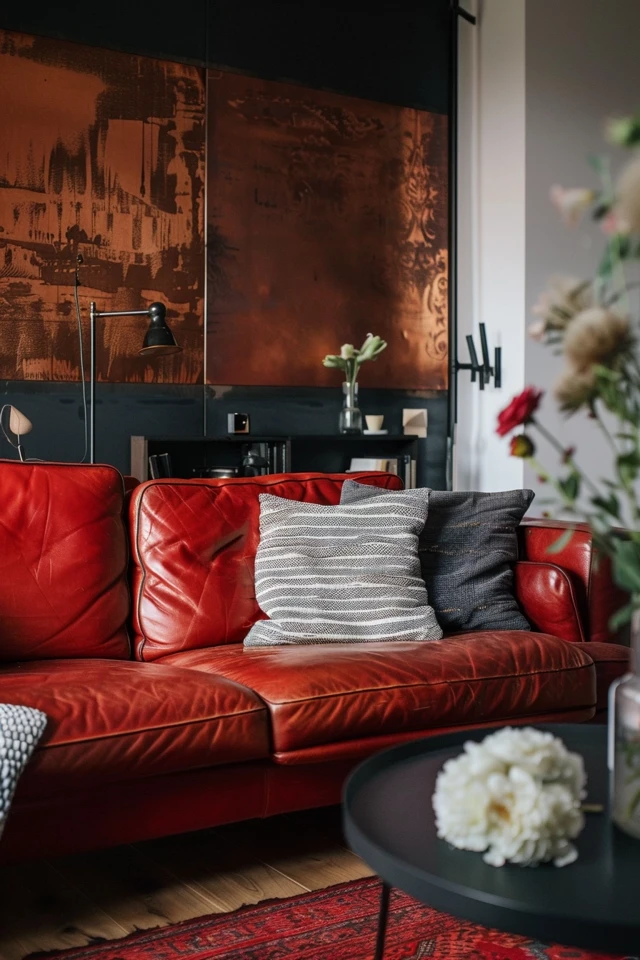
For a cozier, den-like atmosphere, dark walls work exceptionally well. Charcoal, navy, or even a deep forest green can make the red rug pop in a sophisticated way. Dark walls absorb light, while the rug reflects warmth, creating a perfectly balanced envelope.
Common Mistakes + Fixes
- MistakePainting the walls a yellow-based beige. Why it fails: The yellow undertones often clash with the blue-red undertones of the rug, making the room look “muddy.” TheFixSwatch paint colors that have a greige (grey-beige) or green undertone to neutralize the warmth.
II.Balancing Furniture Styles and Eras
A traditional rug does not require traditional furniture. in fact, pairing a Persian rug with heavy mahogany furniture and damask upholstery is exactly what creates that “museum” vibe many people try to avoid. To keep the look fresh, we need contrast.
The Power of Clean Lines
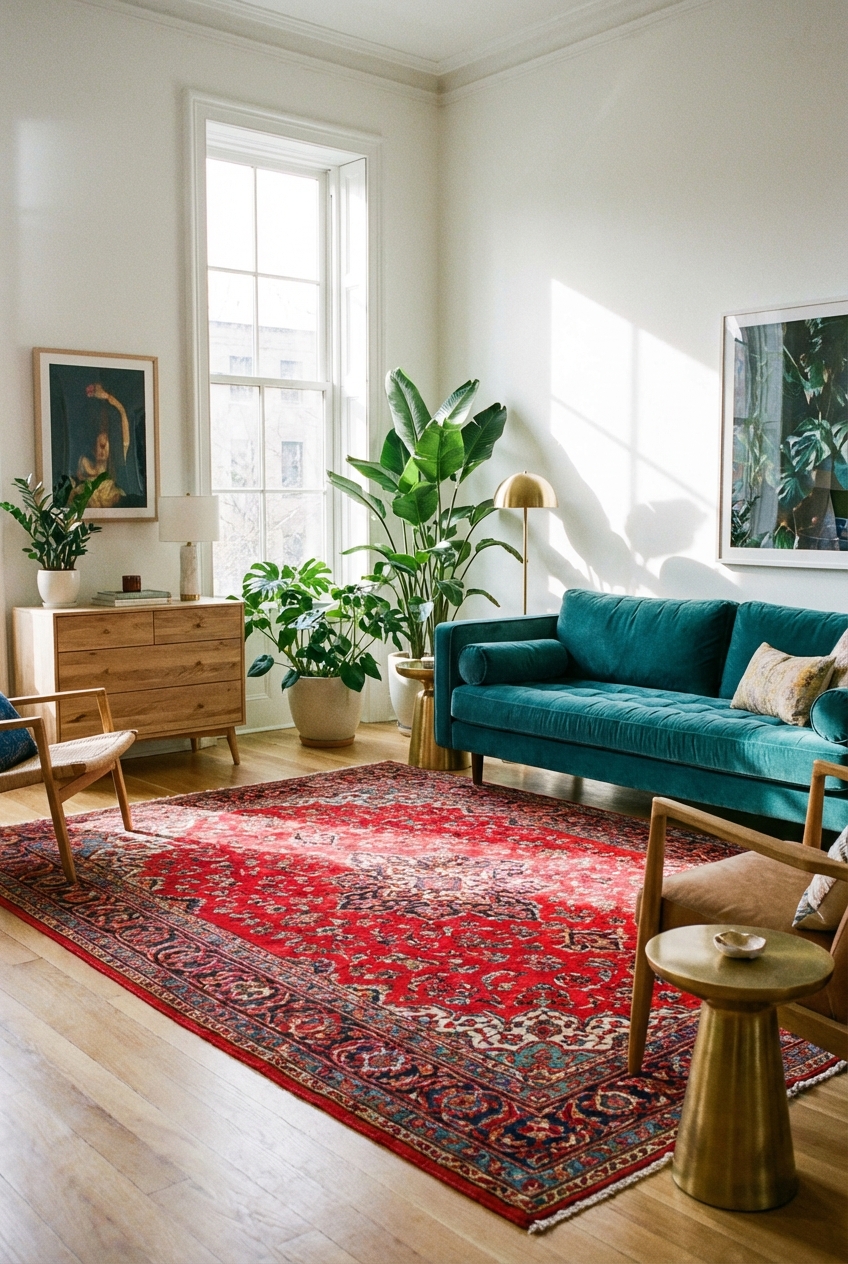
Mid-century modern furniture is the best friend of a Persian rug. The clean lines, tapered legs, and lack of ornamentation allow the intricate pattern of the rug to take center stage without visual competition.
Consider a low-profile sofa with track arms. The simplicity of the silhouette contrasts beautifully with the busy complexity of the rug’s knots.
Material Matters
The texture of your furniture is just as important as the shape. Because wool rugs absorb light, you want furniture materials that offer some reflection or variation.
- Leather: A cognac or worn black leather sofa is a classic pairing. The sleek surface of the leather contrasts with the matte wool pile.
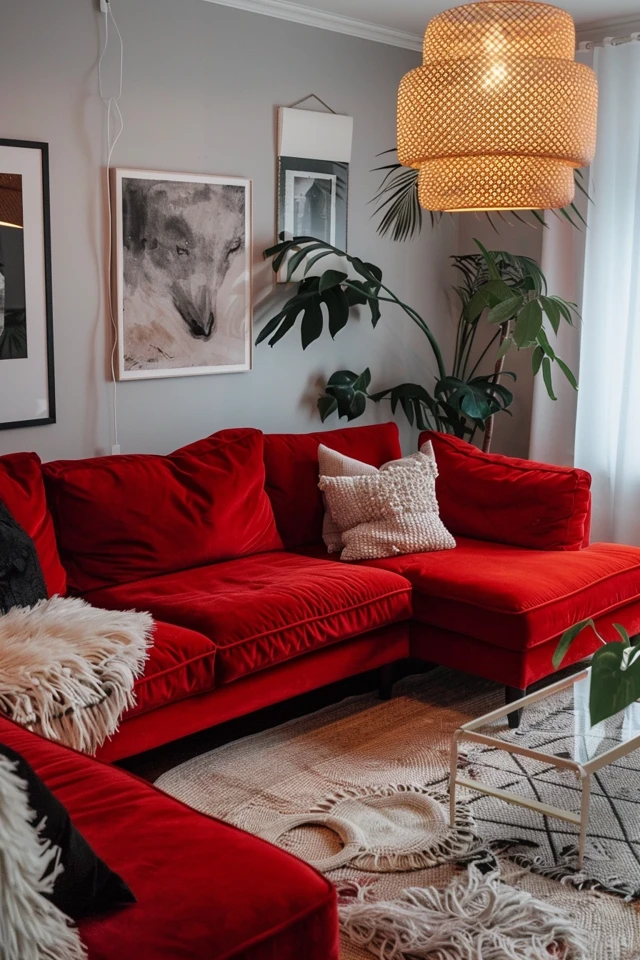
- Glass and Metal: Using a glass coffee table is a pro move. It allows you to see the medallion in the center of the rug, which is often the most beautiful part. Brass or matte black metal accents add a modern edge.
- Velvet: If you want luxury, performance velvet in a solid color (emerald, navy, or gold) stands up well to the visual weight of the rug.
We swapped the wood table for a large acrylic (Lucite) coffee table. Suddenly, the room breathed. The rug became art, visible through the table, and the space felt 30% larger.
III.Proper Sizing and Layout Mechanics
A red rug demands to be the anchor of the room. If the rug is too small, it looks like a floating island, and the red color will feel disjointed from the rest of the design. Scale is arguably the most critical technical aspect of interior design.
The “Front Legs” Rule
For most living rooms, the front legs of your sofa and accent chairs should sit on the rug. This physically connects the furniture to the rug, creating a cohesive conversation area.
Standard Sizes and Spacing
- 18-Inch Border: Ideally, you want about 12 to 18 inches of bare floor visible between the edge of the rug and the wall. This frames the space.
- The 8×10 vs. 9×12 Debate: In an average US living room (roughly 12×18 feet), an 8×10 is often too small. A 9×12 usually provides the luxurious coverage needed to anchor the furniture properly.
- Rental Constraint: If you are in a rental with wall-to-wall beige carpet, you can layer a Persian rug on top. It defines the zone and hides generic flooring. Just ensure the rug is thick enough so it doesn’t ripple.
Open Floor Plans
If you have an open concept living and dining area, the red rug defines the “living” zone. You do not need a matching red rug in the dining area. In fact, a natural fiber rug (like sisal or jute) in the adjacent dining space is a perfect, neutral companion that lets the living room rug be the star.
What I’d Do in a Real Project
If I am working with a 9×12 red Persian rug:
1. Place the sofa so the front 6 inches of the legs are on the rug.
2. Place the two accent chairs opposite the sofa, also with front legs on.
3. Ensure the coffee table is 16-18 inches away from the sofa edge for legroom.
4. Check that the rug extends at least 6 inches past the sides of the sofa to widen the visual space.
IV.Lighting and Metal Finishes
Red is a highly reactive color when it comes to lighting. The way your rug looks at 10:00 AM will be vastly different from how it looks at 8:00 PM. Managing this shift is crucial for maintaining the room’s mood.
Color Temperature
Avoid cool, blue-toned LED bulbs (anything over 3500K). These will make the red look harsh and clinical. Stick to warm white bulbs (2700K to 3000K). Warm light enhances the rich, amber and madder dye tones in the wool, making the room feel cozy rather than alarming.
Natural Light and Fade
Red dyes are notoriously susceptible to sun fading. If your living room gets direct sunlight, this is a genuine concern for an investment piece.
- Rotation: Rotate your rug 180 degrees every six months. This ensures that any fading happens evenly, which eventually looks like a deliberate antique patina rather than sun damage.
- Window Treatments: Use sheer curtains to diffuse harsh midday rays without blocking the light entirely.
Mixing Metals
Red Persian rugs have a warmth that pairs exceptionally well with unlacquered brass, antique gold, and oil-rubbed bronze. These finishes share the warm undertones of the rug.
Chrome or polished nickel can work, but they create a high-contrast, cooler look. If you use silver tones, ensure you have other cool elements (like grey walls or blue upholstery) to tie it together.
V.Practicality: Traffic, Pets, and Maintenance
One of the reasons I constantly recommend Persian rugs is their durability. These rugs were designed to be walked on, often with street shoes, for decades. They are far more forgiving than the delicate viscose rugs currently flooding the market.
The Magic of Wool
Wool is naturally stain-resistant due to the lanolin coating on the fibers. This makes red Persian rugs surprisingly excellent for families with kids and pets.
Because the pattern is intricate and the color is deep, a red rug hides everything. Dog hair, crumbs, and small spills disappear into the pattern much better than they would on a beige Berber carpet or a solid grey rug.
Rug Pads are Mandatory
Do not skip the rug pad. For a living room, I recommend a 1/4-inch to 1/3-inch felt-and-rubber combo pad.
- Comfort: It adds distinct plushness underfoot, making the room feel more luxurious.
- Protection: It prevents the abrasive backing of the rug from scratching your hardwood floors.
- Safety: It keeps the rug from slipping or bunching, which is a major trip hazard.
Common Mistakes + Fixes
- MistakeUsing a vacuum with a beater bar on the fringe. Why it fails: The rotating brush will catch the fringe and rip it off or unravel the knots. TheFixUse the “floor” setting (suction only) when vacuuming the rug, or carefully lift the vacuum head when you approach the edges.
VI.Textural Layering to Soften the Look
Because a red Persian rug is visually “hard” and heavy, you need soft textures elsewhere to create balance. If everything in the room is sleek and hard, the space will feel cold despite the red color.
Window Treatments
Avoid patterned curtains. The rug is your pattern. For curtains, go with heavy linen, velvet, or a textured weave in a solid color.
Hang the curtain rod high—at least 4-6 inches above the window frame, or all the way to the ceiling molding. This draws the eye up, counteracting the heavy visual weight of the rug on the floor.
Throw Blankets and Pillows
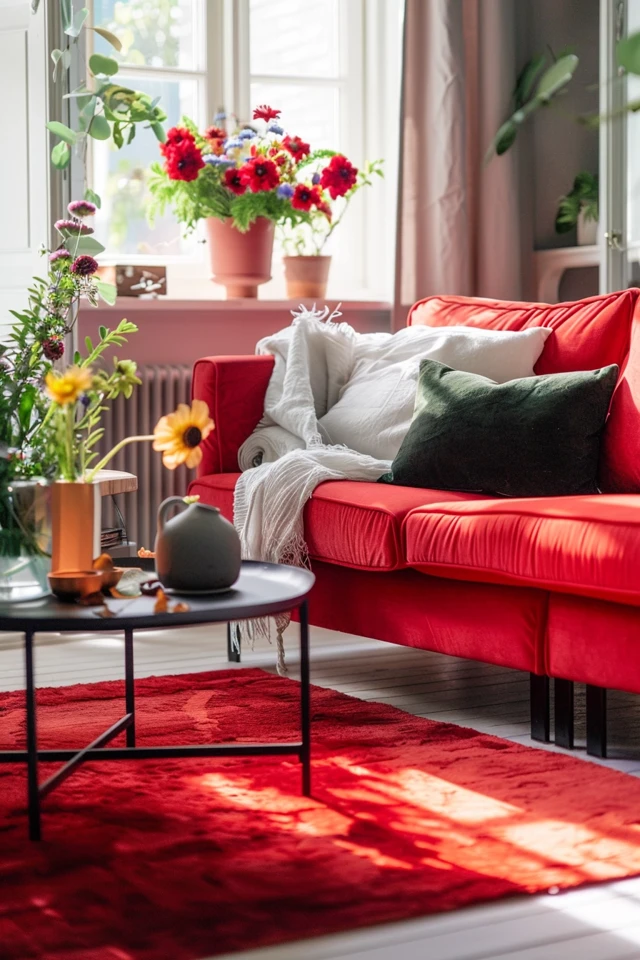
Introduce chunky knits, bouclé, or faux fur. A cream bouclé throw blanket draped over a leather chair adds instant softness. These tactile elements invite touch and make the room feel lived-in.
Plants
Greenery is the ultimate neutralizer for red. A large fiddle leaf fig or a tall olive tree in a terracotta or basket planter looks incredible against a red rug. The organic green is the natural complementary color to red, creating a vibration that feels energetic yet harmonious.
VII.Final Checklist: The “Designer’s Eye” Review
Before you consider your room complete, run through this mental checklist. I use this on every project to ensure the space feels resolved.
1. Check the legs.
Are the front legs of the sofa and main chairs resting on the rug? If the furniture is floating off the rug, pull the rug closer or the furniture in.
2. Check the palette.
Did you accidentally match the throw pillows to the primary red of the rug? If so, swap them for pillows that match the rug’s secondary colors (blues, creams, greens).
3. Check the “breathing room.”
Is there too much wood? If you have wood floors, a wood coffee table, and wood side tables, it might look too heavy with a red rug. Swap one table for stone, glass, or metal.
4. Check the lighting.
Turn on the lamps at night. Does the rug look rich and inviting, or harsh? If it’s harsh, swap your bulbs for 2700K warm white LEDs.
5. Check the art.
Is the art fighting the rug? Large-scale modern art or black-and-white photography usually works better than busy, traditional oil paintings which can compete with the rug’s intricacy.
VIII.FAQs
- Can I use a red Persian rug in a small living room?
- Absolutely. A common myth is that dark or bold colors shrink a room. In reality, a large red rug can expand a space by pushing the boundaries of the floor outwards. Just ensure you choose a size that fills the room (leaving that 12-inch border) rather than a small “postage stamp” rug in the middle.
- Does the rug have to be an authentic antique?
- Ideally, yes, because the natural dyes in antique rugs age more beautifully than synthetic dyes. However, there are high-quality new hand-knotted rugs that look fantastic. Avoid polypropylene machine-made copies if possible; they tend to look shiny and plastic, which cheapens the look of the room.
- My rug is faded in some spots. Is that okay?
- Yes, that is called “abrash,” and it is desirable. Abrash refers to the natural variation in dye lots and fading over time. It adds depth and character to the piece, proving it is a handmade product rather than a factory print.
- What if I have grey walls?
- Red rugs look stunning with grey walls. It is a very modern, chic combination. Just ensure the grey has a slight warm undertone so it doesn’t look icy blue, which can create a jarring contrast with the warm rug.
IX.Conclusion
Embracing a vibrant red Persian rug is a design decision that pays dividends for years. It provides a foundation of warmth, history, and unparalleled durability that few other floor coverings can match. By keeping your furniture lines clean, your lighting warm, and your supporting colors neutral or moody, you create a space that feels curated and timeless.
Don’t be afraid of the bold color. In the world of interiors, fortune favors the brave. Trust the craftsmanship of the rug, follow the rules of scale, and you will have a living room that feels both impressive and incredibly inviting.
X.Picture Gallery
Five photographs · drag or swipe