Warm Brown Tile Bathroom Designs & Tips
Discover the warmth of brown tile bathroom ideas that elevate your space with earthy elegance. Get inspired by modern designs and timeless charm!
For a long time, the design world was dominated by cool grays and stark whites, but the pendulum has officially swung back toward warmth. Brown tile is having a massive resurgence, shedding its 1970s reputation for a look that is organic, grounding, and incredibly sophisticated. If you want to skip the technical advice and see real-world examples, you can scroll down to the Picture Gallery at the end of this blog post.
I remember a specific project where a client was terrified of brown tile because she grew up with an avocado and harvest-gold bathroom. We compromised on a rich, variegated bronze-brown Zellige tile for the shower, and she ended up loving it more than any other room in the house.
The key to pulling this off isn’t just picking a color; it is about understanding texture, grout lines, and lighting to prevent the space from feeling like a cave. Whether you are looking for a spa-like retreat or a moody powder room, brown tile offers a versatility that gray simply cannot match.
I.Choosing the Right Material and Undertone
Not all brown tiles are created equal, and selecting the wrong material can make your bathroom look dated rather than designed.
When selecting brown tile, you first need to identify the undertone. Some browns lean red (terracotta or cherry), some lean yellow (honey or sand), and others lean gray (taupe or mushroom).
I always recommend holding your tile sample up against a pure white piece of paper in natural daylight. If it looks muddy or green next to the white, it will likely look dull on a large wall.
Material Options for Every Budget
Ceramic and Porcelain
For high-traffic family bathrooms, porcelain is your best friend. It is non-porous and incredibly durable. Look for “color-body” porcelain, where the color goes all the way through the tile, so chips won’t show as white spots.
Natural Stone (Travertine and Marble)
If you want luxury, look at darker Travertines or brown marbles like Emperador. Keep in mind that natural stone is porous. You must seal it upon installation and reseal it annually to prevent staining from soaps and oils.
Zellige and Hand-Made Tiles
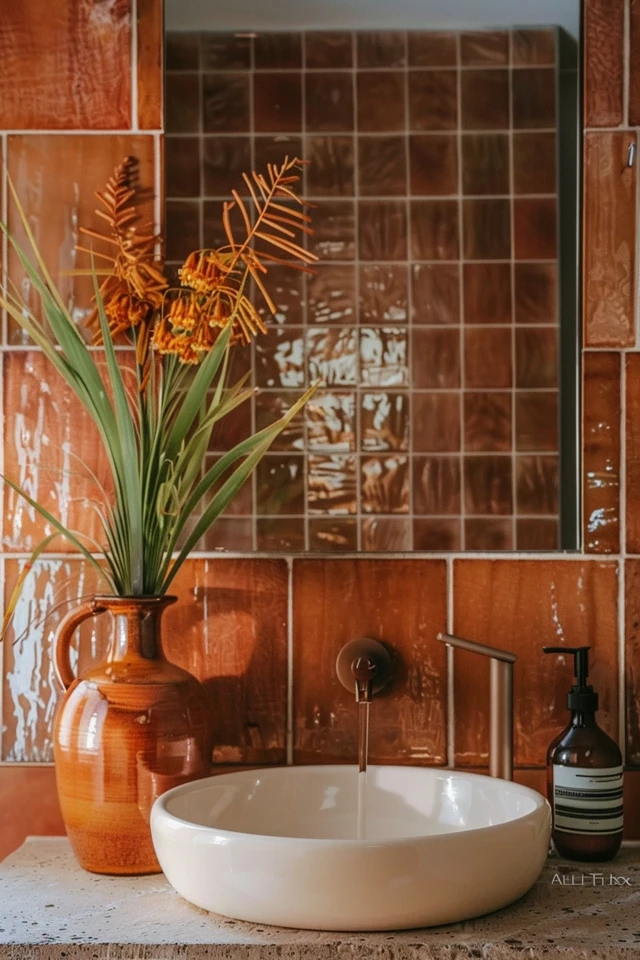
This is my favorite way to use brown. The variation in glazing means you get fifty shades of brown in one wall, which reflects light beautifully. This texture prevents a dark wall from feeling flat or heavy.
The Fix: Stick to one undertone family. If your floor is a warm, honey-colored wood look, choose a wall tile that also has warm, golden notes.
II.Lighting Darker Spaces Effectively
Brown absorbs more light than white or gray, which means your lighting plan needs to be intentional.
If you simply swap white tile for brown without adjusting your fixtures, your bathroom will feel significantly smaller and dimmer. You need to layer your light sources to wash the walls and highlight the richness of the tile.
Kelvin Temperature Matters
I cannot stress this enough: check the Kelvin (K) rating on your bulbs.
- 2700K: Too yellow. It will make brown tile look orange.
- 3000K: The sweet spot. It is warm but crisp enough to render colors accurately.
- 4000K+: Too blue. This will make deep brown tile look sterile and lifeless.
Placement Rules of Thumb
Avoid relying solely on a single overhead can light, which casts harsh shadows.
I prefer sconces mounted at eye level (roughly 60 to 66 inches from the floor) on either side of the mirror. This cross-illumination is flattering for your face and brings out the dimension in the tile behind the vanity.
Common Mistakes + Fixes
- MistakeUsing dark grout and dark tile in a room with no window. TheFixIf you lack natural light, use a high-gloss finish on your brown tile. The glossy surface acts like a mirror, bouncing artificial light around the room and expanding the visual space.
III.Grout Selection and Layout Strategy
The grout color you choose can completely change the vibe of brown tile.
High-contrast grout (like white or cream) highlights the geometric pattern of the layout. This is excellent for mid-century modern or graphic looks but can feel busy in a small space.
Low-contrast grout (a shade slightly lighter or darker than the tile) creates a monolithic, seamless look. This is generally more luxurious and calming, ideal for spa-inspired bathrooms.
Spacing Standards
- Rectified Edge Tile: You can go as tight as 1/16 inch for the grout line. This looks very modern and clean.
- Hand-molded Tile: These irregular edges usually require a wider grout line, typically 1/8 inch or 3/16 inch, to account for size variations.
Layout Patterns to Consider
Vertical Stack Bond
Stacking rectangular tiles vertically draws the eye up. In a bathroom with standard 8-foot ceilings, this is a great trick to make the room feel taller.
Herringbone
This adds energy and movement. It is fantastic for floor tiles to lead the eye into the room, but it requires more cuts and labor, usually increasing installation costs by 20%.
Standard Brick (Running Bond)
Classic and safe. If you use this layout with brown tile, I recommend a 50% offset for a traditional look or a 1/3 offset to prevent “lippage” (where one corner sticks out higher than the neighbor) on larger tiles.
IV.Balancing with Metals and Fixtures
Brown is an earth tone, so it pairs exceptionally well with warm metals.
Chrome and cool stainless steel can sometimes look too stark against warm brown, creating a jarring “hot and cold” effect. However, polished nickel offers a slightly warmer silver tone that can work if you dislike gold.
The Case for Unlacquered Brass
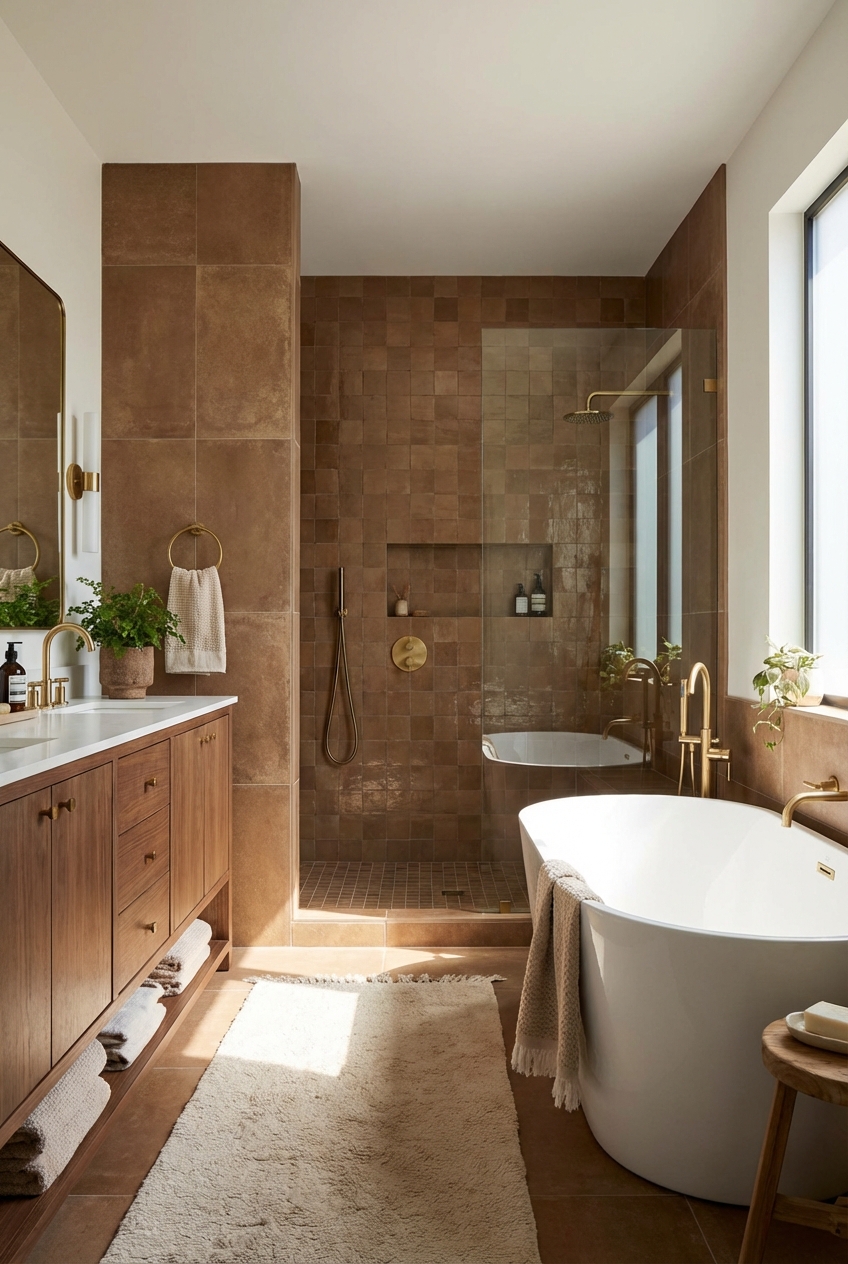
This is the gold standard for brown bathrooms. Unlacquered brass develops a patina over time, getting darker and richer. This living finish complements the organic nature of brown stone or ceramic perfectly.
Matte Black for Modernity
If you want a more industrial or contemporary look, matte black fixtures are a solid choice. Black is a neutral that grounds the space.
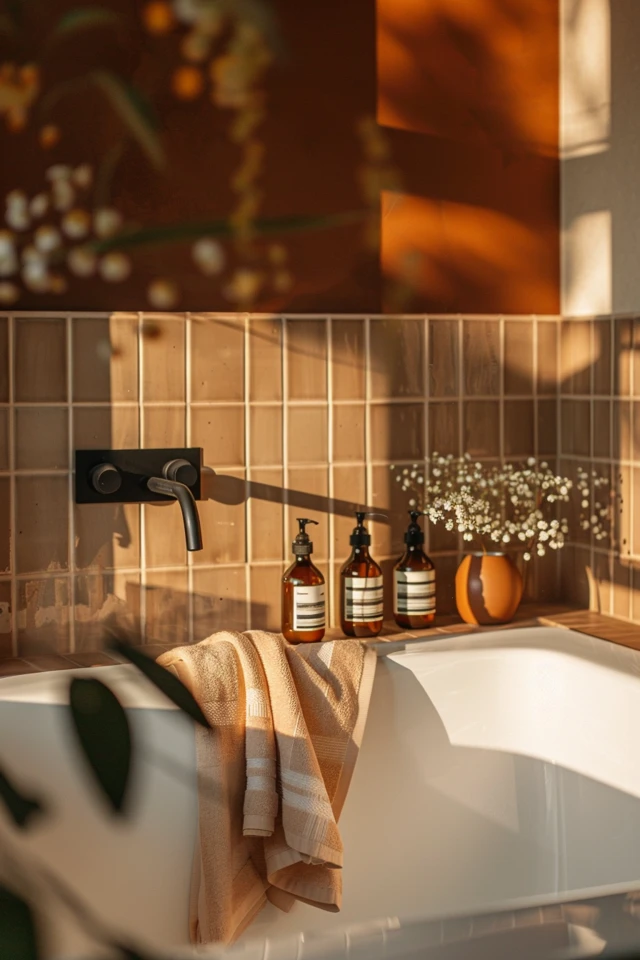
Just ensure your brown tile isn’t so dark that the black fixtures disappear. There needs to be enough contrast for the silhouette of the faucet to be visible.
Styling the Vanity
If your walls are brown tile, be careful with a wood vanity. Wood-on-brown can look like a sauna if the tones are too similar.
What I’d Do:
- Option A: Use a painted vanity in a creamy off-white, soft sage green, or deep charcoal to break up the wood tones.
- Option B: If you want a wood vanity, choose a species that contrasts with the tile. If the tile is a dark chocolate, go for a light white oak vanity.
V.Texture, Textiles, and Softening the Space
A bathroom with floor-to-ceiling tile can feel cold and hard, regardless of the color.
You need soft elements to absorb sound and add tactile comfort. Brown acts as a neutral canvas, allowing you to play with textures rather than just colors.
The Rug Rule
Skip the tiny postage-stamp bath mat that sits right in front of the shower.
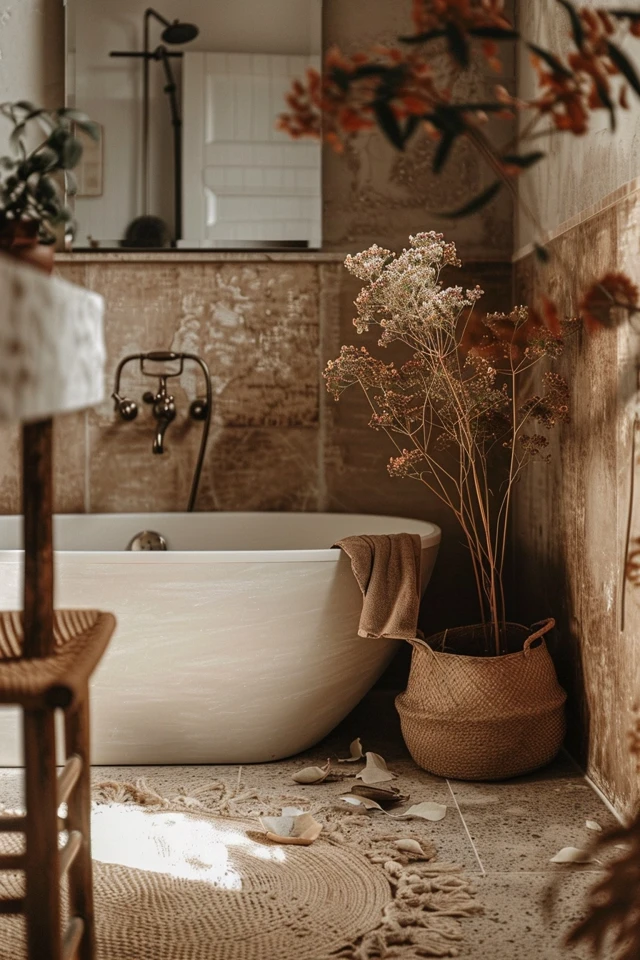
I prefer using a vintage-style runner or a larger area rug if space permits.
- Sizing: Leave about 4 to 6 inches of floor visible between the rug and the vanity or tub.
- Material: For bathrooms, synthetic blends (like polyester/polypropylene) that look like wool are best because they resist mold and dry quickly.
Window Treatments
If you have a window, avoid cheap aluminum blinds.
A woven wood shade or a bamboo blind echoes the brown tones of the tile but introduces a dry, organic texture. Alternatively, a cafe curtain in natural linen adds softness and privacy while letting light pour in from the top.
Plants as Decor
Brown and green are nature’s most natural color pairing.
A high-humidity plant like a Fern, Pothos, or Snake Plant will thrive in a bathroom. The vibrant green pops against a brown backdrop, instantly making the room feel fresh rather than muddy.
VI.Final Checklist: What I’d Do in a Real Project
If I were designing a brown-tiled bathroom today, here is the exact formula I would follow to ensure success.
1. The Tile
I would choose a 2×8 inch glossy ceramic tile in a “tobacco” or “cognac” shade with high color variation (V3 or V4 rating).
2. The Application
I would apply wainscoting (tiling halfway up the wall) around the entire room, transitioning to a vertical stack in the shower to emphasize height.
3. The Paint
Above the tile, I would paint the walls and ceiling in a warm white, like Benjamin Moore’s “Swiss Coffee,” to keep the room airy.
4. The Floor
I would pair the brown wall tile with a larger format, neutral floor tile—likely a limestone-look porcelain in a warm beige to prevent the room from feeling too dark.
5. The Grout
I would use a “biscuit” or warm light gray grout. Pure white is too harsh, and dark brown is too intense.
6. The Accents
I would finish the space with brushed brass sconces, a light oak vanity, and a large, frameless mirror to reflect as much light as possible.
VII.FAQs
- Will brown tile make my small bathroom look smaller?
- Not necessarily. Dark colors can actually blur the edges of a room, creating depth. The trick is to use a glossy finish to reflect light and to keep the ceiling light to draw the eye up.
- Is brown tile hard to keep clean?
- Darker brown tiles are excellent at hiding dirt and hair compared to white tile. However, in hard water areas, dark tile can show white mineral deposits (limescale). You may need to wipe down shower walls more frequently to prevent spotting.
- Does brown tile work for a rental apartment?
- If you can’t replace tile, you can warm up a sterile white rental bathroom by adding brown accents. Use a peel-and-stick vinyl floor tile in a warm wood pattern, or simply add oversized brown waffle-weave towels and wood accessories to bring in that earthy warmth without renovation.
- What colors coordinate best with brown tile?
- Cream and warm white are the safest bets. For color, look at sage green, terracotta, navy blue, and dusty pink. Avoid bright primary colors like fire engine red or bright yellow, as they can look jarring.
VIII.Conclusion
Embracing warm brown tile is a design choice that signals confidence and a desire for comfort. It moves away from the clinical feel of all-white bathrooms and creates a space that wraps you in warmth.
Whether you opt for a full drench of chocolate hues or subtle caramel accents, the key lies in managing your lighting and textures. By mixing glossy finishes with organic materials and the right metals, you can create a bathroom that feels timeless, elegant, and uniquely yours.
IX.Picture Gallery
Five photographs · drag or swipe