
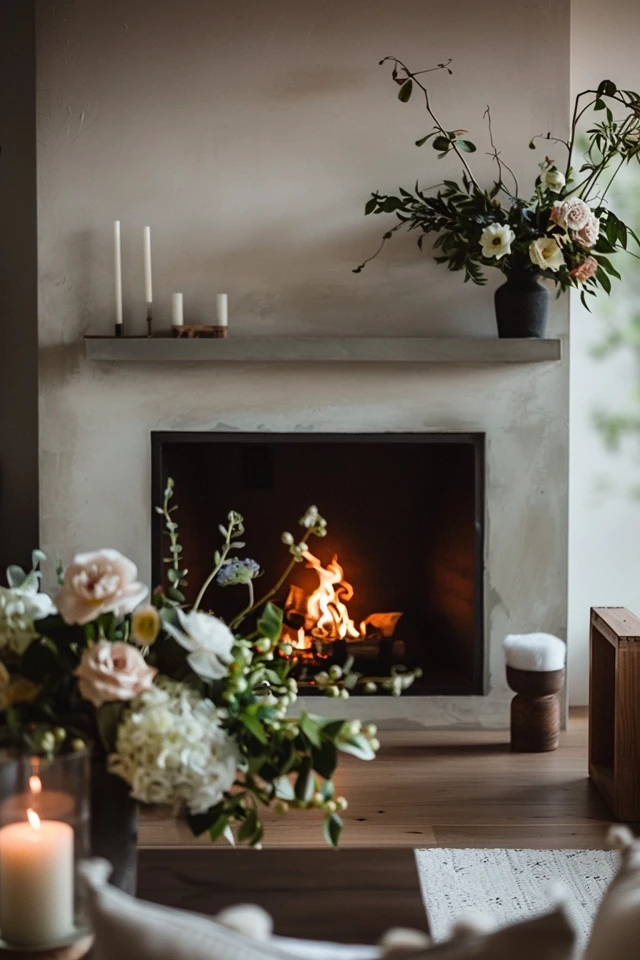
Warm Up Your Home with Stucco Fireplace Ideas
For years, fireplace design felt stuck in a binary choice between traditional brick and formal wood mantels. However, the rise of “organic modern” and Mediterranean-influenced interiors has brought stucco to the forefront of fireplace design. I remember walking into a client’s 1970s ranch home that felt dark and dated due to a massive, imposing red brick fireplace that swallowed the entire living room.
Instead of tearing it out, we applied a steel lath and a warm, creamy stucco finish right over the brick. The transformation was immediate; the room felt lighter, the ceiling felt higher, and the texture added a softness that drywall simply cannot replicate. Stucco offers a tactile, artisanal quality that bridges the gap between old-world charm and contemporary minimalism.
Whether you are renovating a rental, building a new home, or looking to update an outdoor patio, stucco is one of the most versatile materials available. If you are looking for visual inspiration, be sure to check out the Picture Gallery at the end of the blog post.
1. Choosing the Right Material: Stucco, Plaster, or Microcement?
When clients ask for a “stucco” fireplace, they often use the word as a catch-all term for any textured, cement-like finish. As a designer, I have to clarify the technical differences because they impact cost, durability, and heat resistance.
Traditional Cement Stucco
This is the rougher, exterior-grade finish you see on Spanish-style homes. It is incredibly durable and heat-resistant, making it excellent for wood-burning fireplaces where heat fluctuation is high. The texture is usually sand-finished or “dashed,” meaning it feels gritty to the touch.
Venetian Plaster and Limewash
If you want that velvety, smooth, cloud-like aesthetic often seen in high-end magazines, you likely want a lime-based plaster or Tadelakt, not cement stucco. These materials are softer and can be burnished to a shine. They are beautiful but can be more prone to cracking if the substrate (the wall underneath) shifts due to heat expansion.
Microcement
This is my current go-to for renovations. Microcement is a polymer-modified cement that is flexible, waterproof, and bonds to almost anything, including tile. It is much less likely to crack than traditional stucco and offers a sleek, modern, suede-like finish.
Designer’s Note:
One thing that usually goes wrong is texture mismatch. If your walls are smooth drywall, a heavy, rough stucco fireplace can look like an accidental exterior wall brought inside. For interiors, I almost always specify a “smooth trowel” or “Santa Barbara” finish. It provides movement and shadow without being abrasive to the touch.
2. Mastering Scale and Shape
The beauty of a stucco fireplace lies in its ability to be sculpted. Unlike brick, which is governed by the size of the unit, stucco is fluid. This allows us to play with geometry, but you must respect the scale of the room.
The Floor-to-Ceiling Taper
A popular look right now is the tapered chimney breast, where the fireplace structure angles inward as it rises toward the ceiling. This draws the eye up and makes standard 8-foot ceilings feel taller. I recommend tapering the structure by about 4 to 6 inches on each side as it ascends.
The Curved “Kamin” Style
Rounded corners and arched openings are hallmarks of the organic modern style. If you are building the frame from scratch, ask your contractor to use “bullnose” corner beads rather than 90-degree metal corners. This softens the shadows and makes the fireplace feel like it grew out of the wall.
Common Mistakes + Fixes
Mistake: Making the fireplace too wide in a small room.
Fix: Apply the “Thirds Rule.” The fireplace structure (including the surround) should ideally take up no more than one-third of the wall length in an average living room. If the wall is 12 feet long, keep the fireplace structure around 4 feet wide to allow for breathing room or shelving on the sides.
3. To Mantel or Not to Mantel?
With stucco, the decision to include a mantel changes the entire vibe of the architecture. A “clean face” stucco fireplace (no mantel, no hearth) looks incredibly modern and minimalist, but it poses practical challenges.
The Floating Beam
If you choose a mantel, a reclaimed wood beam is the classic pairing for white stucco. The warmth of the wood cuts the coolness of the plaster.
Placement Rule: Mount the mantel at least 12 inches above the fireplace opening (check your local fire code, as this varies by firebox type).
Depth: Ideally, the mantel should be 6 to 8 inches deep. Anything shallower looks like a trim piece; anything deeper can dominate the room.
The Integrated Ledge
Instead of wood, we often sculpt a shelf out of the stucco itself. This creates a monolithic look. However, be aware that a white stucco shelf will show soot and dust more than wood or stone.
What I’d do in a real project:
1. Check the “clearance to combustibles” in the manual of the gas or wood insert.
2. If the client owns a TV, I almost always insist on a mantel to deflect heat away from the screen mounted above.
3. If no TV is involved, I prefer a floor-to-ceiling smooth stucco face with no mantel, letting the art do the talking.
4. Integration with Built-ins and Niches
A standalone stucco fireplace can sometimes look like a tombstone if it isn’t integrated into the rest of the wall. Flanking the fireplace with built-ins or drywall niches creates a cohesive architectural statement.
Drywall vs. Stucco Shelves
If you have alcoves on either side of the fireplace, you can continue the stucco finish inside the niches for a “cave-like” aesthetic. This is very trendy in Mediterranean design.
Shelf Thickness: To pull this off, the shelves need to look chunky. I frame them to be at least 3 inches thick.
Lighting: Install LED tape channels toward the back of the shelves to wash the textured back wall with light.
Wood Cabinetry
Contrast is key. If the fireplace is rough white stucco, I love using white oak or walnut cabinetry on the sides. The precision of the cabinetry highlights the organic imperfection of the stucco.
Designer’s Note:
Avoid having the cabinetry flush with the fireplace face. The fireplace should always sit proud (stick out further) than the built-ins. I aim for the fireplace to extend at least 4 to 6 inches past the cabinetry face to maintain depth and hierarchy.
5. Durability and Maintenance Realities
Clients often worry that a white stucco fireplace will turn black with soot. This is a valid concern, but it is manageable with the right design choices.
The Non-Combustible Slip
Never run white stucco directly to the edge of a wood-burning firebox opening. It will stain within a week. You need a “slip” or a surround of a darker material—like slate, black granite, or steel—creating a border between the fire and the stucco.
Dimension: A 6-inch to 8-inch border of black soapstone or matte black metal is usually sufficient to hide soot accumulation.
Cleaning Stucco
Stucco is porous. If you spill red wine on a hearth made of unsealed stucco, it is there forever.
* Repair: The benefit of stucco is that it is easily patchable. If you get a hairline crack (which is normal with heat expansion), you can fill it with a matching grout or plaster repair kit.
Common Mistakes + Fixes
Mistake: Using high-gloss paint over stucco.
Fix: Never use semi-gloss or eggshell paint on a stucco fireplace. It highlights every flaw and makes it look like plastic. Use a flat, mineral-based masonry paint or a lime wash that allows the masonry to breathe.
Final Checklist: Planning Your Stucco Fireplace
Before you call the contractor or start mixing cement, run through this list to ensure you have covered all the functional bases.
- Check the Substrate: If going over brick, verify the brick is structurally sound. You will need a metal lath layer before the scratch coat.
- Verify Fire Codes: Confirm the required distance between your firebox opening and any combustible framing behind the stucco.
- Lighting Plan: Plan for “grazing” lighting. A recessed pot light positioned 12 to 18 inches away from the fireplace face will cast shadows down the stucco, highlighting the beautiful texture.
- TV Conduit: If mounting a TV, install a conduit pipe inside the wall before stuccoing to hide cables. You cannot fish wires through hardened stucco easily.
- Color Selection: Test your stucco color in evening light. Pure white can read blue/gray. I usually recommend “Swiss Coffee” or slightly warm off-whites for a cozy feel.
FAQs
Can I apply stucco directly over my existing brick fireplace?
Yes, but you cannot just trowel it on. You must attach a metal lath (mesh) to the brick using masonry screws. Then, you apply a “scratch coat” (base layer) to embed the mesh. Once that dries, you apply the finish coat. Without the lath, the stucco will eventually delaminate and fall off.
How much does a stucco fireplace renovation cost?
For a standard facelift (going over existing brick), expect to pay between $2,500 and $5,000 for professional labor and materials. If you are framing a new shape or altering the firebox, costs can exceed $8,000. DIY material costs are low (under $500), but the learning curve for a smooth finish is steep.
Is stucco safe for heat?
Cement-based stucco is non-combustible and very safe for heat. However, the framing behind the stucco is the concern. Ensure you strictly follow the clearance requirements of your specific fireplace insert regarding wood studs and drywall.
Can I paint an existing stucco fireplace?
Yes. If you dislike the color of your current stucco, do not use standard latex paint, which films over the surface. Use a mineral paint or masonry stain. These bond with the concrete and maintain the stone-like texture rather than looking like a painted wall.
Conclusion
A stucco fireplace is more than just a trend; it is a shift toward homes that feel more grounded, organic, and serene. Whether you opt for a crisp, square-edged modern look or a curvaceous, Santa Barbara-style hearth, the material brings a sense of calm to a living space that other finishes struggle to match.
The key to success is in the preparation—getting the proportions right, choosing the appropriate texture for your lifestyle, and ensuring your lighting highlights the hand-applied artistry. Don’t be afraid to embrace the slight imperfections of the finish; they are what give the fireplace its soul.
Picture Gallery


