
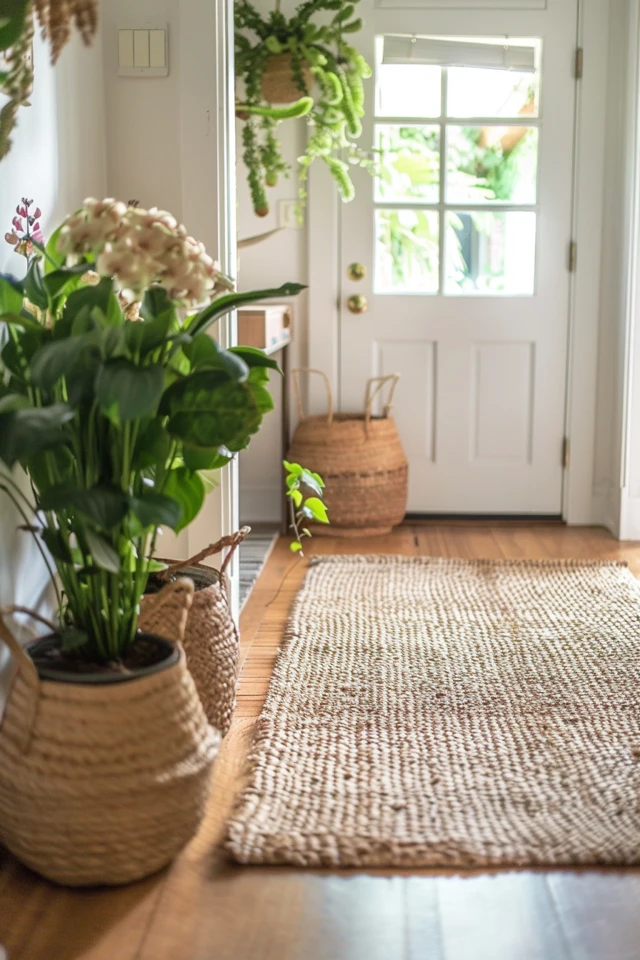
Welcoming Spaces: Entryway Foyer Rugs Ideas
The foyer is the handshake of your home. It creates the very first impression for guests and sets the emotional tone for the rest of your living space. Yet, in many of the projects I take on, this critical transition area is often treated as an afterthought or a “drop zone” for mail and shoes.
A well-chosen rug does more than just wipe your feet; it anchors the space, defines the entry zone, and leads the eye into the main living areas. It introduces your home’s color palette and texture story before a guest even takes off their coat. However, balancing the aesthetic needs of a welcoming entry with the brutal reality of muddy boots and paw prints is a challenge every designer faces.
In this guide, we will break down exactly how to select the perfect rug for your entryway, from calculating the correct dimensions to choosing fibers that can withstand heavy traffic. For those who want to skip the reading and spark their creativity immediately, you can find our curated Picture Gallery at the end of this blog post.
1. Mastering the Mathematics of the Entryway
The most common mistake homeowners make with foyer rugs is buying one that is too small. A “postage stamp” rug floating in the middle of a large entry makes the space feel disjointed and cheap.
To get the scale right, you need to measure the open floor space, not the wall-to-wall dimensions. A good rule of thumb is to leave between 6 to 12 inches of bare floor visible around the perimeter of the rug. This “breathing room” frames the rug and prevents the space from looking cramped, which often happens if the rug runs right up to the baseboards.
You must also consider the vertical clearance. This is the “door swing test.” Before buying anything, measure the gap between the bottom of your front door and the existing floor. If your door sits low, you need a flat-weave or low-pile rug (usually under 0.25 inches thick) to prevent the door from getting stuck every time you open it.
Designer’s Note: The Furniture Relationship
If you have a console table or a bench in the foyer, you have two choices for placement. You can either place the rug completely independent of the furniture (floating in front of it) or have the front two legs of the piece sitting on the rug.
I generally prefer the rug to float in front of the console if the walkway is narrow. This creates a clear visual path. However, if you have a large, grand foyer with a round center table, the rug must be large enough that the entire table fits on it with at least 18 inches of rug extending past the table edge.
2. Material Matters: Durability Meets Design
The entryway sees more foot traffic than any other part of the house. It is the first line of defense against rain, mud, grit, and street dust. Therefore, selecting the right material is not just an aesthetic choice; it is a functional necessity.
Wool
Wool is the gold standard for high-traffic areas. The fibers are naturally elastic, meaning they spring back after being walked on, rather than matting down like cheaper synthetics. Wool also contains natural oils that repel small amounts of liquid and dirt. While the upfront cost is higher, a wool rug in an entry can last for decades.
Natural Fibers (Jute, Sisal, Seagrass)
These provide excellent texture and a relaxed, organic look that works well in transitional and coastal homes. However, they are highly absorbent. If you live in a rainy or snowy climate, muddy water can stain sisal permanently. Seagrass is the most stain-resistant of the bunch, but it can be slippery with socks on.
Indoor/Outdoor Performance Rugs
This is my secret weapon for families with young kids or pets. Modern technology has improved polypropylene rugs to the point where they feel soft like wool but can literally be taken outside and hosed off. They are stain-proof, fade-resistant, and incredibly durable.
Common Mistakes + Fixes
Mistake: Using Viscose or Silk in the entry.
Fix: Avoid these fibers at all costs in a foyer. One drop of water will ruin a viscose rug, causing it to yellow and lose its sheen. Save the silk for the bedroom or formal living room.
Mistake: Using a high-pile shag rug.
Fix: Shag rugs trap dirt deep in the fibers where a vacuum cannot reach. Stick to low-pile or flat-weave constructions that allow surface dirt to be easily vacuumed away.
3. Choosing the Right Shape for Your Architecture
The shape of your rug should generally mirror the shape of the room. This creates a sense of harmony and architectural intent.
Rectangles
These are the standard for most foyers. They work best in distinct, defined entry spaces where the room is roughly square or rectangular. Ensure the long side of the rug runs parallel to the longest wall or the main flow of traffic.
Runners
If your entry is essentially a hallway or a narrow corridor, a runner is the only logical choice. The standard width for a runner is 2 feet 6 inches to 3 feet. When placing a runner, aim to have it start about 12 to 18 inches past the door sweep so guests have a moment to step in before hitting the rug.
Round Rugs
Round rugs are fantastic for square entries or grand foyers with curved staircases. They soften the hard angles of walls and doors.
A round rug is particularly effective if you have a decorative pendant light or chandelier in the entry. Centering a round rug directly beneath the light fixture creates a powerful vertical axis that makes the design feel deliberate and high-end.
4. Styling, Pattern, and Dirt Concealment
While we all love the look of a crisp, cream-colored rug in a magazine spread, real life is messier. In an entryway, the rug needs to be forgiving.
Pattern is your best friend here. A rug with a micro-pattern, a Persian-style motif, or a geometric design will hide dirt and lint significantly better than a solid color. If you prefer a solid look, choose a heathered wool or a material with heavy texture variation to mask everyday debris.
Color choice also dictates the mood. Darker rugs ground the space and are obviously better at hiding soil. However, if your entry lacks natural light, a dark rug can make the space feel like a cave.
In dark entries, I often use a “medium-tone” rug—think rust, slate blue, or sage green. These colors are dark enough to be practical but colorful enough to brighten the floor.
Connecting the Dots
Your entry rug does not exist in a vacuum. It must coordinate with the rugs in the adjacent rooms.
They do not need to match perfectly, but they should be “cousins.” If your living room has a vintage blue Persian rug, your entry rug could be a natural jute (neutral) or a runner that pulls out one of the minor accent colors from the living room rug.
5. The Unsung Hero: Rug Pads and Safety
You cannot skip the rug pad in an entryway. This is a non-negotiable rule for both safety and longevity.
Without a pad, an entry rug is a slip-and-fall hazard. When someone enters briskly or turns specifically to close the door, a loose rug can slide out from under them.
Furthermore, dirt acts like sandpaper. When grit gets underneath a rug, it grinds against the floor and the rug backing every time you step on it. A quality pad holds the dirt in suspension until you vacuum, protecting your hardwood floors and the rug’s fibers.
Felt vs. Rubber
For the entry, look for a combination pad (felt with a rubber backing). The rubber grips the floor to prevent sliding, while the felt adds a layer of cushioning.
Avoid the cheap, waffle-grid pure rubber mats found at discount stores. Over time, these can react with the finish on hardwood floors and leave permanent grid marks.
What I’d Do in a Real Project: Mini Checklist
When I am sourcing an entry rug for a client, I run through this mental checklist:
1. Measure the door clearance first. If it’s tight, I filter my search immediately to “flat weave” or “kilim.”
2. Check the traffic flow. If the front door opens directly into the living room, I use the rug to create a “visual vestibule” to define the entry zone.
3. Select the fiber based on the inhabitants. Dogs? Synthetic or indoor/outdoor. No pets? Wool.
4. Color check. I hold the rug sample against the floor color. I want contrast. Dark floors get a lighter rug; light floors get a richer, deeper rug.
Final Checklist
Before you click “purchase” or head to the showroom, ensure you have ticked these boxes:
- Clearance confirmed: The front door can open and close freely over the rug height.
- Scale check: You have measured for 6–12 inches of floor visible on all sides (or 4–6 inches for a runner).
- Material reality: The material matches your lifestyle (mud, pets, kids).
- Pad included: You have added a high-quality felt/rubber pad to the order.
- Color flow: The rug colors compliment, rather than clash with, the adjacent room’s decor.
- Cleaning code: You know how to clean a spill on this specific fiber.
FAQs
Q: Can I layer rugs in the entryway?
A: Yes, this is a great look. Typically, you lay down a large, neutral natural fiber rug (like jute) as the base, and layer a smaller, patterned vintage rug or cowhide on top. Just be very careful about the height. The double thickness can easily block the door swing.
Q: How long should an entryway runner be?
A: A runner should cover the length of the hallway but stop before it hits the threshold of the next room. Never have a runner cross over a transition strip into another room; it looks sloppy. Aim to end the rug 6 to 12 inches before the hallway ends.
Q: Are washable rugs worth it for the foyer?
A: For households with puppies or toddlers, absolutely. However, many washable rugs are very thin and can look like a “mat” rather than a rug. If you go this route, buy the thickest cushioned pad available to give it the weight and feel of a traditional rug.
Q: What if my entry is carpeted?
A: You can absolutely layer an area rug over wall-to-wall carpet. It helps define the entry zone and protects the high-traffic area of the carpet from wearing out. Choose a rug that is heavy enough to lay flat and anchor it with furniture if possible so it doesn’t ripple.
Conclusion
Your entryway rug is a workhorse that deserves to be beautiful. It bridges the gap between the outdoors and your sanctuary, handling mud and moisture while still offering a soft welcome.
By focusing on the correct scale, prioritizing durable natural or performance fibers, and ensuring the rug flows with the rest of your home, you can turn a chaotic drop zone into a curated design statement.
Take your time measuring, invest in a good rug pad, and don’t be afraid of pattern. A well-planned foyer sets the stage for the rest of your home, proving that practical design can also be deeply inviting.
Picture Gallery


