
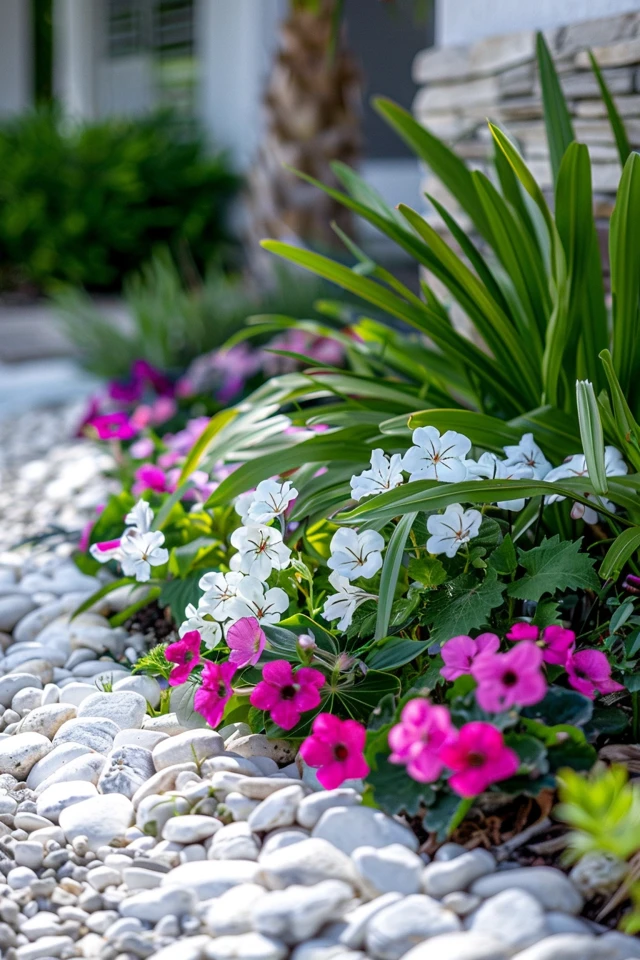
Title: White Rock Landscaping Ideas for Your Garden
White Rock Landscaping Ideas for Your Garden
White rock is one of the most versatile tools in a designer’s arsenal because it acts like a highlighter for your landscape. It instantly brightens shady corners, creates crisp contrast against lush green lawns, and provides a clean architectural look that works for both modern and cottage styles. I often use it to solve tricky drainage problems while simultaneously upgrading the aesthetic of a yard.
However, choosing the right white stone is not as simple as grabbing a few bags from the hardware store. In my years of designing outdoor spaces, I have seen projects fail because the homeowners didn’t account for soil acidity, proper layering, or the specific size of the gravel needed for walkability. There is a science to getting that effortless look.
In this guide, I will walk you through the practical applications, installation depths, and styling techniques to make white rock work for your specific home. If you want to see how these concepts come to life in real homes, make sure to check out the Picture Gallery at the end of the blog post.
1. Selecting the Right Stone: Material and Scale
Not all white rocks are created equal, and the material you choose dictates how the space functions. The two most common options I specify for clients are White Marble Chips and White River Rock.
White Marble Chips are crushed stone with jagged edges. They glitter beautifully in the sunlight and are excellent for decorative beds where you won’t be walking barefoot. However, marble is alkaline; over time, it can raise the pH of your soil, which might harm acid-loving plants like Azaleas or Blueberries.
White River Rocks are smooth, rounded stones. These are much softer on the feet and generally safe for pets. Because they are rounded, they don’t lock together as tightly as crushed stone, meaning they shift more when walked on.
Designer’s Note: The Scale Rule
A common mistake is buying rocks that are too small for the application.
- For Walkways: Use 3/8-inch to 1/2-inch gravel. This size packs down reasonably well but is still comfortable.
- For Drainage/Borders: Use 1-inch to 2-inch stones. The larger gaps allow water to flow through rapidly.
- For Ground Cover: If you use tiny pea gravel in a flower bed, leaf blowers will blow the rocks right out of the bed. Stick to 1-inch stone for beds to make maintenance easier.
2. The High-Contrast Modern Walkway
One of the most requested looks in landscape design right now is the “floating paver” walkway. This involves placing large concrete squares or rectangles and filling the gaps with white rock. It creates a clean, geometric look that visually expands small yards.
The key to this look is spacing. You cannot simply guess the distance between pavers. The average human stride is roughly 24 to 30 inches. I typically place 24-inch square pavers exactly 4 to 6 inches apart. This forces a comfortable cadence where you don’t have to stutter-step.
If you place them too far apart (over 8 inches), the white rock becomes a tripping hazard rather than an accent. If you place them too close (under 3 inches), the rocks get kicked out onto the paver constantly.
Common Mistakes + Fixes
Mistake: Laying pavers and rock directly on dirt. The pavers will sink unevenly, and the white rock will mix with the mud, turning gray and dingy.
Fix: You must excavate 4 inches down. Lay a base of crushed road base (compacted), then a layer of sand for leveling the pavers, and finally, place the decorative white rock in the gaps.
3. Creating Maintenance-Free Garden Borders
White rock is exceptional for defining the edges of garden beds, effectively separating your lawn from your plants. It acts as a visual barrier that stops grass runners from invading your flowers.
For a successful border, width matters. I never design a rock border narrower than 12 inches. Anything smaller than that looks accidental and disappears when the surrounding plants grow in. A 12-to-18-inch border provides enough negative space to make the foliage pop.
You must install physical edging to keep the white rock contained. White stones have a high migration rate; they get kicked by lawnmowers and scattered by rain.
What I’d do in a real project:
- Edging Material: I prefer steel edging or heavy-duty aluminum. It creates an almost invisible line that holds the rock firmly in place. Avoid the cheap black plastic edging that ripples and warps in the sun.
- Height Differential: I install the edging so the top lip is 1/2 inch higher than the rock layer. This acts as a bumper.
- Fabric: Always use a heavy-duty, non-woven landscape fabric under the rock. If you don’t, the white stones will sink into the soil within a year, requiring a costly top-up.
4. Brightening Shady Courtyards and Atriums
In dense urban environments or side yards where grass refuses to grow, white rock is a lifesaver. Grass needs 6 to 8 hours of sun; white rock needs zero.
By replacing patchy, muddy grass with a layer of white gravel, you instantly reflect available light back into the space. This is an interior design trick brought outdoors: light surfaces make small rooms feel bigger.
When designing these “rock gardens,” avoid the “sea of gravel” look. A large expanse of just white rock can feel barren and blindingly bright in peak summer.
Designer’s Note: Breaking up the Expanse
To prevent the space from looking like a parking lot, I use the “Rule of Thirds.”
- 1/3 Hardscape: The white rock base.
- 1/3 Greenery: Use large pots or planted mounds to introduce height. I love using Boxwoods or Snake Plants in dark gray concrete planters to contrast against the white floor.
- 1/3 Living Space: Add a teak bench or a small bistro set. The warm wood tones soften the starkness of the white stone.
5. Solving Drainage with Dry Creek Beds
Functionality should always come before aesthetics, but white rock allows you to have both. If you have a sloped yard or an area where rainwater pools near the foundation, a dry creek bed is the standard solution.
Instead of burying a PVC pipe (which can clog), we sculpt a shallow channel in the ground and line it with landscape fabric and white river rock. The water naturally follows this stone path away from your home.
For a dry creek bed to look natural, you have to mix stone sizes. In nature, water sorts stones by weight. I usually order 70% standard 1-inch white rock and 30% larger 3-to-5-inch white cobbles.
Scatter the larger cobbles randomly along the “banks” of your creek bed and in the center to mimic current flow. This looks intentional and sculptural, rather than just a ditch filled with gravel.
Common Mistakes + Fixes
Mistake: Using white marble chips for drainage.
Fix: Use rounded river rock. The jagged edges of marble pack together too tightly, slowing down water flow. Rounded stones create larger voids for water to rush through during heavy storms.
Final Checklist: Before You Buy
Before you order a truckload of stone, run through this checklist to ensure your site is actually ready for installation.
- Calculate Depth: You need a minimum depth of 2 inches for decorative coverage. If you are covering bare dirt, aim for 3 inches. Do not go deeper than 4 inches for walkways, or it will feel like walking in quicksand.
- Check Your Soil: If you are planting Hydrangeas, Azaleas, or Japanese Maples nearby, test your soil pH. If you use limestone or marble chips, you may need to amend the soil annually to keep it acidic enough for those plants.
- Weed Barrier: Have you purchased professional-grade landscape fabric? Do not rely on black plastic garbage bags or cheap big-box store fabric; weeds will punch right through them. Look for spun-bonded polyester.
- Delivery Logistics: A cubic yard of rock weighs roughly 2,500 to 3,000 pounds. Can a dump truck access your driveway? If not, you may need to order “super sacks” (giant bags) that can be lifted by a forklift, or rely on manual wheelbarrow labor.
FAQs
Does white rock turn green or dirty over time?
Yes, it can. In shady, damp areas, algae or moss may grow on porous stones. This is common with limestone. To clean it, you can spray the rocks with a mixture of water and white vinegar (or a mild bleach solution for tough stains) and rinse with a hose. A pressure washer on a low setting also works wonders for restoring the bright white color.
Is white rock bad for plants due to heat?
White rock reflects sunlight, which can be beneficial for keeping roots cooler than black mulch would, but it can also reflect intense heat onto the underside of delicate plant leaves. I generally avoid planting heat-sensitive broadleaf plants surrounded immediately by white rock in full, direct southern exposure. It works best with heat-hardy plants like succulents, ornamental grasses, and palms.
How do I keep leaves out of the white rock?
This is the biggest maintenance challenge. If you have large shedding trees (like Maples or Oaks) directly above the white rock, maintenance will be high. You cannot rake gravel easily without moving the stones. You must use a leaf blower on a low “idle” setting to skim the leaves off the top. If you have heavy tree cover, I recommend using a larger 2-inch stone size so the blower doesn’t displace the rocks.
Conclusion
Using white rock in your landscape is a bold design choice that pays off by creating a clean, sophisticated structure for your garden. Whether you are building a modern walkway with geometric pavers or a functional dry creek bed to manage rainwater, the success of the project relies on preparation.
Remember to dig down to accommodate the proper layers, use high-quality edging to keep the stones contained, and choose the stone size that matches your foot traffic. When done correctly, white rock landscaping is not just a temporary fix; it is a long-term investment that adds significant curb appeal and reduces your weekly maintenance chores.
Picture Gallery


