
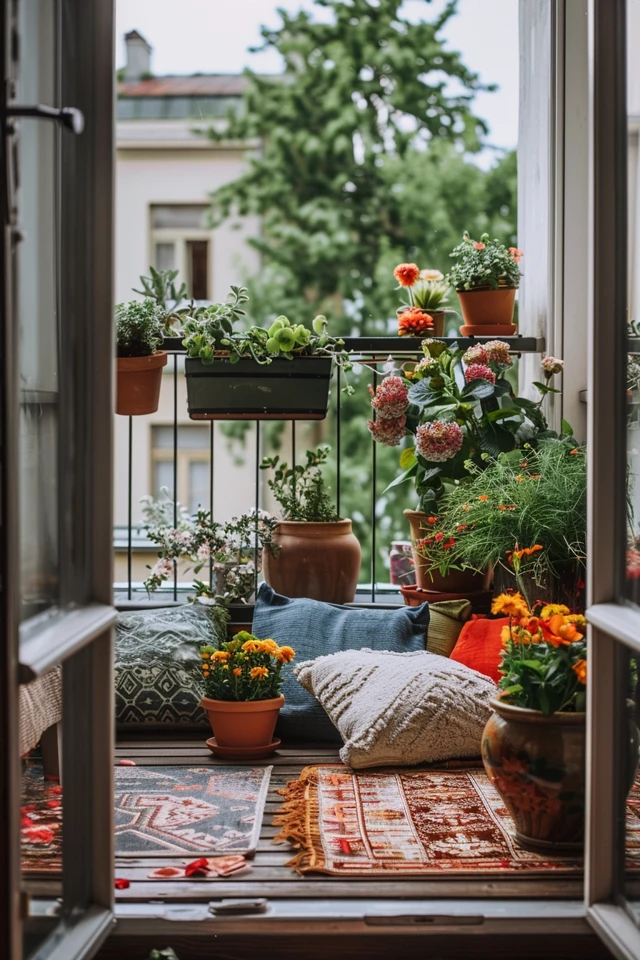
Zen Balcony Decor: Create a Peaceful Oasis
Living in a bustling city or a busy apartment complex often means noise, visual clutter, and a lack of private outdoor space. We often treat our balconies as storage units for dead plants or bicycles, ignoring their potential as a sanctuary. But with the right design approach, even a standard 5×10-foot concrete slab can become a retreat for meditation and morning coffee.
I remember my first apartment balcony, which overlooked a noisy alleyway. By using bamboo screening and sound-dampening textiles, I transformed it from a grit-trap into the only place where I could truly think. For a huge dose of visual inspiration, scroll all the way down to see the Picture Gallery at the end of this post.
Creating a Zen balcony isn’t just about buying a Buddha statue; it is about establishing flow, reducing visual noise, and engaging the senses. We will look at structural layout, plant selection, and material durability to ensure your space lasts through the seasons.
1. Laying the Foundation: Flooring and Boundaries
The biggest atmosphere killer on most balconies is the standard-issue gray concrete or stained wood decking. In Zen design, the ground represents stability, so you must cover unsightly surfaces to set the tone.
I almost always recommend interlocking deck tiles for renters. They float above the existing surface, allowing water to drain underneath, and come in teak, acacia, or composite stone finishes.
If you are working with a long, narrow balcony (common in apartments), run the deck tile slats perpendicular to the building. This visual trick pushes the eye outward, making the space feel wider rather than like a bowling alley.
For a softer approach, layer an outdoor rug over the tiles. However, do not cover the entire floor. In Japanese garden design, “Ma” (negative space) is essential. Leave at least a 6-to-8-inch border of flooring visible around your rug to let the space breathe.
Designer’s Note: The Drainage Trap
A common disaster I see in DIY balcony makeovers is blocking the weep holes or drainage scuppers. These are the small gaps at the bottom of the balcony wall that let rain escape.
Never push mulch, rocks, or rugs tight against the outer wall. I always leave a 1-inch gap between the flooring material and the wall to prevent mold buildup and standing water.
Common Mistakes + Fixes
- Mistake: Using indoor rugs that trap moisture against the concrete.
- Fix: Use polypropylene or recycled plastic rugs. They are mold-resistant and can be hosed off.
- Mistake: Uneven edges where deck tiles don’t fit the dimensions.
- Fix: Fill the awkward 2-inch or 3-inch gaps along the edges with smooth river stones. This adds a textural Zen element and solves the fit issue without cutting tiles.
2. Vertical Gardens and Privacy Screening
Zen is synonymous with privacy and introspection. If you can see your neighbor’s laundry, it is hard to reach a state of calm. You need to create a “soft enclosure” that blocks unsightly views without blocking light.
Bamboo roll-up blinds are a classic solution, but they can be noisy in the wind. A better structural option is a faux-hedge wall or a slat-wood screen attached to the railing with heavy-duty zip ties.
When selecting plants for a Zen aesthetic, think about foliage over flowers. You want calming greens, not a riot of chaotic colors. Bamboo is the obvious choice, but be careful with the variety.
Choose “clumping” bamboo (like Fargesia) rather than “running” bamboo, which can crack pots. If you have a shady balcony, Japanese Aralia or Ferns provide that lush, prehistoric green vibe that feels very grounding.
Pro Tip: The Rule of Three
When arranging planters, avoid symmetry, which can feel rigid. Group pots in clusters of three at varying heights.
1. A tall, vertical plant (like Bamboo or Snake Plant) for the back.
2. A mid-height leafy plant (like a Hosta) for the middle.
3. A trailing plant (like Creeping Jenny) to spill over the edge.
What I’d Do in a Real Project
- I would measure the railing height precisely. If the railing is 42 inches high, I select planters that are at least 30 inches tall.
- This raises the “green line” so that when you are sitting down, you see plants, not the metal bars of the railing.
- I would use resin planters that look like stone or concrete. Real concrete is often too heavy for balcony weight load limits.
3. Furniture Selection: Low Profiles and Natural Materials
In traditional Japanese interiors, life happens closer to the floor. Adopting a low-profile furniture layout on your balcony makes the ceiling feel higher and the space feel more expansive.
Avoid standard patio dining sets. High tables and chairs clutter the vertical space and block the view. Instead, opt for a low teak coffee table and deep lounge seating or floor cushions.
If you have a very small balcony (under 4 feet deep), skip the sofa entirely. Use an oversized “egg” chair or a pair of low-slung rope chairs.
Space Planning Rules of Thumb
- Passage Width: Always keep a clear pathway of at least 30 inches to the door. You should never have to turn sideways to step outside.
- Knee Clearance: Keep 14 to 18 inches of distance between the edge of your seat and your coffee table.
- Scale: If your balcony is 40 square feet or less, choose furniture with “open” frames (like wicker or wire) rather than solid blocky pieces. Seeing the floor through the furniture makes the space look larger.
Material Durability Checklist
- Teak: Beautiful and silvers over time, but requires oiling twice a year to maintain the brown color.
- Powder-Coated Aluminum: Rust-proof and lightweight. Great for modern Zen looks. Avoid black metal if the balcony gets direct afternoon sun, as it will burn your skin.
- Rope/Wicker: Ensure it is “all-weather” synthetic. Natural rattan will rot outdoors within two seasons.
4. The Sensory Experience: Water and Light
A visually beautiful balcony can still feel stressful if you hear city traffic. While you cannot soundproof an outdoor space completely, you can introduce “white noise” to mask it.
A small, recirculating water feature is essential for a Zen theme. The sound of trickling water gives the brain something rhythmic to focus on, distracting it from sirens or chatter.
Look for self-contained resin fountains that plug into a standard outlet. If you don’t have an outdoor plug, solar-powered bird bath fountains are a decent alternative, though they only work in direct sun.
Lighting is the second half of the sensory equation. Never rely on the harsh overhead bulkhead light provided by the apartment complex.
Lighting Layering Strategy
- Ambient: String lights with a warm Kelvin temperature (2700K). Zig-zag them overhead or run them along the railing.
- Task: Solar lanterns placed on the floor in corners. This uplighting effect casts dramatic shadows through your plants.
- Accent: LED candles (wax-coated for realism) on tables. Real candles often blow out too easily on balconies.
Designer’s Note: Light Pollution
Be a good neighbor. Ensure your lights are shielded or point downward. In a Zen design, we want a soft glow, not a spotlight. I often put string lights on a smart plug timer so they turn off automatically at 11 PM.
5. Finishing Touches: Rocks, Sand, and Simplicity
The final layer of decor is where the “Zen” personality really shines through. This is where we add texture without adding clutter.
River rocks are your best friend. Use polished black or gray stones to top-dress your planters. This hides the potting soil, retains moisture for the plants, and looks incredibly high-end.
If you have a corner that is too small for furniture, consider creating a mini dry garden (枯山水, karesansui). Use a shallow tray filled with sand and a few strategically placed rocks. It serves as visual art and can be a meditative activity to rake the sand.
Limit your color palette. A Zen space usually relies on neutrals: stone gray, warm wood tones, forest green, and perhaps accents of white or navy. Avoid bright reds, oranges, or neons, which excite the nervous system rather than calming it.
Common Mistakes + Fixes
- Mistake: Too many small trinkets. A collection of ten small pots looks messy.
- Fix: Consolidation. Replace ten small pots with one large, rectangular trough planter. It looks cleaner and creates a stronger architectural line.
- Mistake: Ignoring wind. Balconies create wind tunnels.
- Fix: Secure everything. Use Velcro strips for cushions and weigh down lightweight decor with heavy stones or sandbags hidden inside the base.
Final Checklist: The “What I’d Do” Summary
If I were hired to design your balcony this weekend, this is the exact workflow I would follow. Print this out and use it as your project tracker.
Phase 1: Prep & Base
- Clear the balcony completely and scrub the floor/railings.
- Measure length and width. Sketch a rough layout.
- Install interlocking deck tiles (leave a gap at the edges).
- Fill edge gaps with river stones.
Phase 2: Privacy & Greenery
- Install privacy screening (bamboo or faux hedge) on the railing.
- Purchase three large planters (lightweight resin).
- Plant tall grasses or bamboo for height and screening.
- Top-dress soil with polished stones.
Phase 3: Furnishing
- Place an outdoor rug (leaving a border visible).
- Assemble low-profile seating.
- Add a small, sturdy coffee table.
- Check clearances (can you walk to the door easily?).
Phase 4: Atmosphere
- Hang warm-tone string lights.
- Set up a small water feature (fill with distilled water to prevent scale).
- Add throw pillows in weather-resistant fabric.
FAQs
Can I leave my Zen decor out all year?
It depends on your climate. Synthetic resin wicker and teak are generally fine, but soft goods (cushions/rugs) must be stored or covered during heavy rain or snow. Ceramic pots may crack in freezing temperatures; stick to fiberglass or resin if you have harsh winters.
How do I handle a balcony with no electrical outlet?
Focus on high-quality solar products. Look for solar lanterns with large separate panels that you can stake into your flower pots to catch the sun. Battery-operated LED candles with built-in timers are also excellent for evening ambiance without wiring.
What is the best way to clean deck tiles?
For wood tiles, sweep regularly and wash with a mild soap solution once a season. Re-oil them annually. For composite or stone tiles, a simple hose-down or a scrub with a stiff broom and water is usually sufficient.
My balcony is extremely windy. What plants will survive?
Wind dries out plants quickly and can shred large leaves. Avoid Banana plants or large-leaf Alocasia. Stick to ornamental grasses, hardy palms, bamboo (secure the pot well), or succulents like Jade and Agave which are aerodynamic and tough.
Conclusion
Transforming your balcony into a Zen oasis is one of the most rewarding home improvement projects you can tackle. It expands your living footprint and provides a necessary mental break from the digital world.
Remember that Zen design is a process of reduction, not accumulation. Start with a quality floor, add comfortable seating, and bring in nature. If an item doesn’t serve a function or bring you peace, it doesn’t belong on your balcony.
Take your time with the layout. Sit in the space at different times of the day to understand the light and noise patterns before buying furniture. Your balcony is ready to become your favorite room in the house.
Picture Gallery


