
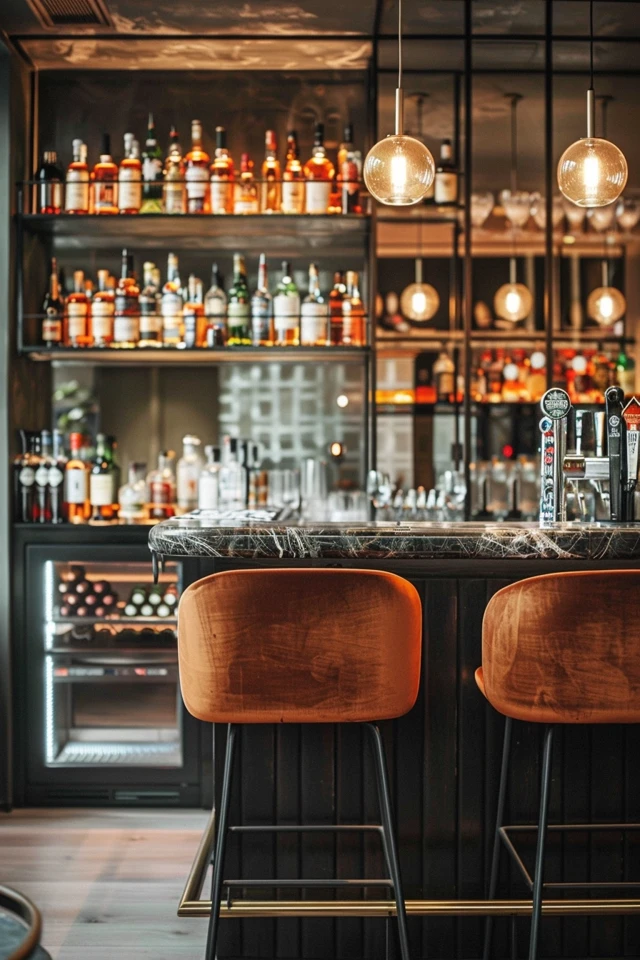
5 Eclectic Home Bar Ideas for a Unique Space
Designing a home bar is one of the most playful tasks in interior design because it allows you to break the rules of the rest of the house. Unlike a kitchen, which requires strict ergonomic efficiency, or a bedroom that demands serenity, a home bar is purely about atmosphere and hospitality. It is the perfect candidate for an eclectic style, where you can mix eras, textures, and finishes to create a space that feels collected rather than bought from a catalog.
I often tell clients that an eclectic bar should feel like a distinct destination, even if it is just a corner of your living room. For visual inspiration on how these disparate elements come together, be sure to scroll down to the Picture Gallery at the end of the blog post.
Whether you are working with a sprawling basement game room or a tight apartment nook, the principles of scale, lighting, and texture remain the same. The goal is to create friction between styles—like pairing a sleek modern countertop with a vintage Persian runner—to spark visual interest.
1. The “Cabinet of Curiosities” Freestanding Bar
This approach is ideal for renters or homeowners who do not want to commit to built-in cabinetry. The concept revolves completely around a statement piece of furniture, usually an upcycled antique armoire, a mid-century sideboard, or a vintage secretary desk. The “eclectic” nature comes from modifying a traditional piece of furniture to serve a modern, functional purpose while filling it with contrasting glassware.
For a recent project, we took a heavy, Victorian-era walnut wardrobe and lined the interior back panel with a modern, geometric peel-and-stick wallpaper. The contrast between the dark, ornate wood and the crisp, bright paper created an instant focal point when the doors were opened.
Designer’s Note: Structural Integrity
The most critical aspect of repurposing furniture for a bar is weight capacity. Liquor bottles are incredibly heavy. A standard 750ml bottle weighs roughly 3 pounds. If you line up 10 bottles, you are putting 30 pounds of localized stress on a shelf.
Most antique wardrobe shelves are designed for linens, not liquid. I always reinforce existing shelves with simple L-brackets underneath or replace the shelf board entirely with 3/4-inch plywood tailored to match the wood stain.
What I’d Do in a Real Project
- The Vessel: Source a tall cabinet with doors that can swing open 180 degrees so they don’t block traffic flow.
- The Lighting: Install battery-operated, motion-sensor LED puck lights inside the cabinet. Hardwiring antiques is difficult, but lighting the bottles is non-negotiable for the “wow” factor.
- The Shelf Spacing: I set the bottom shelf height to at least 14 inches. Most standard liquor bottles are 11–12 inches tall, but you need clearance to lift them out without tilting.
- The Accessories: Use a mix of vintage colored glass goblets and sleek, clear crystal tumblers. The mismatch is intentional and charming.
2. The High-Gloss “Jewel Box” Nook
If you have a small reach-in closet or an alcove under a staircase, you have the footprint for a “Jewel Box” bar. This eclectic style leans heavily on maximalism. The strategy here is to envelop the small space in deep, saturated color or pattern so that it feels like a hidden discovery.
The eclectic tension here is usually between the architectural constraint (a tiny, awkward closet) and the luxury of the finishes. I love pairing high-gloss paint (lacquer look) with raw, industrial brass hardware.
Common Mistakes + Fixes
Mistake: Ignoring the ceiling.
Fix: In a small recessed bar, the ceiling is highly visible. Wallpaper the ceiling or paint it the same color as the walls. This blurs the boundaries of the room and makes the small space feel infinite rather than cramped.
Mistake: Standard counter height issues.
Fix: A standard kitchen counter is 36 inches high. However, in a closet bar where you stand to mix drinks but don’t sit, I often raise the counter to 40-42 inches. This brings the work surface closer to your hands and allows for more storage underneath.
Material Checklist
- Countertop: Remnant stone. Because the square footage is small, you can often afford a high-end slab of quartzite or marble from a stone yard’s “bone yard” (leftover pieces).
- Mirror: Antiqued or smoked mirror for the backsplash. Clear mirrors can feel too bathroom-like in a small nook. Smoked glass adds moodiness and hides splashes.
- Hardware: Unlacquered brass prep sink faucet (if plumbing allows). The patina that develops over time adds to the lived-in, eclectic vibe.
3. The Library Lounge Hybrid
This style merges the intellectual warmth of a home library with the relaxation of a cocktail lounge. This is arguably the most functional eclectic mix because it encourages you to use the room for multiple activities: reading in the morning and entertaining at night.
The aesthetic blends dark wood shelving, leather textures, and metallic accents. We are looking for a “collected” feel where books, art, and spirits share the same vertical real estate.
Lighting Rules of Thumb
Lighting is the make-or-break element in a library bar. You need task lighting for reading labels and ambient lighting for mood.
- Shelf Lighting: Use LED tape lights along the front lip of the shelves, facing inward. This washes light down the back of the books and bottles without shining in your eyes.
- Picture Lights: Mount brass picture lights on the header of the shelving unit.
- Color Temperature: Stick strictly to 2700K (warm white). Anything cooler (3000K+) will make the wood look clinical and kill the cozy vibe.
What I’d Do in a Real Project
- The Seating: I would choose two velvet swivel chairs rather than a sofa. Swivels allow guests to turn toward the bar for a drink or toward a lamp for reading.
- The Rug: A vintage Oushak or Persian rug is essential here to anchor the eclectic mix. Ensure the rug is large enough that the front feet of all seating furniture sit on it.
- The Separation: I designate specific shelves for the bar components rather than scattering them. Usually, the two shelves at counter height (approx. 36 inches) serve as the mixing station, utilizing a pull-out tray or a deeper shelf section.
4. The Industrial-Botanical Mashup
This eclectic style softens the harshness of industrial design with the chaos of nature. Think exposed brick, concrete countertops, and black metal piping mixed with overflowing trailing plants, rattan textures, and warm terracotta hues. It is gritty but welcoming.
This is a fantastic option for basement renovations where you might already have exposed ductwork or concrete floors. Instead of fighting the raw elements, we highlight them and layer in organic warmth.
Designer’s Note: The “Working” Triangle
Even in a home bar, flow matters. If you have a sink and a fridge, keep them within pivoting distance.
- The Aisle Width: If you have a bar island, you need a minimum of 36 inches of clearance between the back bar and the island for one person to work comfortably. If it’s a high-traffic zone, push that to 42–48 inches.
- The Bar Overhang: If you want guests to sit at the bar, the countertop overhang must be at least 10–12 inches to accommodate knees. Anything less is uncomfortable.
Styling the Greenery
Plants in a bar area need to be placed strategically.
- Avoid: Potted plants directly on the mixing surface. Soil and drink prep are a bad sanitary mix.
- Do: Use wall-mounted planters or hang trailing pothos from the ceiling above the bar.
- The Vibe: Use amber glass spray bottles for plant misting—they look like apothecary jars and fit the bar aesthetic perfectly.
5. The Retro Glamour Wet Bar
This style is a nod to the 1970s but updated for today. It features curved lines, terrazzo surfaces, and fluted wood details. The eclectic twist comes from mixing these retro shapes with ultra-modern art and technology.
This style works best in open-plan living/dining areas where the bar needs to look like a piece of art when not in use. We often use curved cabinetry to soften the edges of the room.
Pro-Level Finish Coordination
The key to 70s eclectic is texture over pattern.
- The Wood: Walnut or stained oak with a fluted (ribbed) profile.
- The Stone: Terrazzo with large aggregate chips, or a dramatic veined marble like Viola.
- The Metal: Polished chrome or nickel. This cools down the warm wood tones and feels authentically retro.
Common Mistakes + Fixes
Mistake: Incorrect Stool Height.
Fix: This is the most common error I see.
- If your counter is 36 inches high (standard kitchen height), you need counter stools with a seat height of 24–26 inches.
- If your bar top is 42 inches high (raised bar height), you need bar stools with a seat height of 28–30 inches.
- Always measure from the floor to the top of the seat. Leave 10–12 inches of thigh clearance between the seat and the counter underside.
Final Checklist for Your Eclectic Bar
Before you finalize your design, run through this quick checklist to ensure the space functions as well as it looks.
- Power Sources: Do you have outlets for a mini-fridge, wine cooler, or blender? Hiding cords is much harder after the build is done.
- Floor Protection: If you are using a rug, is it durable? Alcohol spills are inevitable. I recommend wool (naturally stain resistant) or a high-quality performance synthetic. Avoid viscose, which stains with plain water.
- Glassware Variety: For an eclectic look, aim for 3 distinct styles of glass. For example: heavy crystal rocks glasses, delicate vintage coupes, and colored water tumblers.
- Dimmer Switches: Every light source in a bar area must be on a dimmer. Full brightness is the enemy of atmosphere.
- Surface Durability: If you choose real marble, be prepared for etching (dull spots) from citrus juice and wine. If you want perfection, opt for a quartz alternative that mimics the stone.
FAQs
How do I mix metals in a home bar without it looking messy?
The rule of thumb is to pick one dominant metal (e.g., brass) for roughly 70% of the finishes (cabinet handles, faucet). Use a secondary accent metal (e.g., matte black or polished nickel) for the remaining 30% (light fixtures, accessories). Avoid mixing more than two distinct metal finishes in a small zone.
What is the best paint finish for a home bar?
I almost always recommend a Satin or Semi-Gloss finish for cabinetry and walls in a bar area. Alcohol, mixers, and garnishes can splash. Matte paint is porous and difficult to wipe down. A slight sheen is not only practical but also reflects light, adding to the “glam” factor of the space.
Can I have a home bar if I don’t have plumbing?
Absolutely. This is called a “dry bar.” You simply omit the sink. Focus on storage, a great countertop for mixing, and perhaps a small under-counter beverage fridge (which only requires an electrical outlet, not plumbing). You just have to bring ice from the kitchen.
Conclusion
Creating an eclectic home bar is an exercise in balance. It requires the confidence to pair a battered leather chair with a shiny brass table, or to place a neon sign against traditional floral wallpaper. The success of the design lies not in the price of the materials, but in the intentionality of the layout.
Remember that the measurements—counter height, aisle clearance, shelf spacing—are the invisible skeleton that holds the design together. Once you get the “boring” math right, you have total freedom to layer in the personality. Start with one anchor piece or one specific mood, and build outward from there. Your home bar should eventually tell a story about where you have been and what you love, all while serving up a perfectly chilled drink.
Picture Gallery


