
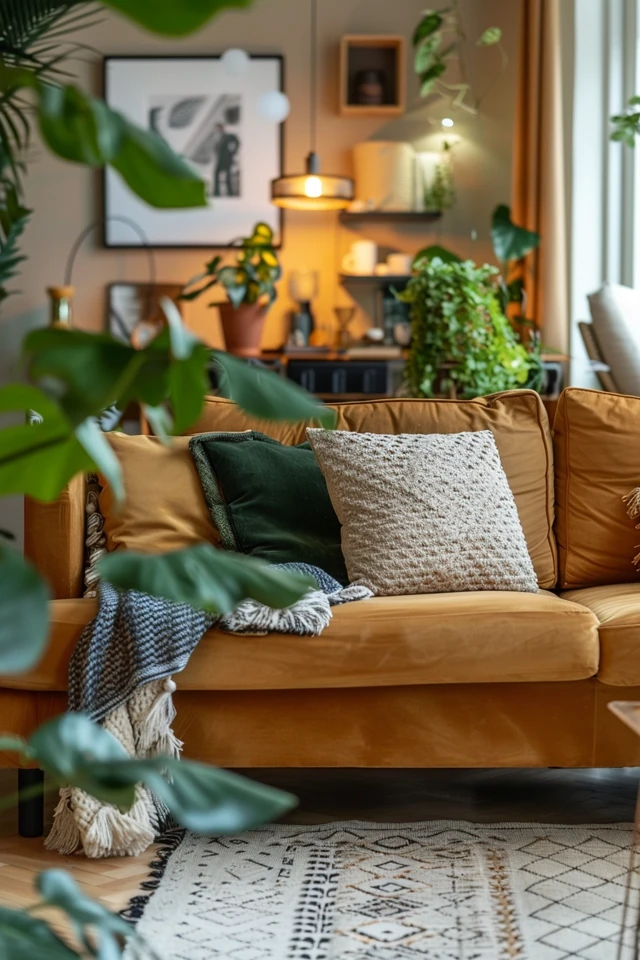
Chic Camel Couch Living Room Ideas to Inspire You
A camel couch is arguably the most versatile piece of furniture you can own. In my design practice, I often refer to it as the “little black dress” of the living room. It manages to feel grounded and earthy while simultaneously acting as a neutral backdrop for almost any design style.
Whether you are aiming for a moody mid-century modern aesthetic or a light, airy bohemian vibe, this specific shade of warm tan works hard for you. However, getting the styling right requires a bit of strategy to prevent the room from feeling too monochromatic or outdated. I remember a client who was terrified that a leather camel sofa would make her living room look like a 1970s den, but once we layered in the right textiles, it became the chicest room in her house.
If you are looking for visual examples of these layouts, make sure to check out our curated Picture Gallery at the end of the blog post. Let’s dive into the practical design rules and styling techniques that will make your camel couch the star of your home.
1. Mastering the Color Palette: What Goes with Camel?
The most common question I get regarding camel furniture is about color coordination. Camel is essentially a warm neutral with strong yellow and orange undertones. To make it sing, you have to decide if you want to complement those undertones or contrast them.
If you want a high-contrast, dramatic look, look at the color wheel. Blue is the direct opposite of orange. This is why you see so many deep navy or charcoal walls paired with camel leather. The contrast makes the leather pop and look richer.
For a softer, more organic feel, I love pairing camel with sage green or olive tones. This creates an “earth-on-earth” palette that feels very grounded. It works exceptionally well in homes with large windows and garden views, bringing the outdoors in.
Designer’s Note: The “Orange” Fear
Many clients worry their sofa will look too orange. If you paint your walls a cool gray, the orange undertones in the leather will intensify. If you want to neutralize the orange, pair the sofa with warm whites (like Sherwin Williams Alabaster) or warm woods. The warmth in the surroundings will absorb the warmth of the couch, making it look more neutral.
2. Texture Layering: The Key to Coziness
If you have chosen a leather camel couch, you are dealing with a sleek, smooth, and sometimes cold surface. In interior design, we balance materials through contrast. You never want to pair a shiny leather sofa with shiny silk pillows; the slipping and sliding is impractical, and the look is too cold.
You need to introduce “high-tactile” fabrics. I always recommend wool, boucle, chunky knits, or linen. These matte textures absorb light, whereas the leather reflects it. This balance is what makes a room feel professionally designed.
Rug Selection Rules
The rug is the foundation of your living area. With a camel sofa, avoid beige rugs that match the leather tone too closely. It will look like a “flesh-toned” blob in the middle of the room.
Instead, opt for:
- Vintage styles: Persian-style rugs with reds and deep blues look historic and expensive next to camel.
- Jute or Sisal: For a coastal or boho look, natural fibers add necessary grit and texture.
- Cream Berber: A fluffy cream rug with a black geometric pattern offers high contrast and modern vibes.
3. Defining Your Design Era
One of the reasons I specify camel couches so often is that they are stylistic chameleons. The vibe of the room depends entirely on the supporting furniture. Specifically, the legs of your furniture and the silhouette of your accent chairs will dictate the era.
Mid-Century Modern (MCM)
This is the most natural fit. To achieve this, look for a sofa with tufted cushions and tapered wooden legs. Pair it with a walnut coffee table. The wood tone of walnut is usually darker than the camel leather, creating a lovely separation. Keep the silhouette of your accent chairs low and sleek.
Scandi-Boho
For a more relaxed, California-cool vibe, choose a camel sofa with a slouchier, deeper seat. Instead of dark walnut, mix in white oak or ash woods. Add plenty of greenery—a large Ficus or Monstera plant next to a camel sofa is a classic pairing for a reason. The green vibrant leaves enliven the brown leather immediately.
Industrial Edge
If you live in a loft or want a more masculine edge, lean into black metal accents. A camel sofa looks incredible next to a black iron floor lamp or a coffee table with metal framing. The black creates a graphic outline that sharpens the soft brown of the sofa.
4. Spatial Planning and Layout Logic
Regardless of how beautiful the sofa is, the room won’t work if the layout is cramped. As a designer, I live by specific measurements to ensure flow and function.
The Coffee Table Gap
A camel couch, especially in leather, can have a visual “heaviness.” You need to give it room to breathe. Place your coffee table 14 to 18 inches away from the edge of the sofa.
If you get closer than 14 inches, you will hit your shins. If you go further than 18 inches, you cannot comfortably set down a drink.
Rug Sizing for Camel Sofas
A common mistake is buying a rug that is too small. A camel couch demands presence. If you have a standard 84-inch sofa, you almost certainly need an 8×10 or 9×12 rug.
The Rule of Thumb: At a minimum, the front two legs of the sofa must rest on the rug. Ideally, all four legs should be on it if the room size allows. This anchors the furniture so it doesn’t look like a raft floating in a sea of flooring.
Side Table Height
Pay attention to the arm height of your specific couch. Your side tables should be within 2 inches of the arm height. If they are too low, the visual scale looks off, and the sofa will look monstrously large in comparison.
5. Lighting: Setting the Mood
Lighting changes how we perceive the color of camel leather or velvet. Because camel is a warm tone, you must use warm lighting.
Avoid “daylight” bulbs that range from 4000K to 5000K. These emit a blue light that will make your beautiful warm leather look sickly and green-cast.
Stick to bulbs in the 2700K to 3000K range. This soft white light enhances the natural richness of the upholstery.
Floor Lamps vs. Sconces
I love placing a floor lamp behind a camel sectional. If you have a leather sofa, look for a lamp with a fabric shade (like linen). Again, this goes back to texture mixing. The fabric shade softens the look of the leather.
If you are tight on space, wall sconces are a great alternative. Matte black sconces provide that industrial contrast I mentioned earlier, while brass sconces lean into the warm, monochromatic look for a glam feel.
6. Maintenance and Real-Life Durability
I often work with families who have young kids and pets. They want the look of a chic camel sofa, but they are worried about destruction. The good news is that camel leather is one of the most forgiving materials you can choose, provided you buy the right type.
Leather Types Matter
If you are buying a camel leather couch, check if it is “aniline” or “pigmented/protected.”
Aniline leather is dyed without a protective topcoat. It is buttery soft but will scratch if a dog looks at it wrong. However, many people love this. Over time, the scratches blend into a patina that looks vintage and lived-in.
If you are a perfectionist who hates scratches, buy protected or semi-aniline leather. It has a coating that resists claws and spills, though it feels slightly less natural.
Fabric Options
If you prefer velvet or linen in a camel tone, you must treat the fabric. Camel is light enough that red wine or dark soda spills will show. I always recommend professional stain guarding for fabric sofas in this color family.
Common Mistakes + Fixes
Mistake: Placing a camel leather sofa in direct, harsh sunlight.
Fix: Leather fades and cracks with UV exposure. If your layout requires the sofa to be near a south-facing window, use sheer curtains to diffuse the light or apply a leather conditioner every 3 to 6 months to keep it hydrated.
Final Checklist: What I’d Do in a Real Project
If I were styling your living room with a camel couch today, here is the exact mental checklist I would run through:
- Check the Undertones: Bring a swatch of the sofa home. Does it look yellow, orange, or beige in your lighting?
- Anchor with Black: I would ensure there is at least one black accent in the room (picture frame, lamp, or pillow pattern) to ground the space.
- Add Life: I would place a tall green plant nearby to contrast the brown.
- Layer Textiles: I would add two throws—one chunky knit and one lighter cotton—to break up the expanse of leather.
- Mix Woods: I would avoid matching the coffee table wood exactly to the sofa legs. I would aim for a shade lighter or darker for contrast.
FAQs
Can I mix a camel couch with grey walls?
Yes, but the shade of grey matters. Avoid cool, icy greys, as they clash with the warm leather. Opt for “greige” (warm grey) or dark charcoal for a dramatic, moody look.
What color pillows work best with a camel sofa?
Navy blue, sage green, cream, terracotta, and charcoal grey are the best options. Avoid bright primary colors like fire engine red or bright purple, as they can look cheap against the sophisticated camel tone.
Is a camel couch trendy or timeless?
Camel leather sofas are timeless. They have been a staple in design for decades, from Victorian libraries to modern lofts. While specific silhouettes (like the cloud couch) may come and go, the color and material are classics.
Does denim transfer onto camel leather?
It can, especially on lighter camel tones and with new dark-wash jeans. This is called dye transfer. Regular cleaning with a leather-specific wipe can prevent this from becoming permanent.
Conclusion
Choosing a camel couch is a bold but safe investment in your home’s design. It offers a warmth that grey sofas lack and a durability that white sofas can’t compete with.
By focusing on the right color pairings, layering diverse textures, and respecting the layout rules of the room, you can create a space that feels curated and high-end. Remember that the couch is just the starting point; the magic happens in the mix of rugs, lighting, and textiles you layer around it.
Picture Gallery


