
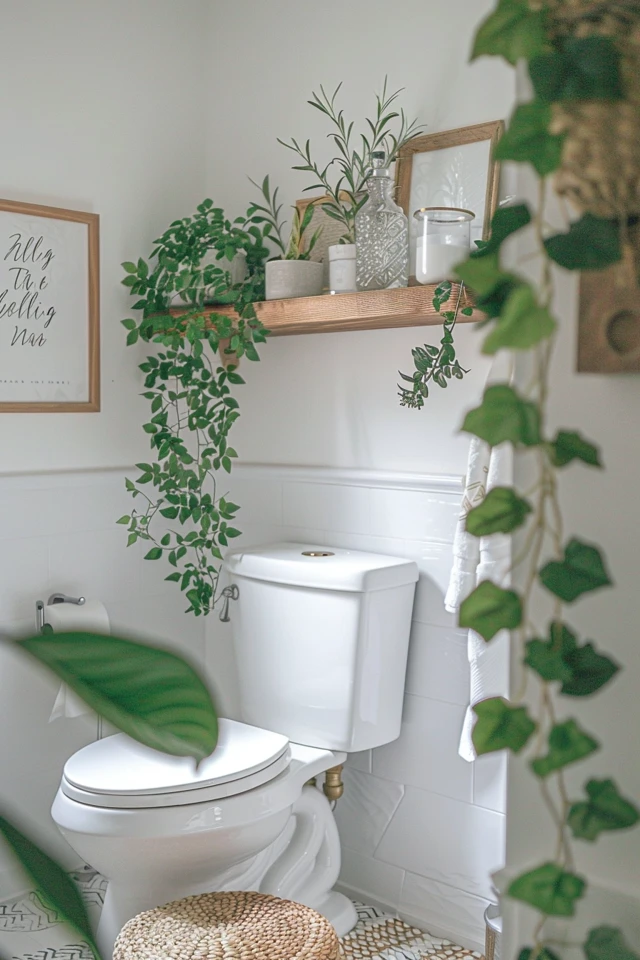
Chic Over the Toilet Decorating Ideas for Bathrooms
The space directly above the toilet is often the most neglected square footage in a bathroom. It is a vertical void that, when left empty, can make the room feel unfinished or strictly utilitarian. However, when approached with a designer’s eye, this area offers a prime opportunity to add storage, personality, and visual height to a compact space.
Many homeowners hesitate to decorate here because of the obvious logistical challenges. There are concerns about items falling into the bowl, blocking access to the tank for repairs, or simply overcrowding a small room. But with the right measurements and secure installation methods, you can transform this “dead zone” into a focal point.
Whether you are renting an apartment or remodeling a master bath, the solutions range from simple floating shelves to architectural paneling. You can find a curated Picture Gallery at the end of this post to visualize these concepts. Let’s explore how to maximize this vertical real estate with style and function.
1. Mastering the Floating Shelf Layout
Floating shelves are the most versatile solution for over-the-toilet storage. They provide a clean, modern look that doesn’t weigh down the room visually. However, the success of this look depends entirely on placement and scale.
If you hang shelves too low, you block access to the tank; hang them too high, and they look disconnected from the rest of the room. The goal is to create a visual link between the toilet and the ceiling while keeping everything within reach.
The Golden Rules of Shelf Placement
As a designer, I see shelf placement mistakes constantly. Here are the specific measurements I use in client projects:
- Clearance: Install the bottom shelf at least 10 to 12 inches above the top of the toilet tank. This allows you to remove the tank lid for maintenance without taking the shelf down.
- Depth: Keep shelf depth between 8 and 10 inches. Anything deeper than 10 inches increases the risk of bumping your head when standing up.
- Spacing: If installing multiple shelves, space them 12 to 15 inches apart vertically. This accommodates taller items like folded towels or tall candle holders.
Material Selection
Wood adds warmth to sterile, tiled bathrooms. If your vanity is oak or walnut, try to match that tone with your shelving to create cohesion. For a more industrial or modern vibe, matte black metal or tempered glass shelves work beautifully and are impervious to moisture.
Designer’s Note: The Safety Factor
What usually goes wrong: Shelves are installed with standard drywall anchors that pull out over time, or items are placed loosely and fall due to vibration from door slams.
How to prevent it: Always try to hit at least one stud. If you can’t, use toggle bolts (snaptoggles) rather than plastic plugs. For styling, use museum putty or clear glue dots to secure lightweight decor items to the shelf surface. This is a non-negotiable step if you have children or pets.
2. Statement Art and Photography
Sometimes you don’t need storage; you need personality. The bathroom is often filled with hard surfaces like porcelain, tile, and metal. Adding framed art introduces a necessary “soft” element that absorbs sound and adds character.
A single large piece of art creates a calm, centered focal point. Alternatively, a vertical stack of two or three smaller frames can draw the eye upward, making the ceiling feel higher.
Sizing Your Art Correctly
Scale is everything. A tiny 5×7 frame floating in the middle of the wall will look lost and cluttered. A piece that is wider than the toilet tank will feel top-heavy and unstable.
My rule of thumb is to keep the artwork width between 75% and 90% of the toilet tank’s width. This creates a balanced pyramid shape where the “base” (the toilet) is slightly wider than the visual element above it.
Moisture-Proofing Your Gallery
Bathrooms are humid zones. Steam can ruin original canvas paintings or warp paper prints. Here is how to protect your investment:
- Avoid originals: Use prints or reproduction art in this space. Save the oil paintings for the hallway.
- Seal the back: If you are framing a print, apply brown framing tape to the back of the frame to seal out moisture and dust.
- Use Acrylic: Opt for acrylic (plexiglass) instead of glass. It is lighter and safer. If it accidentally falls, it won’t shatter into dangerous shards on the ceramic tile.
Common Mistakes + Fixes
Mistake: Hanging art too high, leaving a large gap between the tank and the frame.
Fix: Treat the toilet tank like a piece of furniture. The bottom of the frame should be roughly 8 to 10 inches above the tank. It should feel connected to the fixture, not floating near the ceiling.
3. Enclosed Cabinetry and Built-Ins
For bathrooms that lack linen closets, open shelving is often not practical. You don’t necessarily want to display extra toilet paper rolls, cleaning supplies, or feminine hygiene products. In these cases, enclosed cabinetry is the superior choice.
This approach moves away from the “decorative” and leans into heavy-duty functionality. However, standard kitchen cabinets are too deep for this application. You need specific bathroom wall cabinets or custom millwork.
The Custom Built-In Look
If you are renovating, consider building a recessed niche or a floor-to-ceiling cabinet unit around the toilet. This creates a seamless look where the toilet feels integrated into the architecture rather than just sticking out of the wall.
If a renovation isn’t in the budget, you can hack the look using an “over-the-toilet saver” unit. The key to making these look expensive is to avoid the cheap wire metal ones. Look for solid wood units with doors that hide the contents.
What I’d Do in a Real Project: The Cabinet Hack
Here is a trick I use to make store-bought cabinets look custom:
- Buy a standard wall-mounted bathroom cabinet (typically 24 inches wide).
- Mount it to the wall securely, leaving 10 inches of clearance above the tank.
- Install a piece of floating timber or a shelf directly below the cabinet. This creates an open “styling moment” for a plant or candle, while the ugly clutter remains hidden behind the doors above.
- Swap out the standard knobs for high-end brass or matte black hardware that matches your faucet.
Designer’s Note: Depth Perception
Standard upper kitchen cabinets are 12 inches deep. This is too deep for over a toilet; it will feel like a looming box over your head. Search specifically for “bathroom wall cabinets” or “medicine cabinets” which usually have a depth of 6 to 9 inches. This 3-inch difference is critical for comfort.
4. The Hotel Towel Rack
If you have limited wall space for towel bars elsewhere, the space above the toilet is an excellent location for a “train rack” or hotel-style towel shelf. This adds a spa-like, high-end hotel vibe to the bathroom.
This is particularly effective in guest bathrooms where you want fresh towels to be immediately visible and accessible. The metal finish of the rack adds a nice gleam and breaks up a painted wall.
Styling the Towel Rack
The key to this look is the quality of the linens. Since they are on display, the towels need to be in good condition. Fluffy, white towels always look the most expensive and crisp.
Fold your towels in thirds lengthwise, then roll them tightly. Stack three or four rolls on the top shelf. Hang one hand towel or bath towel from the bar below. This repetition creates a sense of order and cleanliness.
Installation Best Practices
Towel racks, when fully loaded, are heavy. The leverage meant by pulling a towel off the bar adds stress to the wall anchors. You must install these into studs or use heavy-duty toggle bolts. Never rely on the small plastic anchors that come in the box.
5. Architectural Details: Shiplap and Wallpaper
Sometimes the best way to decorate the space over the toilet is to change the wall itself. Defining the area behind the toilet creates a vertical zone that draws the eye up without requiring shelves or cabinets.
This is a fantastic strategy for small powder rooms where shelves might make the space feel claustrophobic. By applying a flat treatment to the wall, you add interest without encroaching on the physical space.
Wallpaper Accents
The wall behind the vanity and toilet is often the best place for an accent wall. A bold botanical print or a subtle geometric texture can disguise uneven walls and hide the visual bulk of the toilet tank.
If you are renting, peel-and-stick wallpaper is a durable and reversible option. Vinyl-based wallpapers are best for bathrooms as they resist humidity and can be wiped down.
Paneling and Beadboard
Installing beadboard or shiplap up to a height of 48 inches (wainscoting) helps ground the toilet. You can then paint the paneling a semi-gloss white or a moody dark green.
Above the wainscoting, you can hang a single piece of art. The horizontal line of the paneling cap acts as a shelf of sorts, visually separating the “utility” lower half of the wall from the “decorative” upper half.
Styling Accessories: The Finishing Touches
Once you have your shelves or surfaces in place, you need to style them. The goal is a balance between “lived-in” and curated. Avoid cluttering the surface with tiny knick-knacks that collect dust.
The Rule of Three
Group items in odd numbers. A grouping of three items is more visually pleasing than a pair. For example, on a shelf, try this combination:
- Height: A tall vase with dried eucalyptus or a tall framed print leaning against the wall.
- Texture: A woven basket holding extra toilet paper rolls.
- Shine: A glass jar with cotton swabs or a metallic candle holder.
Greenery is Essential
Bathrooms are full of cold, hard surfaces (ceramic, metal, glass). You need plants to introduce organic softness. The top of a toilet tank or a shelf above it is a great spot for a Pothos or a Snake Plant.
If your bathroom has no windows, do not force a real plant to die a slow death. High-quality faux plants are acceptable in windowless baths. Look for “real touch” latex versions rather than fabric silk plants, which attract dust and mildew.
The “Drop Zone” Tray
If you must place items directly on the toilet tank lid, always use a tray. A marble, wood, or rattan tray contains the items and makes it look intentional rather than messy.
A tray also makes cleaning easier. You can lift the entire arrangement with one hand to wipe down the tank lid. On the tray, you can place a room spray, a candle, and a small box of matches.
Final Checklist: Before You Drill
Before you purchase any decor or drill any holes, run through this quick checklist. This is the exact mental process I use during a site survey.
- Check the Flush Button: Is your flush mechanism on the top of the tank or the side? If it is on top, ensure your shelf or tray doesn’t block it.
- Measure the “Head Strike” Zone: Sit on the toilet (lid down) and lean back slightly. Measure how much vertical space you occupy. Your bottom shelf should be well above this line.
- Locate the Plumbing Vent: Behind the drywall, there is often a plumbing vent stack running vertically near the toilet. Use a stud finder that detects pipes to avoid drilling into your drainage system.
- Test the Reach: If the shelf is for functional items like toilet paper, can you actually reach it while seated? If not, designate that shelf for decorative items only.
- Assess Lighting: Does the shadow from a new cabinet block the light needed for the toilet area? You may need to add under-cabinet lighting.
Frequently Asked Questions
Can I hang a mirror over the toilet?
Technically, yes, but I generally advise against it. Mirrors are best placed where you need to check your reflection (vanity) or reflect light. A mirror over the toilet often just reflects the shower curtain or the opposite wall. Art is usually a better choice here unless you are trying to bounce light from a window directly opposite.
How do I hide the gap behind the toilet?
If your toilet was installed far from the wall, leaving a large gap, floating shelves are the best fix. Install the shelf so it is deep enough to visually bridge the gap. Alternatively, a custom-built ledge shelf that sits flush with the top of the tank can cover that void entirely.
Is it sanitary to keep toothbrushes above the toilet?
No. When a toilet flushes, it aerosolizes microscopic particles. This is known as the “toilet plume.” Keep toothbrushes, contact lenses, and face towels inside a closed cabinet or drawer. Open shelves above the toilet should be reserved for sealed products, candles, plants, and spare toilet paper.
What is the best way to store extra toilet paper?
A nice woven basket on a shelf is the most aesthetic way. It adds texture and hides the commercial packaging. If you use a tray on the tank, you can stack two rolls neatly, but baskets generally look cleaner.
Conclusion
Decorating the space over the toilet is about reclaiming lost opportunities. In a small home, every square inch counts. By treating this vertical space with the same design rigor as your living room walls, you elevate the entire bathroom experience.
Remember that functionality must come first. Ensure your installation is secure, your measurements allow for maintenance access, and your material choices can withstand humidity. Whether you choose the architectural route with shiplap, the practical route with cabinetry, or the decorative route with art, the key is intentionality.
Start by measuring your clearance today. A simple shelf or a thoughtful piece of art might be exactly what your bathroom needs to feel finished. Browse the gallery below to see how these rules apply in real-world designs.
Picture Gallery


