
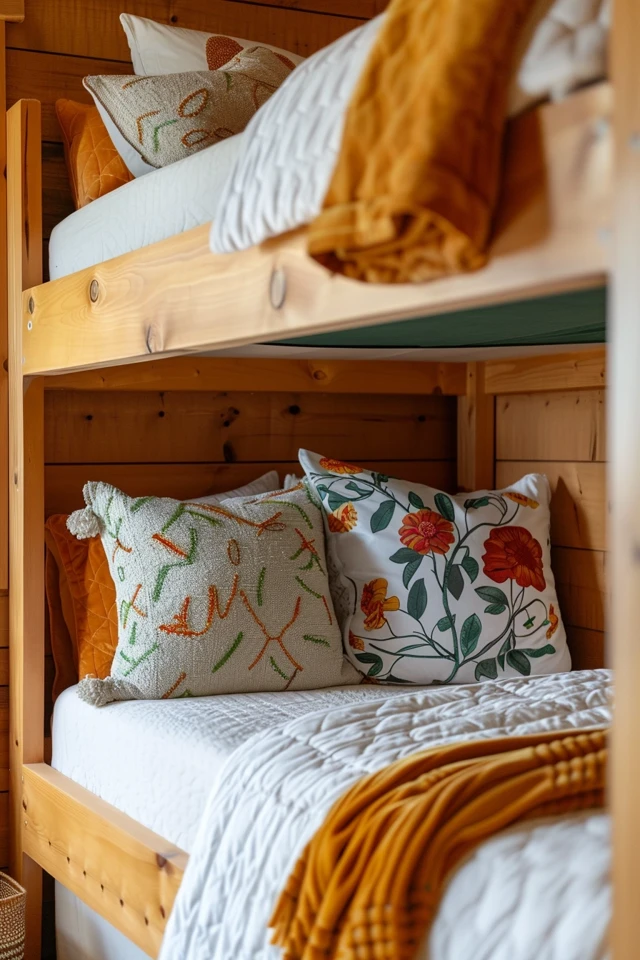
Cozy Small Cabin Bunk House Ideas for Your Retreat
There is something undeniably nostalgic about a bunk room. It evokes memories of summer camps, late-night whispers between cousins, and the excitement of a family getaway. However, designing a bunk house that feels like a boutique retreat rather than a crowded dormitory requires careful planning.
In my design practice, the bunk room is often the most challenging yet rewarding puzzle. You are trying to maximize sleeping capacity without sacrificing comfort or circulation space. It is a balancing act between structural safety, durability, and that warm, enveloping aesthetic we all crave in a cabin.
For a curated collection of visual inspiration, don’t miss the Picture Gallery at the end of this blog post.
1. Strategic Layouts and Space Planning
The biggest error I see in DIY bunk rooms is failing to account for “human scale” clearance. You might fit the beds on the floor plan, but if you cannot walk past the ladder or open a suitcase, the room fails.
In a small cabin, every inch counts. For a standard bunk arrangement, I insist on a minimum of 30 to 36 inches of clearance between the side of the bunk and the opposite wall or furniture. If you are placing bunks on opposite walls, try to keep 48 inches of aisle space in the center so two people can pass each other comfortably.
Vertical space is just as critical as floor space. If you are building floor-to-ceiling bunks, you need to measure your clear ceiling height carefully. A standard 8-foot ceiling is tight for triple bunks but workable for doubles. Aim for at least 30 inches of headspace above each mattress. This allows an adult to sit up in bed to read without hitting their head.
Designer’s Note: The “L-Shape” Advantage
In square rooms, the “train car” layout (beds parallel on opposite walls) can feel narrow. I often pivot to an L-shaped configuration for corner bunks.
By placing two bunk units perpendicular to each other in a corner, you open up the center of the room. This creates a functional “zone” for a small rug, a pouf, or simply open space for kids to play. It also prevents the room from feeling like a hallway.
2. Built-In Bunks vs. Freestanding Frames
If you are renovating a cabin intended for long-term use or rentals, built-in bunks are almost always the superior investment. Freestanding metal or wood bunks tend to squeak, wobble, and visually clutter a small room with extra legs and posts.
Built-ins provide structural rigidity. When we frame these, we anchor them directly into the wall studs on two or three sides. This eliminates the “shake” when someone climbs the top ladder. It also allows us to customize the dimensions to fit the room perfectly, eliminating those awkward dust-gathering gaps between a store-bought bed and the wall.
If you must use freestanding beds due to budget or rental restrictions, choose heavy timber frames over metal. Look for “contract grade” furniture if possible, which is designed for heavier wear and tear.
Common Mistakes + Fixes
- Mistake: Using standard 2×4 lumber for the main visible posts.
- Fix: While 2x4s are strong enough structurally, they look spindly. Wrap them in 1×6 knotty pine or cedar for a substantial, timber-frame look that anchors the cabin aesthetic.
- Mistake: Forgeting guard rails on the top bunk because “it looks cleaner without them.”
- Fix: This is a massive liability. Install a sturdy rail that extends at least 5 inches above the top of the mattress. Make it part of the design by using industrial pipe or stained wood slats.
3. Smart Storage Solutions for Tight Quarters
In a bunk house, you have a high density of people with very little floor space. The number one complaint in vacation rentals is a lack of place to put luggage and gear. If four people sleep in a 10×10 room, you have four suitcases to hide.
I recommend utilizing the “dead space” under the bottom bunks. Instead of leaving it open, install massive rollout drawers on heavy-duty casters. These should be at least 24 inches deep. They are perfect for stowing duffel bags or extra blankets.
If you are framing built-ins, look for opportunities to create niches between the wall studs. A recessed niche inside the bunk provides a shelf for a water bottle, phone, or book without encroaching on the sleeping area. This removes the need for nightstands, which saves precious floor area.
The “Mudroom” Effect
Since a bunk house is often a separate structure or an entry-point room, treat the entry zone like a mudroom.
- Install a row of shaker pegs or heavy iron hooks at varying heights (low for kids, high for adults).
- Place a narrow bench or a floating shelf below the hooks for shoes.
- Keeping wet coats and muddy boots off the sleeping area floor is vital for cleanliness and preserving your flooring.
4. Layering Lighting for Individual Comfort
Lighting makes or breaks the “cozy” factor. The harsh glare of a single overhead “boob light” ruins the ambiance and wakes everyone up if one person needs to use the restroom.
The golden rule for bunk rooms is localized control. Each bunk berth needs its own dedicated light source. I prefer hardwired sconces installed on the back wall of the bunk, roughly 18 to 24 inches above the mattress height.
If hardwiring isn’t an option, plug-in sconces with cord covers are a great alternative. Look for fixtures with a shielded shade (metal or thick linen) to direct light downward. This ensures that if the person in the top bunk is reading at 11 PM, the light doesn’t shine directly into the eyes of the person in the bottom bunk.
Temperature Matters
For a cabin, always choose LED bulbs in the 2700K to 3000K range.
- 2700K: Warm, candlelight glow. Best for wood-heavy rustic interiors.
- 3000K: Soft white. A bit brighter and cleaner, good for modern farmhouse styles.
- Avoid: Anything 4000K or higher. It looks clinical and makes wood tones look green or sickly.
5. Selecting Durable Materials and Textiles
A bunk house sees high traffic. You need materials that can withstand wet bathing suits, snowy boots, and snack spills. However, durability does not mean sacrificing comfort.
For flooring, I generally advise against wall-to-wall carpet in cabins. It traps moisture and odors. Instead, opt for Luxury Vinyl Plank (LVP) or engineered hardwood. LVP is practically indestructible and waterproof, making it ideal for rural retreats.
To bring in the warmth, use area rugs. However, sizing is tricky in rooms with multiple beds. A runner rug placed between the bunks is often safer and easier to clean than a large area rug that gets trapped under heavy bed frames.
Bedding Logic for Turnovers
If you are renting the cabin or hosting frequently, simplify your bedding.
- The Sheet Strategy: Use white cotton percale. They can be bleached, and they look crisp and hotel-like.
- The Duvet Rule: Use duvet inserts with removable, washable covers. Avoid heavy quilts that require dry cleaning.
- Fabric Choice: For throw pillows or upholstered headboards, choose “performance fabrics” like Crypton or solution-dyed acrylics. These resist stains and fading.
- Texture: Add the “cozy” vibe with wool throws or faux fur blankets at the foot of the bed. These are easy to remove for washing.
6. Creating Privacy in a Shared Space
Even family members need a break from one another. In a small bunk house, audio and visual privacy can be hard to come by.
I frequently install privacy curtains on built-in bunks. This is a simple addition that elevates the experience instantly. Use a ceiling-mounted track system recessed into the bunk header for a seamless look.
The fabric should be medium-weight linen or a heavy cotton blend. It needs to breathe so the bunk doesn’t get stuffy, but it should be opaque enough to block light. This allows a toddler to nap in the bottom bunk while older kids play quietly in the room.
Sound Dampening
Small rooms with hard surfaces (wood floors, wood walls) can become echo chambers. To mitigate this:
- Hang heavy drapes on the windows.
- Use upholstered headboards or wall pads inside the bunks.
- Ensure the rug has a thick felt pad underneath.
These soft surfaces absorb sound and make the room feel quieter and more restful.
Final Checklist: What I’d Do in a Real Project
If I were designing a bunk house for a client today, here is the exact checklist I would run through to ensure success:
1. Verify Mattress Sizes: I always specify Twin XL rather than standard Twin. The extra 5 inches (80″ vs 75″) allows adults to sleep comfortably.
2. Check Egress: Ensure the window is large enough and low enough to serve as an emergency exit, especially if the door is blocked.
3. Power Sources: Install a USB/outlet combo inside every single bunk niche. Everyone needs to charge a phone or tablet.
4. Ladder Ergonomics: Build the ladder with flat treads (like stairs), not round dowels. Round rungs hurt bare feet.
5. Ventilation: If the room is small, does it have a ceiling fan? Airflow is critical when stacking people vertically.
6. The Shake Test: Before painting, I physically climb the bunks and shake them. If they move, we add more blocking.
FAQs
What is the minimum ceiling height for triple bunks?
For triple bunks, you really need a 9-foot or 10-foot ceiling. With a standard 8-foot ceiling, you will likely only have enough room for two bunks with adequate sit-up clearance. If you attempt three bunks in an 8-foot room, the clearance is so tight it can feel claustrophobic and unsafe.
How do you heat and cool a small bunk shed?
If the bunk house is detached, a ductless mini-split system is the gold standard. They are quiet, energy-efficient, and provide both heating and AC. For a budget option in a temperate climate, a through-wall unit or safe electric baseboard heaters (kept away from bedding) can work.
Should I use built-in stairs or a ladder?
If you have the floor space, stairs are always safer and easier, especially for changing sheets. You can also build drawers into the stair risers for massive storage gains. However, stairs require roughly 3 feet of width and significantly more floor depth. For very small rooms, a vertical ladder is the only viable option.
Conclusion
Designing a small cabin bunk house is an exercise in efficiency. It forces you to strip away the non-essentials and focus on what truly matters: a safe, comfortable, and memorable place to rest.
By prioritizing sturdy construction, individual lighting, and smart storage, you can turn a cramped shed into the most coveted room on the property. Whether it is for grandkids, hiking buddies, or rental guests, a well-executed bunk room invites connection. It is about creating a space where the day’s adventures are recounted in the dark, just before sleep takes over.
Picture Gallery


