
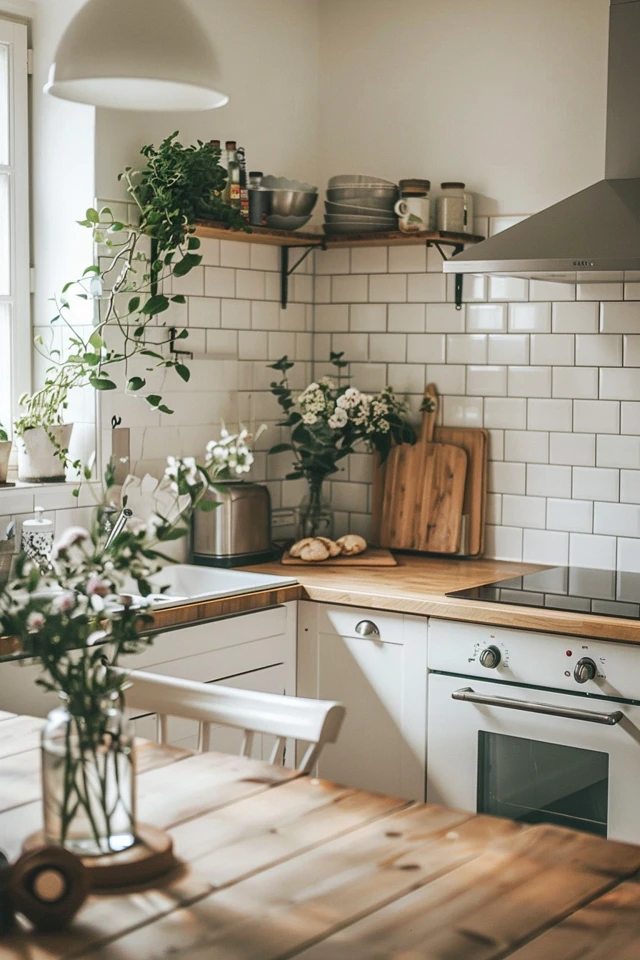
Creating a Scandinavian Kitchen: Simple and Functional
There is a distinct calmness that washes over you when you step into a well-designed Scandinavian kitchen. It isn’t just about white walls or wood floors; it is about the intentional removal of visual noise. Over the years, I have helped countless clients transition their chaotic, cluttered cooking spaces into serene hubs that actually make meal prep enjoyable.
One of my favorite projects involved a small galley kitchen for a client who was convinced she needed to tear down walls to make it work. By simplifying the color palette, maximizing vertical storage, and focusing on light, we created a space that felt twice as big without moving a single stud. The Scandinavian aesthetic relies on this honesty of materials and purity of form.
It is a style that works just as well for a busy family with toddlers as it does for a minimalist couple in a city apartment. For plenty of visual inspiration to help you visualize these concepts, make sure to check out our curated Picture Gallery at the end of this blog post.
1. The Foundation: Materials and Color Palettes
The backbone of any Nordic-inspired space is the interplay between light and texture. We want to maximize natural light, which is a precious commodity in Scandinavian countries.
The Role of Wood
You cannot have a true Scandi kitchen without wood elements to warm up the space. I almost always recommend light-tone woods like Ash, White Oak, or Birch. These species keep the room feeling airy.
If you are renovating, wide-plank engineered white oak flooring is the gold standard. For those on a budget or with large dogs, a high-quality luxury vinyl plank (LVP) in a matte “blonde” wood finish is incredibly durable and convincing. Avoid red undertones (like Cherry or Mahogany) as they clash with the cool, crisp aesthetic we are aiming for.
The “Right” White
White paint is not just white paint; the undertones matter immensely. In a Scandinavian kitchen, I lean toward warm whites rather than sterile, cool whites.
My go-to rule of thumb is to look for whites with a slight creamy or greige undertone to prevent the room from feeling like a hospital. If you use a stark white on the walls, balance it with warm wood cabinets. If you have white cabinets, ensure your backsplash or wall color has a hint of warmth or texture.
Matte Over Gloss
When selecting finishes for hardware, faucets, or even cabinetry, opt for matte or satin finishes. High-gloss surfaces can feel too glam or modern.
Matte black faucets provide a beautiful, grounding contrast against light cabinetry. Brushed nickel or unlacquered brass also works beautifully if you want a softer look. From a practical standpoint, matte finishes are much more forgiving with fingerprints, which is a lifesaver if you have kids.
2. Layout and Flow: Function is King
Scandinavian design is functionalism at its core. A kitchen can look beautiful, but if the flow is awkward, it fails the design test.
Respecting the Work Triangle
Even in modern open-concept homes, the relationship between your sink, stove, and refrigerator governs the room’s efficiency. The sum of the three sides of this triangle should ideally be between 13 and 26 feet.
If the legs of the triangle are too far apart, cooking becomes a marathon. If they are too close, you will feel cramped. Ensure there is no island barrier cutting directly through this path.
Walkway Clearances
One of the most common mistakes I see in DIY kitchen renovations is skimping on aisle width to fit a larger island.
Designer’s Rule: You need a minimum of 42 inches of clearance between the counter edge and the island for a one-cook kitchen. If two people frequently cook together, push that to 48 inches. Anything less than 36 inches is a major code violation and will make the kitchen unusable.
Island Seating Logic
If you plan to eat at your island, comfort is key. Scandinavian design never sacrifices comfort for style.
Allocate 24 inches of width per person for counter-height seating. This ensures everyone has enough elbow room to eat without bumping into their neighbor. Also, ensure there is at least 12 to 15 inches of overhang for knee space; otherwise, you will be leaning forward awkwardly to reach your plate.
3. Storage: The Art of “Hidden” Clutter
The hallmark of this style is a clutter-free countertop. To achieve this, your storage game needs to be strong and strategic.
Flat-Panel Cabinetry
For the most authentic look, choose flat-panel (slab) cabinet doors. They are sleek, easy to wipe down, and timeless. Shaker cabinets can work, but they lean a bit more traditional or farmhouse.
If you are renting, you likely cannot replace cabinets. However, you can visually simplify the space by removing ornate hardware and replacing it with simple, clean-lined pulls in matte black or leather tabs.
The Open Shelving Debate
Open shelving is beautiful, but it requires discipline. In a Scandi kitchen, open shelves are for everyday items like plates, bowls, and mugs—things that get washed and used daily so dust doesn’t settle.
Designer’s Note: I learned this lesson the hard way early in my career. Do not place open shelving immediately next to or above the stove. No matter how good your range hood is, grease particles will eventually coat your styled items. Keep open shelves near the sink or dishwasher for functional unloading.
The Appliance Garage
To keep counters clear, designate a cabinet as an “appliance garage” for toasters, blenders, and coffee makers.
Ideally, this cabinet sits on the counter level and has an outlet inside. You can slide the appliance out to use it and hide it away immediately after. This maintains the visual silence that makes these kitchens so peaceful.
4. Lighting: Layering for Warmth
Lighting is perhaps the most critical element in Scandinavian interiors due to the long, dark Nordic winters. The goal is to create a warm, inviting glow, not a bright interrogation room.
Color Temperature
Pay close attention to the Kelvin (K) rating on your bulbs. For a kitchen, I strictly recommend 2700K to 3000K.
3000K is a crisp, clean white that is great for task lighting without turning blue. Avoid 4000K or 5000K (often labeled “Daylight”), as these temperatures feel cold and clinical, killing the cozy “hygge” vibe instantly.
Pendant Placement
Pendant lights over an island or dining table act as functional jewelry.
Hang pendants so the bottom of the fixture is 30 to 36 inches above the countertop. If you have very tall ceilings (over 8 feet), you can raise them slightly, about 3 inches for every extra foot of ceiling height.
Under-Cabinet Lighting
Do not skip under-cabinet lighting. It is essential for task work and adds a soft layer of ambient light in the evening. LED strip lights are easy to retrofit and make a massive difference in how the wood tones in your kitchen look at night.
5. Hygge: Styling with Soft Textures
Once the hard surfaces are installed, you need to soften the room. “Hygge” is the Danish concept of coziness, and it prevents a minimalist kitchen from feeling stark.
Textiles and Rugs
Kitchens are full of hard, cold surfaces like stone and tile. Introduce softness with a runner rug between the island and the main counter.
I recommend a vintage-style washable rug or a flat-weave wool runner. Wool is naturally stain-resistant due to its lanolin content. Just ensure you use a quality rug pad underneath to prevent slipping.
Ceramics and Wood Accents
Display cutting boards of different shapes and sizes by leaning them against the backsplash. The wood grain adds immediate warmth.
Swap out plastic soap dispensers for amber glass or ceramic bottles. Use a ceramic crock for wooden spoons. These small, tactile details make the space feel lived-in and grounded.
Greenery
Plants breathe life into a neutral palette. Fresh herbs in terra cotta pots on the windowsill are practical and beautiful.
If you lack a green thumb, a few branches of eucalyptus in a tall vase can last for weeks and add a subtle, fresh scent.
Common Mistakes + Fixes
Mistake: The “All-White” Box
Many people assume Scandi means 100% white everything. This results in a room that feels flat and uninviting.
The Fix: Introduce contrast. If you have white cabinets and white walls, add a butcher block countertop, leather cabinet pulls, or a gray slate floor to ground the space.
Mistake: Over-Styling Open Shelves
Filling shelves with purely decorative items creates visual clutter and wastes storage space.
The Fix: Follow the 80/20 rule. 80% of items on shelves should be functional (dishes, glasses), and 20% can be decorative (a small plant, a piece of art).
Mistake: Ignoring Acoustics
Minimalist spaces with hard surfaces echo terribly.
The Fix: Add a runner rug, use fabric window treatments (like linen roman shades) instead of metal blinds, and consider upholstered bar stools to absorb sound.
What I’d Do in a Real Project (Mini Checklist)
If I were designing a Scandinavian kitchen today, here is the exact formula I would start with:
- Flooring: Wide-plank White Oak (engineered or LVP) in a matte finish.
- Cabinetry: Flat-panel doors in a “Greige” (like Benjamin Moore Revere Pewter) or light birch wood.
- Countertops: Honed Quartz in a solid white or subtle concrete gray (honed finishes feel more natural than polished).
- Backsplash: Vertical stack subway tile in white with light gray grout.
- Lighting: Matte black cone pendants and 3000K LED under-cabinet strips.
- Hardware: Minimalist finger pulls or simple knobs in matte black.
Final Checklist for Your Renovation
Use this checklist to ensure you stay on track during your project.
- Define the Palette: Select one wood tone, one neutral color, and one accent metal. Stick to them.
- Check Clearances: Measure your walkways. Do not go below 42 inches in the main work zone.
- Plan Lighting: Ensure you have overhead, task (under-cabinet), and ambient (pendants/sconces) lighting layers.
- Audit Storage: Purge items you don’t use. Plan drawers for pots/pans and shelves for everyday dishes.
- Select Textures: Choose natural materials (linen, wood, wool, stone) over synthetic ones.
- Add Greenery: Plan a spot for at least one plant or herb pot.
FAQs
Is a Scandinavian kitchen expensive to build?
It can actually be budget-friendly because the design relies on simplicity. You are not buying ornate moldings or complex cabinetry. IKEA is famous for this style and offers very affordable, high-quality flat-panel cabinets that fit this look perfectly.
How do I keep a white kitchen clean with kids?
Choose “scrubbable” paints with an eggshell or satin finish rather than flat paint. For cabinets, a high-quality laminate or painted finish is easy to wipe. Avoid marble countertops, which stain easily, and opt for quartz that mimics the look of stone but is non-porous.
Can I mix metal finishes?
Yes, but keep it intentional. I usually stick to two metals max. For example, stainless steel appliances work well with matte black hardware. Avoid mixing two similar metals, like nickel and chrome, as it looks like a mistake.
What window treatments work best?
Natural light is priority number one, so leave windows bare if privacy allows. If you need coverage, use simple roller shades in a textured fabric or sheer linen curtains. Avoid heavy drapes or aluminum mini-blinds.
Conclusion
Creating a Scandinavian kitchen is about more than just copying a look from a magazine. It is about embracing a lifestyle that values function, light, and simplicity. It is a rejection of the unnecessary.
By focusing on a neutral but warm palette, prioritizing flow and layout, and layering lighting and texture, you can build a space that remains timeless. Whether you are doing a full gut renovation or just swapping out hardware and painting, the principles of Nordic design can bring a sense of peace to the busiest room in your house.
Picture Gallery


