
Title: Creative Cinder Block Wall Ideas for Your Home
Introduction
Cinder blocks, technically known as Concrete Masonry Units (CMUs), used to be relegated to unfinished basements, garages, and dorm rooms. For years, they were viewed as the budget option you couldn’t wait to cover up with drywall. However, with the rise of industrial chic and brutalist design trends, these humble gray blocks have found a new identity in modern homes. They offer a raw, textural element that can ground a space and provide an architectural edge that traditional drywall simply cannot match.
Whether you are dealing with an existing basement wall or planning to build budget-friendly furniture, the key lies in intentionality. If you treat the blocks as a deliberate design feature rather than a mistake, they become an asset. If you are looking for visual inspiration, check out the Picture Gallery at the end of the blog post.
In this guide, I will walk you through how to elevate cinder blocks from cold and dreary to warm and stylish. We will cover surface treatments, landscaping applications, interior furniture hacks, and the crucial lighting techniques that professional designers use to make concrete textures sing.
1. Painting and Surface Treatments
Painting cinder block is the most accessible way to transform a space, but it is also the area where I see the most DIY failures. Concrete is porous; it acts like a hard sponge. If you simply slap a coat of standard latex paint on raw block, it will soak in unevenly and likely peel within a year due to moisture migration.
Preparation is Everything
Before you even open a can of paint, you must assess the condition of the wall. If you see white, powdery residue on the blocks, that is efflorescence. It is caused by moisture moving through the block and leaving salt deposits behind. You cannot paint over this. You must scrub it off with a stiff wire brush and a masonry cleaner.
Once clean and dry, use a high-quality masonry primer. Do not skip this step. A masonry primer is thicker than standard primer and is formulated to bond with the high-pH surface of concrete. It fills the millions of tiny pinholes in the block, giving you a smoother topcoat and better coverage.
Choosing the Right Finish
As a designer, I almost always recommend a matte or flat finish for cinder blocks. High-gloss paint reflects light, which highlights every chip, uneven mortar joint, and imperfection in the masonry. A matte finish absorbs light, making the wall look solid, velvety, and intentional.
- The Monochrome Look: Paint the blocks, the mortar, and the trim in the same color. Dark charcoal or navy blue works exceptionally well here. It turns the texture into a subtle backdrop rather than a chaotic focal point.
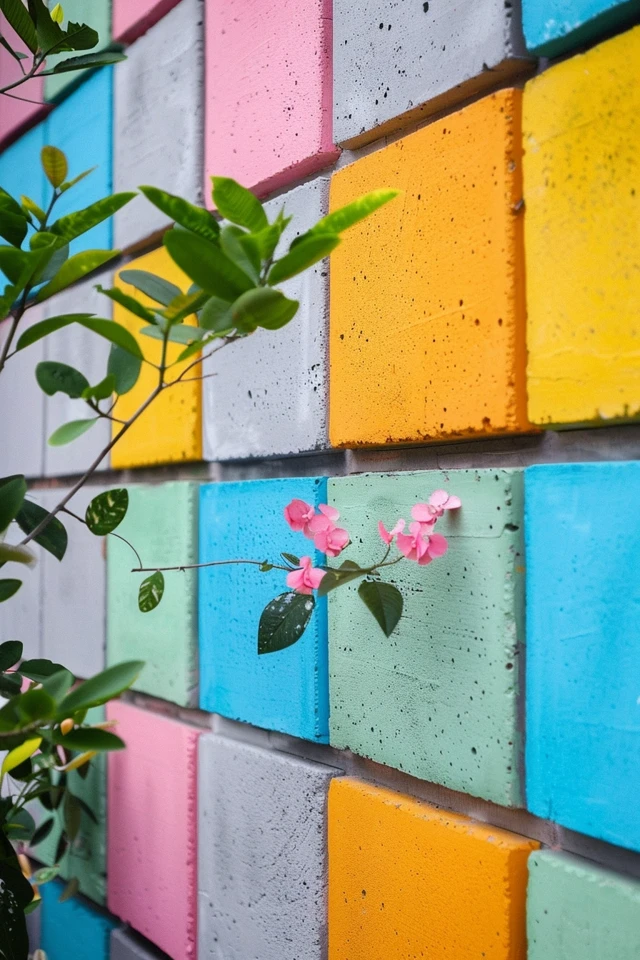
- Color Blocking: If you want to break up a long, boring basement wall, use painter’s tape to create geometric shapes. Because the grout lines provide a grid, it is easy to keep your lines straight.
- Whitewash: For a softer, farmhouse-industrial look, water down white latex paint (1 part water to 1 part paint). Brush it on and rag it off immediately. This allows some of the raw grey aggregate to show through, reducing the visual “heaviness” of the wall.
Designer’s Note:
A common mistake I see is people using standard wall paint in damp basements. If your wall touches earth on the other side (below grade), use a specific waterproofing paint, often called elastomeric paint. This creates a membrane that can hold back a certain amount of hydrostatic pressure, preventing damp spots and mold growth.
2. Using Cinder Blocks in Landscaping
Cinder blocks are naturally suited for the outdoors. They are rot-proof, pest-proof, and incredibly affordable. In landscape design, we use them to create structure in a garden without the massive expense of poured concrete or stone masonry.
The Modular Planter Wall
One of the most effective uses is the tiered planter wall. By stacking blocks with their open cells facing upward, you create instant pockets for soil and plants.
- Scale and Height: Keep dry-stacked walls (walls without mortar) under 3 feet in height. Anything taller requires rebar reinforcement and concrete filling for safety.
- Stabilization: Use landscape block adhesive between the layers. This comes in a caulk tube and prevents the blocks from shifting if bumped.
- Drainage: This is the step most people forget. Fill the bottom 2 inches of each cell with gravel before adding soil. This prevents the roots from sitting in stagnant water, which will kill most plants.
Creating an Outdoor Banquette
You can build a very high-end looking fire pit seating area using blocks and 4×4 lumber.
1. Arrange standard 8x8x16 blocks to form the “legs” of the bench.
2. Turn the top blocks so the holes face sideways.
3. Slide treated 4×4 timber beams through the holes to create the seat bench.
4. Top with outdoor cushions.
Common Mistakes + Fixes
Mistake: Placing blocks directly on top of grass or soft topsoil.
Fix: The wall will sink and tilt over time. always dig a trench about 4 inches deep, fill it with crushed gravel, and tamp it down to create a level, solid footing before laying your first course of blocks.
3. Interior Architecture and Furniture Hacks
In small apartments or rental units where you cannot renovate the walls, you can use cinder blocks to build furniture. This is a staple of the “lo-fi” aesthetic. It is modular, meaning you can take it apart when you move, and it costs a fraction of buying a new entertainment center.
The Media Console
This is a classic project that I have specified for bachelor pads and student apartments. It relies on the interplay between the cold industrial block and warm, organic wood.
- Materials: 4 to 6 cinder blocks and 2 long planks of lumber (pine or oak work best).
- Sizing: Use 10-inch or 12-inch wide lumber. Standard blocks are 8 inches wide, but the extra depth on the wood prevents it from looking flimsy.
- Assembly: Stack two blocks for the base legs. Place a wood plank on top. Stack two more blocks on the plank directly above the base blocks. Place the second plank on top.
Designer’s Note:
Safety is paramount here. Even though the weight of the wood holds the structure down, I recommend using a clear silicone adhesive between the blocks and the wood if you have pets or children. Also, always place felt furniture pads under the bottom blocks to prevent them from scratching your hardwood or vinyl flooring.
The Platform Bed
You can create a very sturdy platform bed base using blocks. The aesthetic is very minimalist and pairs well with linen bedding.
To do this correctly, you cannot just space out blocks and throw a mattress on top. A mattress requires even support, or it will sag and ruin the springs (and your back). You must lay a sheet of thick plywood over the block structure to distribute the weight evenly. If you want the “floating” look, recess the blocks 12 inches from the edge of the mattress so you don’t stub your toes.
4. Cladding and Concealing: The “Refined” Look
Sometimes, you just want the texture gone. If painting isn’t enough, but you don’t want to frame out a whole new wall with 2x4s and drywall, there are intermediate options that save space.
Parging (Surface Bonding Cement)
Parging involves troweling a thin layer of specialized cement over the blocks to fill in the joints and create a smooth(er) surface. This mimics the look of a poured concrete wall or expensive Venetian plaster.
- The Process: dampen the wall, apply the bonding cement with a flat trowel, and smooth it out.
- The Look: You can leave it somewhat swirled for an Old World stucco look, or sand it down for a modern concrete finish.
- Benefits: It adds structural integrity to the wall and seals out moisture better than paint alone.
Vertical Wood Slats
If the room feels too cold or echoes too much, cladding the cinder block with wood is the solution. You don’t need to cover 100% of the wall.
I recommend attaching 1×2 inch furring strips horizontally to the masonry using concrete screws. Then, nail vertical wood slats to those strips with a slight gap between each board. This creates a “japandi” or spa-like atmosphere. The wood adds warmth, and the gaps between the slats help break up sound waves, reducing the echo that is common in rooms with concrete walls.
What I’d do in a real project:
If I were designing a basement home office with block walls, I would paint three walls a warm white (like Benjamin Moore Swiss Coffee) to bounce light. On the fourth wall, I would install the vertical wood slats to create a focal point behind the desk. This balances the budget while making the room feel finished.
5. Lighting and Texture Play
As an interior designer, I cannot stress this enough: Lighting changes everything. The texture of a cinder block wall can look dirty and accidental under flat overhead lighting, or it can look sculptural and dramatic under the right accent lighting.
Wall Grazing
“Grazing” is a technique where you place a light fixture very close to the wall (usually in the ceiling) and aim the beam directly downward. The light skims the surface of the blocks.
This creates high-contrast shadows that exaggerate the texture of the masonry. It turns the wall into a dramatic feature. This works best if the wall is painted a dark color or if you have parged the wall to give it a stucco texture.
Wall Washing
If your goal is to hide the texture, you want “Wall Washing.” This involves placing the light fixture further away from the wall (about 2 to 3 feet) and aiming a wide beam at it. This flattens the texture and reduces shadows. This is the better approach if you have painted the wall white and want it to recede into the background.
Softening the Hardness
Concrete is a “hard” material visually and physically. To make a room with exposed blocks feel livable, you must introduce “soft” materials.
- Rug Sizing: You need a large rug. In a living room with concrete walls, the rug should be large enough that all front legs of the furniture sit on it. This creates an acoustic dampener.
- Curtains: Even if you have small basement windows, install floor-to-ceiling drapery. The vertical folds of fabric provide a crucial contrast to the rigid, horizontal lines of the mortar joints.
- Plants: The organic, chaotic shapes of leafy plants break up the grid pattern of the blocks. A large Ficus or Monstera in the corner creates life in a sterile space.
Final Checklist
Before you tackle your cinder block project, run through this mental checklist to ensure you are ready to execute like a pro.
1. Moisture Check:
Tape a 2×2 foot square of plastic wrap to the wall. Leave it for 24 hours. If the concrete is dark or there is water under the plastic, you have a moisture issue. Do not paint until you resolve the drainage outside.
2. Structural Integrity:
Are there stair-step cracks in the mortar? If the cracks are wider than 1/8th of an inch, consult a structural engineer before covering them up.
3. Cleaning:
Have you removed all efflorescence (white powder) and grease? Paint will not stick to dust.
4. Priming:
Do you have a specific masonry primer? Standard drywall primer is insufficient.
5. Lighting Plan:
Have you decided if you want to highlight the texture (graze) or hide it (wash)? This determines where you put your lamps or track lights.
FAQs
How do I hang art on a cinder block wall?
You cannot use standard nails or command strips; the surface is too porous and hard. You need a hammer drill and a masonry bit. For light items, plastic anchors work well. For heavy mirrors or shelving, use “Tapcon” screws. These are blue screws specifically designed to cut threads into concrete.
Does a cinder block wall provide good insulation?
No. Standard hollow blocks have a very low R-value (insulation rating). If this is a living space in a cold climate, the walls will radiate cold. In these cases, framing out the wall and adding fiberglass or foam board insulation is the only way to make the room truly energy efficient.
Can I tile directly over cinder block?
Yes, provided the wall is painted or sealed first. However, the surface must be flat. If the mortar joints are very deep, you may need to apply a “skim coat” of thin-set mortar to level the wall before applying your tile.
Conclusion
Cinder block walls are no longer something you need to hide or apologize for. Whether you choose to embrace the industrial grit with a coat of matte charcoal paint, or soften the look with wood slats and textiles, these walls offer incredible potential.
The difference between a dungeon-like basement and a chic industrial lounge is rarely the budget—it is the lighting, the preparation, and the styling choices you make. By following the rules of scale, texture, and proper surface preparation, you can turn the most basic building material into the highlight of your home.
Picture Gallery


