
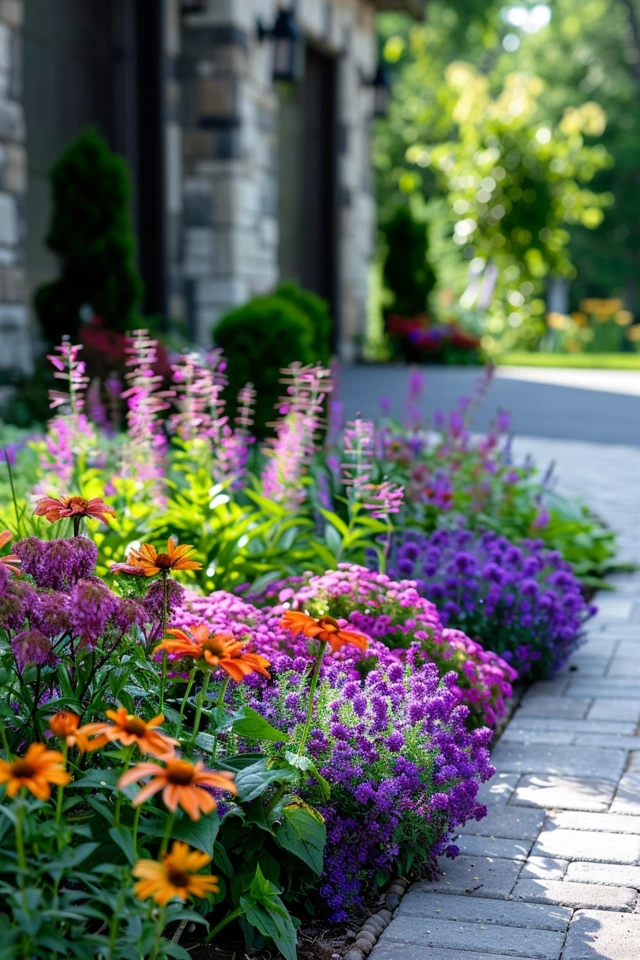
End of Driveway Landscape Ideas I Love Sharing!
The end of your driveway is essentially the handshake of your home. It is the very first interaction a guest has with your property, yet it is often the most neglected area in residential design. We tend to focus heavily on the foundation plantings near the front door, leaving the driveway entrance looking stark or utilitarian.
When I approach a landscape design project, I view the driveway entrance as a “transition zone.” It signals the shift from the public roadway to your private sanctuary, and it deserves just as much design attention as your foyer. By adding structure, lighting, and intentional planting, you increase curb appeal and property value simultaneously.
In this guide, I will walk you through the practical steps I use to elevate this specific space. For those who want to jump straight to the visuals, please note that there is an extensive Picture Gallery at the end of this blog post.
1. The Driveway Apron: Creating a Defined Entrance
The “apron” is the section of the driveway that meets the street, usually the first 10 to 15 feet. From a design perspective, this is where you can make the biggest impact by changing materials. If you have a standard asphalt driveway, transitioning to a cobblestone, brick, or paver apron creates an immediate sense of luxury.
I often recommend Belgian block or granite cobblestone for this area because of its incredible durability. Asphalt tends to crack and crumble at the edges where it meets the street due to heavy vehicle turning. A stone apron acts as a durable buffer that handles the torque of tires much better than asphalt.
When designing an apron, I usually flare the edges out where they meet the street. If your driveway is 12 feet wide, the apron should flare out to 16 or 18 feet at the curb. This isn’t just aesthetic; it allows delivery trucks and guests to turn in safely without running over your grass or sprinkler heads.
Designer’s Note on Scale:
One thing that usually goes wrong in DIY projects is the scale of the apron. A three-foot strip of pavers looks like an afterthought. For a standard suburban home, the apron should be at least one car length deep (about 15 to 18 feet). This signals to the driver that they have arrived and provides a distinct visual break from the public road.
2. The “Visibility Triangle” and Plant Height Rules
Planting at the end of the driveway is a balancing act between beauty and safety. As a designer, my number one rule here is maintaining the “visibility triangle.” You never want to plant something that will eventually block your view of oncoming traffic when you are trying to pull out.
I limit plant heights in this zone to 30 inches or lower. This ensures that even in a low sports car, the driver can see over the foliage. This restriction actually helps narrow down our choices to ground covers, low mounding shrubs, and perennials that offer texture without height.
For these beds, I rely heavily on “drifts” of plants rather than single specimens. Planting in odd-numbered groups (3, 5, or 7) creates a cohesive look that is readable from the street. A single bush looks lonely; a drift of five hydrangeas looks like a design statement.
Common Mistakes + Fixes:
- The Mistake: Planting large evergreens right at the corner. While they look small in the pot, an Arborvitae or Spruce will eventually blind you to traffic.
- The Fix: Move tall vertical elements back at least 15 feet from the street curb. Use the immediate corner for low growers like ‘Green Velvet’ Boxwood or creeping junipers.
3. Selecting Salt and Stress-Tolerant Plants
The end of the driveway is a hostile environment. It is subjected to radiant heat from the asphalt, road salt spray in the winter, and potential crushing from snow plows. If you choose delicate plants here, you will be replanting them every spring.
I always specify salt-tolerant species for the “hell strip” or driveway entrance. Rugosa roses are fantastic for this; they are tough, handle salt spray easily, and bloom repeatedly. Ornamental grasses like Karl Foerster or Fountain Grass (Pennisetum) are also excellent choices because they bounce back if they get a little snow piled on them.
Daylilies constitute another bulletproof option. The ‘Stella de Oro’ variety is a landscaping staple for a reason—it stays low, blooms all summer, and is virtually unkillable. For a more modern look, I love using Russian Sage. It provides a beautiful purple haze of color, attracts pollinators, and thrives in hot, dry conditions next to pavement.
What I’d do in a real project:
- Zone 1 (0-3 feet from curb): Hardscaping or river rock mulch. Do not put plants here; the snow plow will destroy them.
- Zone 2 (3-6 feet from curb): Tough perennials like Sedum ‘Autumn Joy’ or Salvia.
- Zone 3 (6+ feet back): This is where I start layering in structure like dwarf hydrangeas or inkberry holly.
4. Lighting Pillars and Piers
If budget allows, installing masonry pillars or piers at the entry is the most transformative change you can make. These structures anchor the driveway and give the property a sense of permanence. However, the materials must coordinate with the architecture of the house.
If your home has brick veneer, the pillars should be brick. If you have a farmhouse with stone skirting, use a matching natural stone veneer for the pillars. I recommend pillars be at least 24 inches square; anything thinner tends to look spindly and unsubstantial from the road.
Capstones are crucial for the longevity of these pillars. A solid piece of bluestone or limestone on top prevents water from seeping into the masonry core and freezing, which causes cracks. The capstone should overhang the pillar by at least 1.5 to 2 inches on all sides to create a drip edge.
Lighting Integration:
Lighting on these pillars should be low-voltage and subtle. A common error is using high-wattage bulbs that look like airport runway lights. I use warm white LEDs (2700K temperature) with a lumen output between 150 and 300. You want a glow, not a spotlight. If you don’t have pillars, a quality post light set back 4 to 6 feet from the street is a classic alternative.
5. The Mailbox as a Design Feature
In many neighborhoods, the mailbox is a necessary evil located right at the driveway entrance. Instead of treating it as an afterthought, I treat it as a piece of “garden jewelry.” The standard plastic post is a missed opportunity.
I frequently design custom mailbox posts using 6×6 cedar or pressure-treated lumber encased in a sleeve that matches the home’s trim. Adding a high-quality metal mailbox in copper or matte black elevates the look instantly.
To integrate the mailbox into the landscape, I create a kidney-shaped planting bed around the base. This serves two purposes: it beautifies the post and eliminates the need to use a string trimmer right up against the wood, which eventually damages the post.
Planting around the Mailbox:
A Clematis vine trained up the post adds vertical interest without bulk. At the base, I like to use annuals for a pop of color that changes yearly—petunias in summer or mums in the fall. Just ensure the planting bed diameter is about 3 to 4 feet wide so the plants aren’t competing with the post footing for water.
Final Checklist: Planning Your Driveway Entrance
Before you dig a single hole or buy a single paver, run through this checklist. This is the mental framework I use to ensure the project runs smoothly and looks professional.
1. Check your easement.
Most municipalities own the first few feet of “your” yard from the street curb. Check your property survey. You generally cannot build permanent masonry structures (like pillars) in the town right-of-way. Hardscaping here often requires a permit.
2. Assess your irrigation.
The end of the driveway is usually the furthest point from the house. Does your hose reach? Do you have an irrigation zone that extends that far? If not, focus on drought-tolerant plants like lavender, sedum, and ornamental grasses.
3. Define the borders.
Install steel or aluminum edging to separate your driveway garden beds from the lawn. This keeps grass from creeping into your mulch and gives the design a crisp, professional line.
4. Lighting wire runs.
If you are adding lights, run the low-voltage wire inside a conduit (PVC pipe) under the driveway if you need to light both sides. It is much easier to bury a pipe before you pour a new apron than to try to tunnel under it later.
5. Winter strategy.
Place fiberglass driveway markers in the late fall. This guides the snow plow driver and saves your Belgian block curbing and lawn from getting ripped up.
FAQs
How do I stop delivery trucks from driving on my grass at the end of the driveway?
This is a layout issue. The most effective fix is to widen the apron with a flare, as mentioned earlier. If that isn’t in the budget, placing large “guard rocks” (boulders roughly 18-24 inches in diameter) on the inside corner of the curve can physically prevent trucks from cutting the corner. Just ensure they are set back slightly from the road to comply with town safety ordinances.
What is the best material for a driveway border?
I prefer Belgian block (granite cobblestone) set in concrete. It is virtually indestructible. Steel edging is great for garden beds, but for the driveway edge itself, you need masonry that can withstand tire impact. Avoid plastic edging; it will heave and crack within two seasons.
Can I use solar lights instead of hardwired ones?
You can, but manage your expectations. Most big-box store solar lights emit a cool, blueish light and don’t last through the night. If you must go solar, invest in high-end commercial-grade solar fixtures that use glass (not plastic) and have replaceable batteries. However, low-voltage hardwired lighting is always superior for consistency and color temperature.
How often should I seal a paver apron?
I generally recommend sealing concrete pavers every 3 to 5 years. This protects them from oil drips and enhances the color. If you use natural stone like granite or bluestone, sealing is optional but can help prevent staining from wet leaves or tire marks.
What are the best plants for a shaded driveway entrance?
If you have large street trees shading the area, look at Japanese Pachysandra, Liriope (Lilyturf), or Hosta (specifically the ‘Sum and Substance’ variety which is large and sun-tolerant enough to handle filtered light). Astilbe is also a great choice for adding color in shady spots.
Conclusion
Designing the end of your driveway is about solving functional problems with aesthetic solutions. It requires acknowledging the harsh realities of the location—traffic, salt, and utilities—while creating a welcoming atmosphere.
By widening the apron for better access, respecting visibility lines for safety, and choosing materials that can take a beating, you create an entrance that looks established and expensive. Remember that this space is viewed at 30 miles per hour by passersby and at walking speed by your guests. The design needs to work for both perspectives.
Start with the hardscaping bones, layer in your salt-tolerant plants, and finish with warm lighting. It’s a small square footage area compared to the rest of your yard, but it carries the most weight in defining your home’s character.
Picture Gallery


