
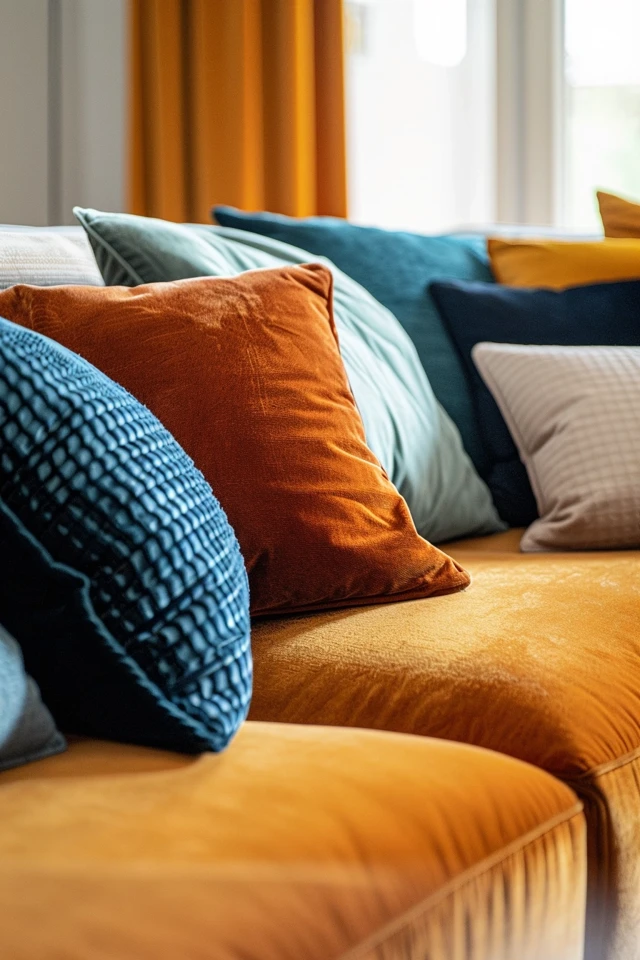
How To Decorate A Sectional With Pillows: Cozy Arrangements
Bringing a large sectional into your living room is a commitment to comfort, but styling it can often feel overwhelming. Unlike a standard sofa, a sectional dominates the room and provides a vast landscape of upholstery that can look barren without the right accessories. The challenge lies in creating an arrangement that looks curated and intentional, rather than just a pile of cushions that guests have to move before sitting down.
The secret to a professionally styled sectional isn’t just buying expensive pillows; it is understanding scale, grouping, and texture. You want to bridge the gap between a showroom look and a space where your family can actually relax for movie night. We will break down the formulas interior designers use to tackle corners, chaise lounges, and deep seating.
For those looking for visual inspiration, please note that a curated Picture Gallery is included at the end of this blog post to help you visualize these arrangements.
1. Understanding Pillow Sizes and Scale
The most common mistake homeowners make with sectionals is buying pillows that are too small. A standard 18-inch pillow, which looks fine on a loveseat, will disappear on a large sectional. To make the sofa look luxurious and grounded, you must scale up your accessories.
For the back corners of a sectional, you should rely on 22-inch or even 24-inch square pillows as your foundation. These large squares act as anchors for the rest of your arrangement. They provide back support for deep seating and visual height that breaks up the long horizontal lines of the sofa back.
Once you have your large anchors, you can layer in smaller sizes. A typical professional layering creates a cascade effect. You place the 24-inch pillow in the back, a 20-inch pillow in front of it, and finish with a lumbar pillow (usually 14×20 inches) or a smaller decorative shape. This graduation in size creates depth and prevents the arrangement from looking flat.
When selecting inserts, always follow the “plus two” rule for a high-end look. If your pillow cover is 20×20 inches, use a 22×22 inch insert. This overstuffing technique ensures the corners are filled out and the pillow looks plump rather than dog-eared.
2. The Core Layout Strategies
Styling a sectional requires a slightly different approach than a standard sofa because you have to manage a corner and potentially a chaise. We typically use a “2-3-2” or “2-3-1” grouping method depending on the size of the furniture.
The Corner Anchor (The “3”)
The corner where the two sections meet is the focal point of the piece. This is where you want your heaviest visual weight. I usually place three pillows here:
- One 24-inch solid texture (velvet or heavy linen) in the back.
- One 22-inch patterned pillow slightly offset in front.
- One smaller rectangular lumbar to tie the two sides together.
The Ends (The “2”)
On the outer arms of the sectional, you don’t want to overcrowd the seating space. A pair of pillows usually suffices here. Start with a 22-inch square that matches or coordinates with your corner anchor. Layer a 20-inch square in front of it. This provides a comfortable armrest without eating up the seating area.
The Chaise or Open End
If your sectional has a chaise lounge, treat it differently than a standard arm. Avoid stacking pillows against the arm of the chaise, as they often fall over. Instead, simply lean one substantial lumbar pillow or a single 22-inch square against the back cushion. This invites someone to lie down without having to dismantle a complex arrangement.
3. Mixing Fabrics and Textures Like a Pro
Texture is what separates a sterile showroom display from a cozy home. When every pillow is made of the same flat cotton fabric, the sofa looks one-dimensional. You want to mix materials that reflect light differently to create visual interest.
Aim for a mix of at least three distinct textures across the sectional. A reliable combination is:
- Something Soft: Velvet, chenille, or mohair. These add warmth and depth.
- Something Rough: Heavy linen, boucle, or wool. These add structure and an organic feel.
- Something Sleek: Leather or a smooth silk-blend. These add a polished, modern element.
Real Life Constraints: Kids and Pets
If you have a busy household, durability is just as important as aesthetics. For homes with dogs or toddlers, I recommend performance fabrics like Crypton or solution-dyed acrylics, which can be scrubbed. Avoid loose-knit wools that can snag on claws.
Leather pillows are excellent for durability, but they can be slippery. To keep a leather pillow in place, ensure it has a back made of fabric (like canvas) or layer it behind a textured fabric pillow that provides “grip.”
4. Color Theory and Pattern Mixing
Many people default to buying pillows that match the sofa exactly, but this is a missed opportunity. Your pillows are the best way to introduce a color palette without painting the walls. A good rule of thumb is the 60-30-10 rule applied specifically to your textiles.
The 60% (The Connector)
Sixty percent of your pillows should contain a neutral tone that connects to the sofa fabric or the rug. If you have a grey sofa and a cream rug, your large anchor pillows should likely feature grey, cream, or taupe. This grounds the look.
The 30% (The Pattern)
Thirty percent of the arrangement should be your secondary color or pattern. This is where you introduce a geometric print, a stripe, or a floral. If you are mixing patterns, vary the scale. Do not put a small-scale floral next to a small-scale polka dot; it creates visual vibration. Mix a large-scale organic print with a tight geometric grid.
The 10% (The Accent)
The final ten percent is your “pop.” This might be a deep ochre velvet lumbar or a navy leather square. This color should ideally appear elsewhere in the room, such as in a piece of art, a vase, or the curtains. This repetition helps the room feel cohesive.
5. Handling Specific Sectional Shapes
Not all sectionals are created equal. The shape of your furniture dictates how you should distribute the pillows. Ignoring the architecture of the sofa is a common layout error.
The L-Shape
This is the most common configuration. The primary focus should be the 90-degree corner. As mentioned earlier, pile your largest grouping here. As you move away from the corner toward the arms, reduce the size and number of pillows. It creates a visual “V” that welcomes you into the center of the room.
The U-Shape
U-shaped sectionals are massive and require symmetry. You have two corners and two ends. I recommend mirroring your arrangements. What you do in the left corner should be repeated in the right corner. This symmetry calms the eye and brings order to a very large piece of furniture. However, you can vary the lumbar pillows in the center sections to prevent it from looking too rigid.
Curved Sectionals
Curved sofas are trendy but tricky because standard square pillows often leave gaps against a curved back. For these, rely heavily on round cushions (spheres) or curved lumbar pillows. Focus on groups of two rather than three. Because curved sofas are sculptural, you want to use fewer pillows to show off the silhouette of the furniture.
Designer’s Note: The “Karate Chop” and Insert Quality
Here is a lesson I learned early in my career: never underestimate the importance of the pillow insert. I once styled a beautiful high-end sectional with budget polyester-fill pillows. Within two weeks, they looked like lumpy sacks, and the whole sofa looked cheap.
Invest in down or down-alternative inserts (specifically a 10/90 down-to-feather blend is a great sturdy option). These inserts have weight and malleability. They allow you to do the “karate chop”—that little indent in the top center of the pillow.
While the chop is controversial to some, it serves a purpose: it proves the pillow is soft and malleable, not a hard foam brick. It creates shadow lines that make the fabric look more dynamic. If you are allergic to feathers, high-quality “faux down” microfiber inserts are now available that mimic this effect perfectly without the allergens.
Common Mistakes + Fixes
Mistake: The “Matching Set” Syndrome
Buying a sectional that comes with matching pillows in the same fabric and keeping them.
Fix: Keep the inserts if they are good, but donate or store the covers. Replace them with contrasting textures. A sofa should not look like a monolithic block of one fabric.
Mistake: Too Many Pillows
You have to move three pillows just to sit down.
Fix: Use the “sit test.” If you have to move a pillow to sit comfortably, you have too many. Use fewer, larger pillows rather than a mountain of small ones.
Mistake: Ignoring the Rug
The pillows clash with the area rug.
Fix: Your rug and your pillows are “visual cousins.” They don’t need to be twins, but they must get along. If your rug is a busy Persian style, keep your pillows simpler and pull solid colors from the rug’s weave.
What I’d Do in a Real Project: Mini Checklist
If I were styling your sectional today, this is the exact order of operations I would follow:
1. Measure the Back Height: I check the height of the sofa back. If the back is low, I stick to 20-inch anchors. If it is high, I use 24-inch anchors.
2. Audit the Room: I look at the curtains and rug. I pull 2-3 colors from these elements to form my palette.
3. Select the Anchors: I buy two 24-inch pillows in a solid, heavy texture (often velvet or woven wool).
4. Select the Patterns: I find two 22-inch pillows with a pattern or contrasting color.
5. Select the Lumbars: I find one or two rectangular pillows for the center or chaise.
6. Swap Inserts: I replace all retail inserts with down/feather blends that are 2 inches larger than the covers.
7. Arrange: I place the anchors in the corners, layer the patterns in front, and place the lumbars in the negative space.
Final Checklist
Use this summary when you go shopping to ensure you get everything right the first time.
- Insert Sizing: Did I buy inserts that are 2 inches larger than my covers?
- Anchor Size: Do I have at least two pillows that are 22 inches or larger?
- Texture Check: Do I have a mix of smooth, rough, and soft fabrics?
- Pattern Scale: If I have two patterns, is one large scale and one small scale?
- Odd Numbers: Am I grouping pillows in odd numbers (groups of 3) for the corners?
- Performance: If I have pets, are the covers machine washable or performance fabric?
FAQs
How do I store decorative pillows when guests need to sit?
I recommend keeping a large woven basket or a dedicated storage ottoman nearby. This keeps them off the floor and keeps the room looking tidy even when the sofa is full of people.
Can I mix warm and cool colors on a sectional?
Yes, but you need a bridge color. If you have a grey sofa (cool) and want rust pillows (warm), ensure you have a pillow that contains both grey and rust in a pattern. This ties the temperatures together.
How often should I wash pillow covers?
For high-traffic family rooms, wash or dry clean covers every 3 to 6 months. Vacuum them monthly with an upholstery attachment to remove dust and pet dander, which extends the life of the fabric.
My leather sectional makes pillows slide down. What do I do?
Look for pillows backed with suede or heavy cotton canvas. Alternatively, prioritize heavier inserts (feather blends) over light poly-fill. The extra weight helps gravity keep them in place.
Conclusion
Decorating a sectional with pillows is one of the highest-impact changes you can make in a living room. It softens the architectural bulk of the furniture and provides an opportunity to inject your personal style. By focusing on scale, adhering to the rule of three, and investing in quality inserts, you can transform a plain sofa into a luxurious lounging zone.
Remember that these rules are guidelines to help you get started. Once you understand the foundations of scale and texture, feel free to experiment. The goal is a space that feels inviting and authentically yours.
Picture Gallery


