
How To Make Hickory Cabinets Look Modern: Refreshing Updates
Hickory is one of the hardest, most durable woods available for cabinetry, which is why so many homes built twenty years ago still have them in pristine structural condition. However, the specific “calico” grain pattern—the stark contrast between the light sapwood and dark heartwood—can feel visually chaotic and dated to the eye of a modern homeowner. If you are looking for visual inspiration, please note that a curated Picture Gallery is located at the very end of this blog post.
Many clients come to me assuming their only option is to paint over that expensive hardwood with white enamel. While painting is certainly an option, it is not the only path to a modern aesthetic, and it often feels like a shame to cover such bulletproof material.
The secret to modernizing hickory isn’t about changing the wood itself, but rather quieting the noise around it. By streamlining the hardware, simplifying the surrounding palette, and updating the lighting, you can turn rustic cabinetry into a sophisticated, intentional design feature.
1. Managing the Grain: The Art of Simplification
The biggest hurdle with hickory cabinets is the visual activity. The grain has a lot of movement, often mixing blonde, reddish, and dark brown tones on a single door panel. To make this look modern, you have to stop fighting the grain and start managing it.
If your cabinets have yellowed over time due to an oil-based finish, the first step might be a refinishing project. An oil-based polyurethane ambers over time, which pushes hickory into that “rustic log cabin” territory.
Refinishing with a water-based, matte clear coat removes the yellow tint and returns the wood to a more neutral, dry-wood aesthetic. This immediately feels more Scandinavian or “organic modern” rather than dated country.
Designer’s Note: The Tone Trap
I see many homeowners try to “match” the wood with other wood elements in the room. This is usually where the design falls apart. Because hickory has three or four different colors within the grain, adding a fifth wood tone (like an oak floor or a walnut table) creates visual clutter.
The Fix: Let the cabinets be the only wood star in the kitchen. If you have hickory cabinets, avoid wood countertops or wood-look backsplashes. You need solid colors to give the eye a place to rest.
2. Hardware Updates: The Jewelry of the Kitchen
Swapping out hardware is the highest ROI (Return on Investment) update you can make. Many older hickory kitchens feature white ceramic knobs, bulky antique brass plates, or exposed hinges that scream “1990s.”
To modernize the look, you need hardware that is substantial enough to stand up to the busy grain. Petite knobs often get lost visually against the calico pattern.
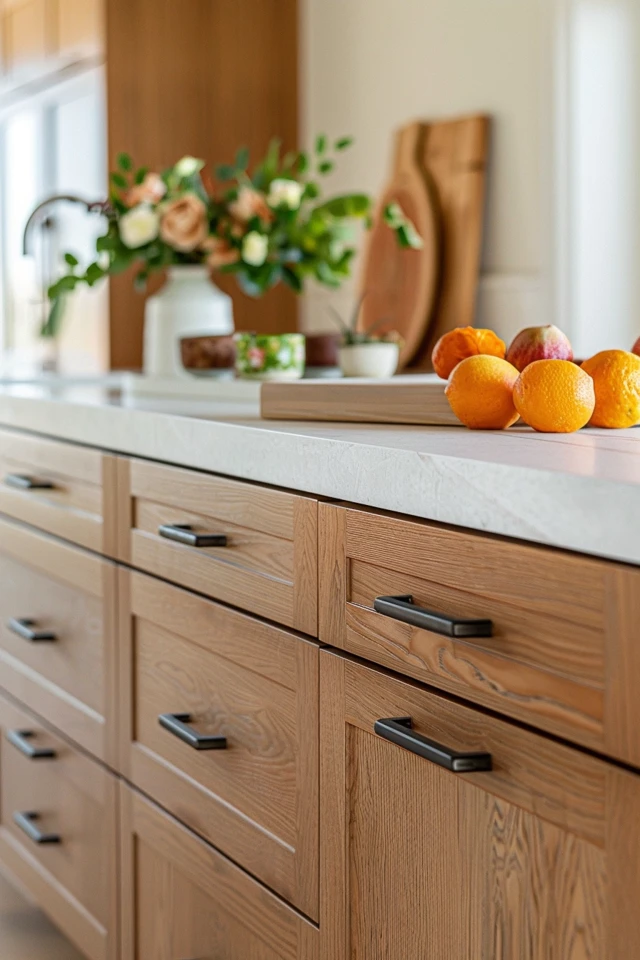
I recommend using pulls that are linear and sleek. A matte black finish is often the best choice for hickory because the black picks up the darkest streaks in the heartwood, tying the look together.
Rules of Thumb for Hardware Sizing
- Drawers wider than 24 inches: Use a single long pull (at least 8 to 10 inches) or two smaller knobs. A single small knob in the center looks underwhelming.
- Upper Cabinets: If you use knobs, place them perfectly aligned with the bottom corner of the door frame. If you use pulls, T-bar pulls in a 5-inch length are a safe, modern standard.
- Drill spacing: If you are swapping hardware, you must measure the “center-to-center” distance of the existing screw holes. If the new hardware doesn’t match, you will have to fill holes, which is nearly impossible to hide on clear-coated hickory.
What I’d Do in a Real Project
If I were renovating a kitchen with standard hickory shaker cabinets, I would choose square-bar pulls in a “Honey Bronze” or “Soft Black” finish. I would avoid polished chrome, as it tends to look too cold and sterile against the warmth of the wood.
3. Countertops and Backsplash: creating Negative Space
This is the most critical design decision you will make. Because hickory is “loud,” your countertops and backsplash must be “quiet.”
A common mistake in the early 2000s was pairing hickory cabinets with busy, speckled granite like Santa Cecilia or Uba Tuba. That combination creates a visual vibration that makes the room feel cluttered, even when it is clean.
To modernize, you need to flatten the texture. Solid white or soft cream quartz is the gold standard here. It brightens the room and provides a clean, crisp line that separates the upper and lower cabinets.
Backsplash Logic
Skip the small mosaic tiles. Glass mosaics with multiple colors will fight with your wood grain. You want a backsplash that acts as a canvas, not a focal point.
- The Safe Bet: A 3×6 or 2×8 subway tile in a white or warm creamy off-white. Use a matching grout color. Contrasting grout creates a grid pattern that adds more lines to the room, which you don’t want.
- The Modern Edge: Use a “Zellige” style tile. These have a handmade texture and slight color variation but are solid in tone. The texture adds interest without adding pattern.
- Slab Backsplash: If the budget allows, running the quartz countertop material up the wall as a backsplash is the ultimate modernizer. It creates a seamless, calm surface.
Common Mistakes + Fixes
Mistake: Installing a 4-inch backsplash made of the countertop material and then tiling above it.
Fix: Remove the 4-inch granite splash before tiling. Tile should run all the way down to the countertop deck for a professional, high-end look.
4. Lighting: Changing the Mood
Lighting changes how we perceive the color of the wood. Old incandescent bulbs or warm-dim LEDs often cast a yellow glow (2700K), which intensifies the orange tones in hickory.
Switch your bulbs to 3000K or 3500K. This is a cleaner, whiter light that neutralizes the yellow without making the kitchen feel like a hospital.
Fixture Selection
The light fixtures themselves act as architectural elements. Since hickory has a visual weight to it, your lighting needs to have presence.
Avoid tiny mini-pendants over the island. They look dinky next to strong wood grain. Instead, opt for oversized pendants. A clear glass globe or a large metal dome in matte black works beautifully.
Placement Rules
- Pendants: Space them 30 to 32 inches apart, measuring from the center of one bulb to the center of the next.
- Height: The bottom of the pendant should sit 30 to 36 inches above the countertop surface.
- Scale: If your island is small (under 6 feet), use two pendants. If it is larger, three is usually the magic number.
5. Flooring and Wall Color: The Envelope
If you have hickory cabinets, the floor is a tricky surface. The biggest design error I see is installing a wood floor that is slightly different from the cabinets. It almost never looks intentional.
If you are renovating the flooring, contrast is your friend. A slate-look tile (large format, 12×24) in a charcoal or deep grey creates a stunning base that grounds the hickory. The cool grey tones balance the warm wood tones.
If you must have wood floors, they should be significantly lighter (white oak with a whitewash) or significantly darker (espresso) than the cabinets. Do not try to match the hickory.
Wall Paint Strategy
Paint is the great unifier. To make hickory look modern, you generally want to avoid yellow-based creams or beige, as they blend too much with the wood.
- Warm Whites: Look for whites with a very slight green or grey undertone. These cool down the room.
- Greens: Sage green or deep forest green looks incredible next to hickory. It plays into the “nature” vibe but feels very current.
- Navys: A dark navy island with perimeter hickory cabinets is a classic, handsome combination.
Designer’s Note: The 60-30-10 Rule
When working with hickory, treat the wood cabinets as your dominant color (60%). Your walls and countertops are the secondary color (30%). Your accents—like a black faucet or a colorful runner rug—are the final 10%.
Final Checklist: The Hickory Modernization Plan
Before you start tearing out backsplash or buying paint, run through this checklist to ensure you are staying on track.
- Audit the finish: Clean the cabinets thoroughly with a degreaser. If the finish is gummy or overly yellow, consult a refinisher about a clear matte coat.
- Select the palette: Choose one metal finish (e.g., matte black) and one countertop color (e.g., white quartz). Stick to them.
- Measure hardware: Confirm the center-to-center measurement of existing holes before buying new pulls.
- Check the lighting: Buy one sample bulb in 3000K to test how it looks against your wood doors at night.
- Rug sizing: If adding a runner, ensure there is at least 6 inches of floor visible between the rug and the toe kick.
- Declutter: Remove everything from the top of the cabinets. No fake plants or baskets. Negative space is modern.
Frequently Asked Questions
Should I just paint my hickory cabinets white?
If you hate the grain pattern no matter what, then yes, painting is the best option. However, hickory is difficult to paint because the grain is open and hard. You will need a grain filler and a high-quality primer to prevent the texture from showing through the paint. It is a labor-intensive job.
What flooring goes best with hickory cabinets?
Large-format porcelain tile that looks like slate or limestone is the best choice. It provides a textual contrast and a temperature contrast (cool stone vs. warm wood). If you need a softer floor, marmoleum in a solid color can also work in mid-century modern inspired spaces.
Can I mix metals with hickory cabinets?
Yes, but be careful. Hickory is already “busy.” If you choose matte black hardware, you can use a stainless steel faucet. I would avoid mixing three metals (like black, brass, and nickel) in a hickory kitchen, as it becomes too stimulating for the eye.
Does hickory darken over time?
Unlike cherry, which darkens significantly, hickory is relatively stable. However, the oil-based finishes used in the past do yellow. If your cabinets look darker than they used to, it is likely the topcoat, not the wood itself.
Conclusion
Modernizing hickory cabinets is an exercise in restraint. The wood itself is full of character, history, and natural beauty. By stripping away the clutter, simplifying the color palette, and updating the functional touchpoints like lighting and hardware, you can create a space that feels fresh and current without erasing the soul of the home.
You do not need a complete demolition to achieve a designer look. Respect the materials you have, edit ruthlessly, and focus on quality fixtures that bridge the gap between the rustic nature of the wood and the clean lines of modern living.
Picture Gallery


