
Title: How To Store Handbags
Handbags often end up as the most neglected items in a closet, slumped over on floors or tangled in a heap on a high shelf. This disorganization not only makes getting dressed stressful but can actually damage your investment pieces over time. Proper storage is about balancing accessibility with preservation, ensuring your bags maintain their shape and finish for years to come.
As an interior designer, I approach handbag storage the same way I approach art installation: it needs to be visible, protected, and properly lit. Whether you have a dedicated dressing room or a compact city apartment, the principles of structure and spacing remain constant. For visual inspiration on arranging your collection, make sure to check out the curated Picture Gallery at the end of this blog post.
By implementing a few professional organization techniques, you can transform a cluttered mess into a boutique-like display. Let’s explore exactly how to audit your collection and install systems that work for your specific space constraints.
1. Auditing and Categorizing Your Collection
Before buying a single bin or installing a shelf, you must understand the scope of what you own. In my design projects, I start every closet renovation with a rigorous inventory process. You cannot build a functional home for your items if you don’t know their dimensions.
Start by pulling every single bag out of your current storage areas. Group them first by type: clutches, crossbodies, shoulder bags, totes, and travel bags. Once grouped, separate them by structure; rigid bags need different storage solutions than unstructured slouchy bags.
Next, measure your largest items. Knowing the height of your tallest tote and the width of your widest weekender bag is critical for setting shelf heights. A common issue I see is adjustable shelving set too low, forcing handles to be crushed against the shelf above.
Designer’s Note: The 80/20 Rule
In almost every closet I design, I find that clients use 20% of their bags 80% of the time. Identify your “daily drivers.” These need to be stored at eye level and within easy reach, usually between 40 and 60 inches off the floor. Your evening clutches and seasonal beach bags can go on higher shelves or in less accessible drawers.
2. Shelf Storage: The Gold Standard
If you have the space, storing handbags on shelves is the absolute best method for preservation. Sitting a bag on its feet prevents the straps from stretching and keeps the leather from warping. However, simply lining them up isn’t enough; you need to manage the “slump.”
Spacing and Dividers
Bags should never touch each other on a shelf. Leather and patent finishes can stick together in humid environments, causing color transfer or peeling. I recommend leaving at least two inches of breathing room between each bag.
To keep bags upright, use acrylic shelf dividers. These are visually unobtrusive and prevent a domino effect if one bag tips over. Place dividers every 8 to 10 inches, or customize the width based on your specific bag sizes.
Shelf Depth and Material
Standard closet shelving is usually 12 inches deep, which is often too shallow for large totes or dust bags. If you are doing a custom build or buying a standalone unit, aim for a depth of 14 to 16 inches.
Avoid wire shelving if possible. The thin metal wires create pressure points on the bottom of soft leather bags, leaving permanent indentations. If you must use wire shelving, line the shelf with a solid liner, heavy cardstock, or a piece of cut acrylic to create a flat surface.
Common Mistakes + Fixes
- Mistake: Storing heavy items inside the bag while it sits on the shelf.
- Fix: Empty your bags completely. A heavy wallet left inside can warp the bottom structure over just a few months.
- Mistake: Pushing bags all the way to the back wall.
- Fix: Pull bags forward to align with the front edge of the shelf. This creates a uniform “boutique” look and prevents dust bunnies from accumulating behind them.
3. Hanging Solutions: When and How to Use Them
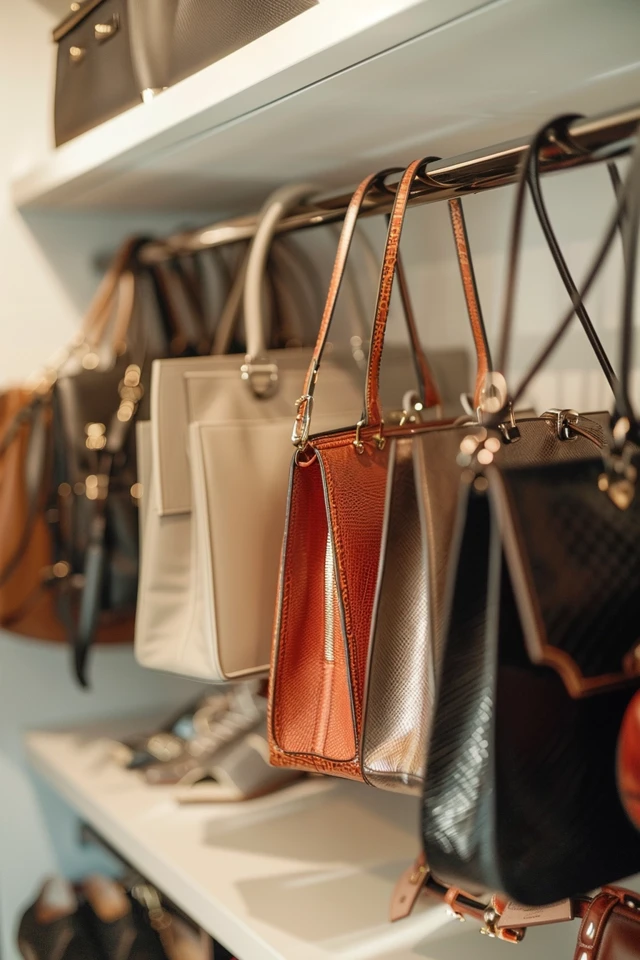
There is a significant debate in the design world about hanging bags versus shelving them. My rule is strict: never hang a bag by its straps if it weighs more than one pound or is made of soft leather. Gravity is the enemy of leather straps.
When to Hang
Hanging is acceptable for lightweight canvas totes, empty nylon backpacks, or durable synthetic bags. It is also a viable solution for crossbody bags with long chains, provided the bag itself is very light.
The Right Hardware
If you must hang bags, do not use thin wire hooks or nails. These create a focused pressure point that will crease the handle. Instead, look for wide, curved hooks specifically designed for purses.
S-hooks can be useful on a closet rod, but ensure they are wide enough to accommodate the full width of the strap. Position hooks at least 6 inches apart to prevent the bags from tangling or rubbing against one another.
Vertical Wall Systems
For clients with limited floor space, I often utilize vertical wall space behind a door. A wall-mounted peg rail is a stylish option. Install the rail at a height of 60 inches for ease of access, and ensure the pegs are rounded wood to be gentle on fabrics.
4. Small Space and Renter-Friendly Strategies
Not everyone has a walk-in closet with custom millwork. When working with renters or smaller urban apartments, we have to get creative with verticality and hidden storage. The goal is to maximize density without crushing the items.
Over-the-Door Organizers
While often considered “dorm room” decor, high-quality over-the-door organizers can be lifesavers. Look for ones with clear, structured pockets rather than soft mesh. The structure helps protect the bag, and the clear plastic lets you see what you have instantly.
Bookshelves as Display
If your closet is tiny, move the bags out into the bedroom. A simple Billy bookcase or a vintage curio cabinet can turn your handbag collection into decor. This is a great way to show off designer pieces.
Under-Bed Bins
For off-season bags, under-bed storage is ideal. However, avoid airtight plastic bins if you live in a humid climate, as they can trap moisture. Look for breathable canvas bins with rigid sides.
If using rolling plastic bins, drill a few small holes in the lid for airflow or throw in a silica gel packet. Store bags flat in these bins, separated by sheets of acid-free tissue paper to prevent friction.
Designer’s Note: Utilizing High Shelves
The top shelf of a closet is often hard to reach and underutilized. This is the perfect spot for rigid, opaque storage bins containing your evening clutches. Label the outside of the bin clearly so you don’t have to pull it down to know what is inside.
5. Preservation: Stuffing, Covering, and Climate
Storage is not just about where you put the bag; it is about how you prepare the bag for hibernation. Leather is a natural skin and needs to breathe, but it also needs support to maintain its silhouette.
Stuffing for Shape
Never store a bag empty if it is prone to slouching. Over time, creases will form in the leather that cannot be buffed out. I recommend stuffing bags with acid-free tissue paper or purpose-made purse pillows.
Do not use newspaper. The ink from the newsprint can transfer onto the lining of your bag over time. In a pinch, you can use old, clean white t-shirts or bubble wrap, provided the bubble wrap doesn’t touch the interior lining directly (wrap it in cotton first).
Dust Bags
Most designer bags come with a flannel or cotton dust bag. Use them. If you bought a bag second-hand or lost the cover, buy a set of generic cotton drawstring bags.
Avoid the clear plastic covers that dry cleaners use. Plastic traps heat and moisture, which can lead to mold growth or cause patent leather to become sticky and melt. Cotton allows for airflow while blocking dust and UV rays.
Climate Control
Temperature and humidity play a massive role in the longevity of your accessories. Leather does best in 40% to 50% relative humidity. If your closet is near a bathroom with a shower, ensure you run the exhaust fan to prevent damp air from settling on your leather goods.
Sunlight is another factor. UV rays will fade the dye of leather and fabric rapidly. If your dressing area has a window, install solar shades or ensure your open shelving is positioned out of direct beams of light.
Final Checklist: What I’d Do in a Real Project
If I were organizing your closet tomorrow, this is the step-by-step workflow I would follow. Use this to guide your own weekend organization project.
- Step 1: The Purge. Remove everything. Donate items not used in 2 years. Check pockets for old gum, pens, or receipts.
- Step 2: Clean. Wipe down exteriors with a proper leather cleaner. Vacuum the interiors to remove dust and crumbs.
- Step 3: Stuff. Fill slouchy bags with acid-free tissue or pillows until they stand up on their own without looking over-stuffed.
- Step 4: Measure. Group bags by height. Adjust your shelving so there is 2 inches of clearance above the tallest bag in that row.
- Step 5: Protect. Place infrequently used bags in cotton dust bags. Attach a laminated photo of the bag to the drawstring so you know what is inside.
- Step 6: Arrange. Place bags on shelves with dividers. Color coordinate from light to dark, left to right, for a visually calming effect.
FAQs
Should I keep the original boxes for my handbags?
Generally, no. Unless you plan to resell the bag shortly, boxes take up too much valuable real estate. They also attract silverfish and other pests that feed on cardboard and glue. If you have a luxury bag you intend to sell later, flatten the box and store it elsewhere (like under a bed), but keep the bag in a dust bag on a shelf.
How do I store patent leather specifically?
Patent leather requires extra care because it absorbs color from items touching it. Never let patent leather touch another bag, plastic, or dark fabric. It must be stored in a white or light-colored dust bag. Once patent leather has “color transfer,” it is virtually impossible to fix.
Is it okay to nest smaller bags inside larger ones?
Nesting is a great space-saver for suitcases, but be careful with handbags. You can store a small clutch inside a durable tote, but ensure the hardware from the clutch doesn’t scratch the interior of the tote. Always put the inner bag in a soft dust bag first. Do not nest more than one layer deep, or you will likely forget what you own.
What is the best way to organize clutches?
Clutches are difficult because they don’t stand up. I prefer to use acrylic file sorters (often found in office supply sections) or lid organizers. You can “file” your clutches upright in these slots. This keeps them visible and accessible without them sliding around in a drawer.
Conclusion
Proper handbag storage is an intersection of discipline and design. By taking the time to stuff, cover, and arrange your collection, you are respecting the craftsmanship of the items and the money you spent on them.
Remember that the system you choose must match your lifestyle. If a storage method requires too many steps to put a bag away, you won’t use it. Aim for simplicity: open shelving for daily items and protected storage for special occasions.
Treating your accessories with care extends their lifespan and keeps your home looking curated rather than chaotic. With these rules of thumb and structural tips, your closet can function just as efficiently as a high-end boutique.
Picture Gallery


