
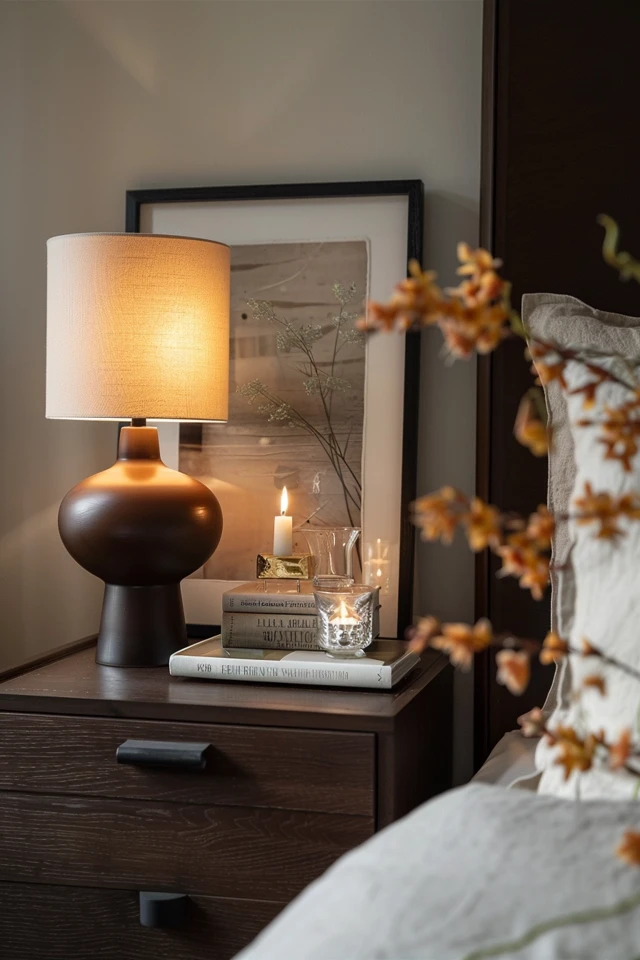
Title: How To Style Your Nightstand: Functional And Chic Arrangement
Introduction
The nightstand is often the unsung hero of the bedroom, yet it tends to become a catchall for receipts, hair ties, and half-empty water glasses. It is the last thing you see before you close your eyes and the first thing you reach for in the morning. Because of this, the way you style it has a massive impact on both your daily efficiency and your mental clarity.
Styling this small surface is about striking a delicate balance between a beautiful vignette and a functional landing pad. You do not need to sacrifice your essential lip balm or phone charger to have a magazine-worthy look. With a few structural rules regarding height, scale, and texture, we can transform this spot into a purposeful display.
We are going to walk through the exact formula I use when finishing a primary suite for a client. For plenty of visual inspiration on how to execute these tips, be sure to scroll down to the Picture Gallery at the end of the blog post.
1. Establishing the Anchor: Lighting and Scale
The lamp is almost always the most important element on the nightstand because it provides vertical height and essential function. A common issue I see in client homes is lighting that is disproportionate to the furniture. If you have a substantial wooden nightstand, a tiny, spindly lamp will look lost and unintentional.
Getting the Height Right
Scale is the first rule of design. For a standard nightstand (usually 24 to 28 inches high), your table lamp should generally be between 24 and 27 inches tall.
The bottom of the lampshade should be roughly at eye level when you are sitting up in bed reading. This prevents the glare of the bulb from hitting you directly in the eyes while ensuring the light is cast downward onto your book or tablet.
Visual Weight
Think about the “visual weight” of the lamp base. If your nightstand has open legs and feels airy, a heavy ceramic or stone lamp base can provide a nice grounding effect. Conversely, if your nightstand is a heavy chest of drawers, a glass base or a slender metal lamp can keep the corner from feeling too bulky.
Designer’s Note: The “Wattage” Mistake
What usually goes wrong: Clients often buy lamps based solely on aesthetics, only to realize they are overly bright or too dim for reading.
How to fix it: Always check the bulb requirements before buying. For a bedside scenario, I recommend a bulb with a color temperature of 2700K (warm white) and roughly 450 to 800 lumens. This provides a cozy glow that is bright enough to read by but soft enough to signal to your brain that it is time to sleep.
2. The Layout Logic: Creating a Composition
Once your lighting is in place, you cannot simply scatter items randomly across the surface. We need to create a composition that guides the eye. I rely heavily on the “Triangle Rule” or the concept of varying heights to keep the arrangement dynamic.
The Rule of Three
In design, odd numbers are more pleasing to the eye than even numbers. Aim to group three distinct items on the table.
- The Tall Item: This is almost always your lamp.
- The Medium Item: This could be a framed photo, a vase with greenery, or a sculptural object. It should be shorter than the lamp but taller than the surface items.
- The Flat Item: This is the grounding layer, such as a stack of books or a catchall tray.
Creating Depth
Do not line everything up in a straight row like tin soldiers. Place the lamp toward the back corner (usually the outer corner) to maximize the usable surface area.
Layer the medium item slightly in front of or beside the lamp, and place the flat item in the foreground. This staggering creates depth and makes the nightstand feel curated rather than cluttered.
Common Mistakes + Fixes
Mistake: Using items that are all the same height.
Correction: If you have a small clock, a candle, and a coaster that are all roughly three inches tall, the vignette will look flat. Place the candle on top of a stack of two books to elevate it, instantly creating the necessary vertical variance.
3. Functional Essentials: The Drop Zone
A nightstand that looks good but doesn’t work for your life is a failure of design. We have to accommodate the real-life items you use every day, like your phone, glasses, jewelry, and water. The secret is containment.
The Power of the Tray
Trays are the secret weapon of interior designers. They physically define a zone for small, loose items. By corralling your lip balm, hand cream, and jewelry into a small marble or leather tray, you transform “clutter” into a “collection.”
Nightstand Height and Reach
Function also dictates the furniture itself. Your nightstand surface should be level with the top of your mattress or up to two inches higher. It should never be lower than your mattress.
If the table is too low, you risk knocking over that glass of water when reaching for it in the dark. If you are currently stuck with low nightstands, consider adding a thick distinctive coffee table book under your lamp to visually bridge the gap, though replacing the table is the better long-term fix.
Tech Management
Nothing kills a vibe faster than a tangle of white plastic cords.
- Concealment: Route your charger cable behind the nightstand and secure it with a command clip to the back edge of the furniture so it is always within reach but never sliding off.
- Wireless Options: Consider a lamp base that has a built-in wireless charging pad, or use a beautiful stone charging tray that blends into the decor.
What I’d Do in a Real Project
If I am designing a master suite, I always ensure there is a coaster. Water damage rings are the most common way nightstands get ruined. I prefer using a coaster made of absorbent material like sandstone or heavy felt rather than sealed marble, so condensation doesn’t pool and stick to the glass.
4. Adding Personality: Art and Organic Elements
Now that we have the lamp (height) and the tray (function), we need the layer that brings joy. This is where you inject personality into the room so it doesn’t look like a hotel.
Leaning Art
You do not always need to hang art on the wall. Leaning a small framed print (think 5×7 or 8×10) against the wall behind the lamp creates a lovely layered effect.
This connects the nightstand to the wall visually. It is also a low-stakes way to display art; you can swap it out seasonally without putting new holes in the drywall.
Organic Life
Every surface in a home needs something organic to feel alive. On a nightstand, this usually means flowers or greenery.
- Fresh: A simple bud vase with a single stem cut from your garden is elegant and free.
- Dried: If you are not great with plant maintenance, a small vessel with dried bunny tails or eucalyptus works well.
- Faux: High-quality faux succulents are great for low-light corners, but ensure they look realistic.
Mixing Materials
To achieve a “chic” look, you must mix textures. If your nightstand is wood and your lamp is ceramic, choose a metal frame for your art and a leather tray for your keys. The contrast between warm wood, cool metal, and soft leather creates a rich, sophisticated tactile experience.
5. Constraints and Real-World Scenarios
Not everyone has a spacious room with a king-sized bed and unlimited budget. Let’s look at how to adapt these styling rules to specific constraints.
Small Spaces and Renters
If your bedroom is tight, you might only have room for a 12-inch wide stool or floating shelf. In this case, surface area is premium real estate.
- Wall Sconces: Use plug-in wall sconces instead of a table lamp. This frees up the entire surface of the nightstand for your water and phone.
- Vertical Storage: Use a nightstand with drawers rather than an open table. Hide the clutter inside so the top can remain minimal.
Pet and Kid Proofing
If you have a cat that knocks things over or a toddler who grabs everything, you need to style defensively.
- Secure the Lamp: Use museum wax on the bottom of your lamp base. It holds the lamp firmly to the table but can be removed without damaging the finish.
- Unbreakable Decor: Swap glass vases for wood or metal vessels. Avoid heavy framed art that leans; hang it securely on the wall instead.
The “Shared Room” Dilemma
Do both nightstands need to match? The furniture should generally match or coordinate closely in height and visual weight. However, the styling does not need to be symmetrical.
In fact, it looks better if it isn’t identical. One side might have a stack of books and a candle, while the other has a larger plant and a photo frame. As long as the lamps match, the accessories can reflect the individual using that side of the bed.
Final Checklist
Before you consider your nightstand “done,” run through this quick list to ensure you have hit all the marks for both style and function.
The Essentials:
- Is the lamp height appropriate for reading without glare?
- Is there a dedicated coaster for water?
- Is there a defined “drop zone” (tray or bowl) for small loose items?
The Aesthetics:
- Do you have a variance in height (tall, medium, flat)?
- Is there something organic (plant/flower)?
- Have you mixed at least two different materials (wood, metal, ceramic, glass)?
The Mechanics:
- Are cords tucked away or managed neatly?
- Can you reach the alarm/phone easily from a lying position?
- Is the table surface clear enough to actually put a book down?
FAQs
Should my nightstand decor match my dresser decor?
It should coordinate, but it shouldn’t match exactly. If you have brass hardware on your dresser, bringing a brass frame or lamp base to the nightstand helps tie the room together. However, avoid using the exact same accessories in multiple spots, as it can look like you bought a “decor set” from a catalog.
How do I style a nightstand with open shelves?
Treat the bottom open shelf as a display area for larger items. A woven basket is perfect here to hide unsightly clutter like extra chargers or lotions. Alternatively, a neat stack of larger coffee table books works well to fill the vertical gap. Keep the top surface for daily essentials and the bottom shelf for storage or anchoring weight.
What if my nightstand is very small (under 18 inches wide)?
Prioritize the lamp and the coaster. Skip the picture frames and decorative objects. To get the “styled” look without the clutter, focus on the lamp itself being a statement piece—perhaps one with a textured base or an interesting shade. Let the lamp be the decor.
Is it okay to have a digital clock on the nightstand?
From a design perspective, vintage-style analog clocks look softer and more timeless. However, if you rely on a digital clock, try to find one with a dimmable display and a sleek casing (like matte black or wood grain) so it doesn’t look like a piece of office equipment.
Conclusion
Styling your nightstand is a small project that pays off every single day. By focusing on the balance of lighting, the rule of three, and the practical management of your daily essentials, you create a space that supports your rest rather than adding to your stress.
Remember that this small surface is flexible. Start with the lamp as your anchor, add a tray for function, and layer in items that make you smile. If you find yourself constantly moving a decorative object to put down your phone, remove the object. Design should never get in the way of living.
Picture Gallery


