
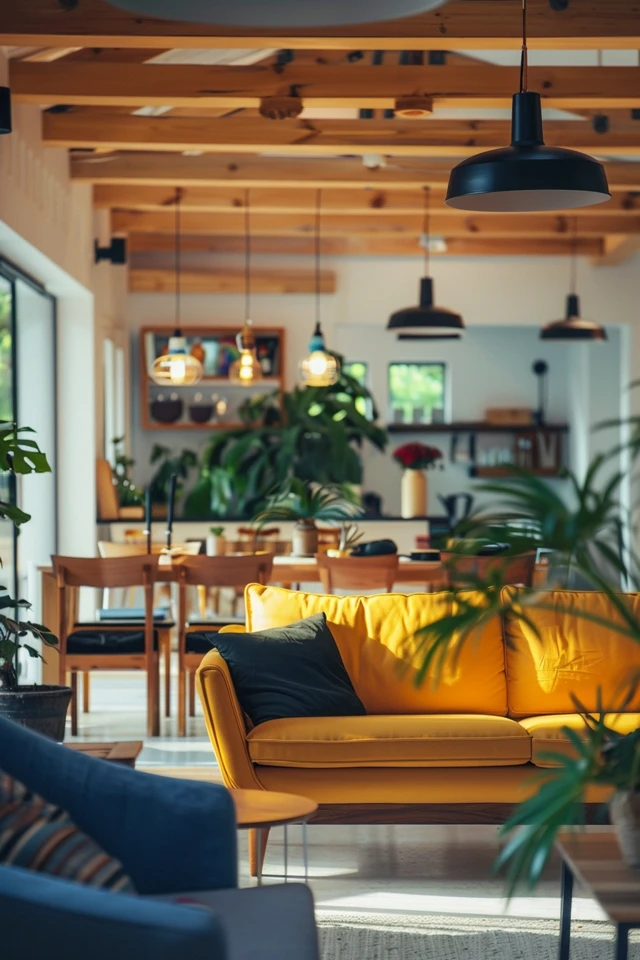
Illuminating Charm: Exposed Beam Ceiling Lighting Ideas
There is something undeniably magnetic about walking into a room with exposed beams. Whether they are original rough-hewn timber in a farmhouse, sleek steel in an industrial loft, or decorative box beams in a new build, they instantly ground a space. However, as much as we love them, beams present one of the most notoriously difficult challenges in interior design: lighting plan integration.
You cannot simply punch a hole wherever you want, and shadows cast by the beams can turn a bright room into a dungeon if you aren’t careful. Over the years, I have seen homeowners struggle with wire concealment and fixture placement that clashes with the structural grid. For those of you who want to jump straight to the visuals, please note that a curated Picture Gallery is at the end of this blog post.
This guide will walk you through the technical and aesthetic strategies I use to light these architectural gems. We will cover how to manage electrical constraints, selecting the right fixture scale, and layering light so your beams remain the star of the show without compromising visibility.
1. Navigating Architecture: Beam Orientation and Ceiling Height
Before buying a single bulb, you must assess the relationship between your beams and your floor plan. The most common mistake I see is ignoring the “grid” created by the beams. If your furniture layout fights the beam layout, lighting becomes a headache.
For cathedral or vaulted ceilings, the volume of space is your primary challenge. A single chandelier often looks lost in the abyss of a high peak. In these scenarios, I prefer to drop pendants or chandeliers so the bottom of the fixture sits between 8 and 9 feet off the floor. This brings the visual weight down to human scale while leaving the majesty of the beams above.
For standard flat ceilings (8 to 9 feet) with decorative beams, flush mounts or semi-flush mounts are usually necessary. However, you have to be careful about “visual clutter.” If the beams are heavy and dark, adding bulky fixtures can make the ceiling feel like it is falling on you. In these cases, recessing can lights into the drywall between the beams is often the cleanest look.
Designer’s Note: The Centering Myth
Clients often panic when their dining table doesn’t center perfectly under a beam or perfectly between two beams. Do not force the table into a bad spot just to align with the ceiling. Instead, use a “swag” kit with a chain to center the light over the table, or use a linear fixture that spans across the beams to trick the eye.
2. The Practicality of Power: Wiring Solutions for Solid Wood
If you are dealing with hollow box beams, count your blessings. You can run Romex wire right through the center of them and mount a junction box anywhere you like. If you are dealing with solid structural timber, however, you have a serious constraint. You generally cannot drill large channels through structural beams without compromising their integrity.
Option A: Conduit and Track Systems
In industrial or rustic spaces, I embrace the conduit. We run rigid metal conduit along the side or bottom of the beam. It looks intentional and raw. This pairs exceptionally well with track lighting systems mounted directly to the side of the beam.
Option B: The “Top Route”
If you have access to the attic space above, we can drill a small hole vertically through the ceiling drywall and the beam (if permitted by a structural engineer) or, more commonly, drop the wire right next to the beam. We then notch the drywall slightly so the canopy of the light fixture hugs the beam, hiding the wire entry point.
Option C: Wireless or Plug-in
For renters or historic homes where drilling is forbidden, we look to swag lamps. We mount a hook into the beam (which creates minimal damage) and drape a high-quality cord to a wall outlet. To keep this looking high-end, choose cloth-wrapped cords rather than cheap plastic ones.
Common Mistake + Fix:
Mistake: Trying to color-match a wire mold to a wood beam. It never matches, and the plastic sheen looks cheap against the wood grain.
Fix: Go for high contrast or distinct metal. Use black metal conduit on a wood beam. It looks like architectural hardware rather than a failed attempt at camouflage.
3. Selecting Fixtures: Scale, Finish, and Materiality
The scale of your lighting must respect the mass of your beams. A delicate crystal chandelier often looks too fragile against massive 10-inch oak beams. Conversely, a heavy iron forge chandelier might overwhelm delicate, painted box beams in a cottage.
Balancing Materials
I follow a rule of “Complement, Don’t Copy.” If you have heavy wood beams, avoid wood chandeliers unless the stain is an exact match (which is nearly impossible). Instead, opt for:
- Matte Black or Iron: The classic choice for rustic and farmhouse styles. It grounds the space and contrasts beautifully with warm wood tones.
- Burnished Brass or Gold: This adds a touch of glamour and warmth. It works exceptionally well with dark walnut beams to brighten the palette.
- Glass and woven textures: Clear glass pendants help keep the sightlines open, while rattan or basket fixtures add texture without adding “weight.”
Sizing Rules of Thumb
When hanging a central fixture in a room with beams:
- Width: The fixture should not be wider than 2/3 the width of the table or area it illuminates.
- Clearance: Ensure there is at least 6 inches of breathing room between the top of the light fixture and the beam itself. If the light touches the beam, it looks cramped.
- Beam Width vs. Canopy: If mounting directly to the beam, the canopy (the plate against the ceiling) should not be wider than the beam. If your beam is 4 inches wide and the canopy is 5 inches, you will have unsightly overhang.
4. Layering Light: Preventing the “Cave Effect”
Exposed beam ceilings, especially those with dark wood, soak up light. They do not reflect it back into the room like a flat white ceiling does. This can create a “cave effect” where the top half of the room feels dark and oppressive at night.
The Power of Uplighting
To combat this, you need to wash the ceiling with light. I often hide LED tape lights on top of the beams if there is a gap, or I install wall sconces that direct light upward. This highlights the architectural detail of the timber and raises the perceived height of the room.
Track Lighting Tactics
Track lighting is often unfairly maligned as dated, but in a beamed room, it is a savior. By mounting a track on the side of a beam, you can aim heads in different directions. Point some down for task lighting and point others back up at the ceiling drywall between the beams. This reduces contrast and eye strain.
Task Lighting Measurements
For kitchen islands set under beams, proper spacing is vital.
- Height: Bottom of pendants should be 30–36 inches above the countertop.
- Spacing: Space pendants 30 inches apart (center to center).
- Beam Alignment: If the beams run perpendicular to the island, try to center the pendants between the beams rather than on them to keep the space feeling airy.
5. Room-Specific Strategies
Different rooms have different functional requirements. Here is how I tackle the three most common spaces with exposed beams.
The Living Room
Here, comfort is king. You usually want ambient light and air circulation. Ceiling fans are common, but they can be visually intrusive.
What I do: I look for “hugger” fans if the ceiling is low, or fans with a simple rod if vaulted. I try to avoid fans with integrated light kits that look like tacked-on bowls. Instead, I rely on floor lamps and table lamps for the actual light, using the fan solely for air. If overhead light is needed, I use recessed cans in the drywall sections between beams.
The Kitchen
This is a high-utility zone. Shadows are dangerous here. You cannot rely solely on a central fixture because the beams will cast shadows on your prep surface when you stand at the counter.
What I do: I insist on under-cabinet lighting to illuminate the counters. For general lighting, I use directional track heads mounted to the beams, aimed specifically at the pantry, sink, and stove. Pendants over the island serve as the “jewelry” of the room.
The Bedroom
Mood is the priority. Glare from overhead lights is the enemy when you are lying in bed.
What I do: I avoid hanging a heavy chandelier directly over the bed unless the ceiling is very high. It can psychologically feel unsafe. instead, I use a large, soft semi-flush mount in the center of the room, or better yet, skip the overhead light entirely and wire switched outlets for bedside lamps and sconces.
6. Common Mistakes and Designer Fixes
Even with the best intentions, installations go wrong. Here are the issues I encounter most often during renovations.
Mistake 1: Ignoring Color Temperature
Dark wood beams warm up the light significantly. If you put a warm bulb (2700K) in a room with red-toned wood beams, the room will look orange.
The Fix: Use a slightly cooler bulb, around 3000K or 3500K. This neutralizes the intense warmth of the wood and keeps the walls looking true to color.
Mistake 2: The “Swiss Cheese” Beam
Homeowners often try to drill multiple holes in a beam for different hooks and wires, realizing too late that the placement is wrong.
The Fix: Plan your layout on the floor first. Use blue painter’s tape to mark the ceiling locations before you pick up a drill. If you have already made holes, use wood wax filler sticks to patch them—they blend much better than standard putty.
Mistake 3: Shadows on Workspaces
Installing a single row of lights parallel to a beam can cause a sharp shadow line right where you are trying to work.
The Fix: Cross-lighting. Ensure light comes from two different angles. If you have a beam to your left, make sure there is a light source to your right to cancel out the shadow.
Final Checklist: The Project Plan
Before you finalize your lighting order, run through this checklist. This is the exact mental process I use for my clients.
1. Identify the Beam Type:
- Is it solid (structural) or hollow (decorative)?
- This dictates your wiring path (through the middle vs. surface mount).
2. Measure the “Bays”:
- Measure the distance of the drywall space between the beams.
- Ensure your recessed cans or flush mounts are centered in these bays, not crowding the beam edges.
3. Check the Drop Height:
- For dining: 30-36 inches above the table.
- For walking paths: Minimum 7 feet from the floor to the bottom of the fixture (6’8″ is acceptable in very old cottages).
4. Select the Bulb Specs:
- Aim for high CRI (Color Rendering Index) of 90+ to make the wood grain pop.
- Choose 3000K LED for a balance of warmth and clarity.
5. Verify Canopy Width:
- Ensure the mounting plate of your fixture is narrower than the beam face if mounting directly to it.
Frequently Asked Questions
Can I install recessed lighting in the beams themselves?
Technically, yes, if they are hollow box beams. We cut holes and insert “puck lights” or small gimbal lights. If they are solid structural beams, absolutely not. You should never hollow out a structural member for a light housing.
What is the best way to light a rental with beams?
Use the beams to your advantage by clamping lights onto them. There are industrial-style clamp lights that look great and require zero drilling. Alternatively, use swag hooks with plug-in pendants. Just ensure the cord has enough slack to drape elegantly; a tight cord looks messy.
How do I clean fixtures hanging from high vaulted beams?
This is a maintenance reality check. If you hang a chandelier 15 feet up, you will need a lift or a very tall ladder to clean it or change bulbs. I highly recommend using integrated LED fixtures or long-life LED bulbs so you aren’t climbing up there once a year. For dusting, there are electrostatic dusters on extension poles that work wonders.
Do dark beams make a room look smaller?
They can if the ceiling is low and the lighting is poor. This is why “uplighting” is critical. By shining light onto the white ceiling between the dark beams, you create contrast that draws the eye up, making the room feel taller despite the heavy materials.
Conclusion
Lighting a room with exposed beams is a balancing act between respecting the architecture and ensuring modern functionality. It requires more planning than a standard drywall ceiling, but the payoff is immense. When done correctly, the light highlights the texture of the wood and the rhythm of the structure, turning your ceiling into the room’s defining feature.
Remember to respect the scale of your beams, pay close attention to color temperature, and never compromise the structural integrity of timber for the sake of a wire. With the right layers of light, your beamed ceiling will feel cozy, grand, and perfectly illuminated.
Picture Gallery


