
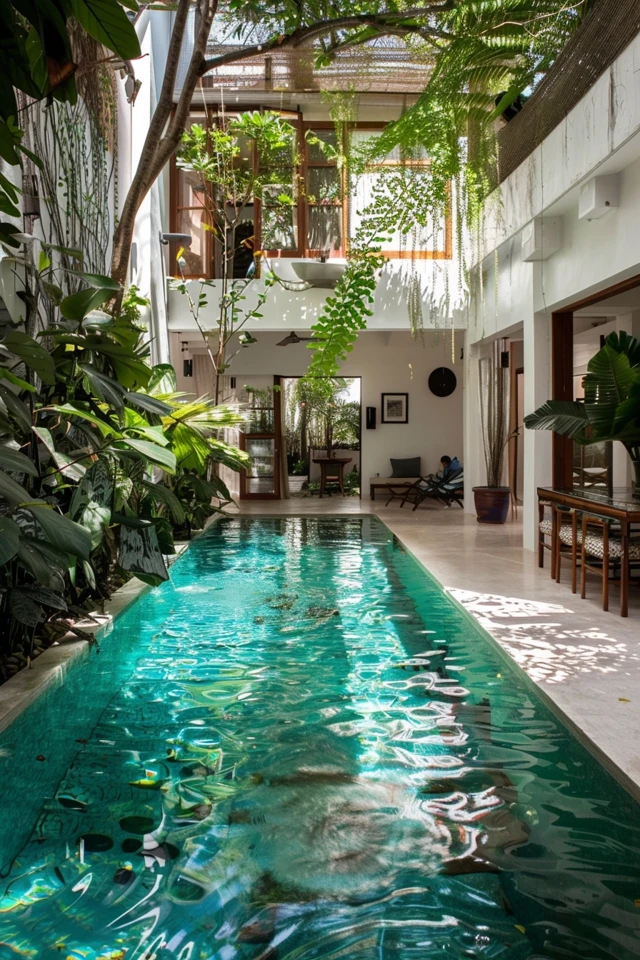
Indoor Oasis: Top Enclosed Pool Ideas Unveiled
Introduction
There is a specific kind of magic in swimming while snow falls silently against the glass just a few feet away. An enclosed pool transforms your home into a year-round sanctuary, ignoring the seasons and offering a private escape from the daily grind. In my career as an interior designer, few projects are as complex or as rewarding as an indoor aquatic space. It requires a marriage of serious engineering and soft, inviting aesthetics.
However, designing an indoor pool is not simply about digging a hole and building a room around it. I have walked into too many “pool rooms” that feel like sterile public natatoriums or, worse, damp basements with a chlorine problem. The goal is to create a seamless extension of your living space that feels intentional and luxurious. I have curated a stunning collection of visual inspiration in the Picture Gallery at the end of this post, so be sure to stick around for that.
I recall a project where a client insisted on wall-to-wall marble without considering the acoustics. The first time their kids jumped in, the echo was so deafening it gave everyone a headache. We had to retrofit the space with expensive acoustic baffles to make it livable. This guide is designed to help you avoid those pitfalls. We will cover everything from managing humidity to selecting the perfect lounge chair, ensuring your indoor oasis is as functional as it is beautiful.
1. Mastering the Envelope: Humidity and Climate Control
Before we pick out tiles or towel hooks, we have to talk about the “envelope” of the room. This is the unsexy part of the design that determines whether your pool room is a dream or a moldy nightmare. An indoor pool generates a massive amount of moisture. Without a specialized dehumidification system, that moisture will seep into your drywall, rot your framing, and rust your light fixtures.
Your standard home HVAC system is not equipped to handle a pool. You need a dedicated system designed to maintain relative humidity between 50% and 60%. If you go lower, the air feels dry and evaporation accelerates; go higher, and you risk mold growth.
Designer’s Note: The Vapor Barrier
In a recent renovation, we found that the previous builder skipped the vapor barrier behind the walls. Moisture had traveled through the insulation and rotted the exterior sheathing. Always insist on a continuous vapor barrier on the warm side of the insulation (usually behind the drywall or ceiling finish). This plastic sheet prevents humid air from penetrating the wall cavity.
Windows and Glass
If you want that “greenhouse” look with floor-to-ceiling windows, you must invest in quality glazing. Standard double-paned windows will fog up instantly in winter.
Look for triple-glazed units with thermally broken frames.
Ideally, your HVAC supply vents should wash warm air across the glass surface.
This airflow prevents condensation and keeps the view clear.
2. Flooring Materials: Balancing Safety and Style
The floor of an enclosed pool area has a tough job. It must be impervious to water, resistant to pool chemicals, easy to clean, and—most importantly—slip-resistant. From a design perspective, it also needs to connect visually with the rest of your home so the pool doesn’t feel like an alien addition.
The Slip Factor
In the industry, we look at the Dynamic Coefficient of Friction (DCOF). For wet areas, you generally want a rating of 0.42 or higher, but for a pool deck, I prefer materials that exceed 0.60. Polished stone looks incredible in photos, but it is a lawsuit waiting to happen.
Top Material Choices
Textured Porcelain Tile: This is my go-to for modern homes. You can get large-format tiles that mimic concrete or stone but have a “grip” finish specifically for wet zones. They are non-porous and handle chlorine well.
Natural Stone (Travertine or Limestone): These offer a timeless, organic look. Travertine is particularly good because it stays cooler underfoot if you have skylights, and its natural pitting provides grip. However, it must be properly sealed to resist salt or chlorine damage.
Sawn-Finished Wood: If you crave the look of a deck, avoid standard hardwoods. They will warp. Instead, use modified woods like Accoya or high-end composites that offer the warmth of wood without the rot.
Common Mistakes + Fixes
Mistake: Using high-gloss sealers on natural stone to make the colors pop.
Fix: Use a penetrating (impregnating) sealer. It protects the stone from within without creating a slippery film on top.
3. Lighting Design: Setting the Mood
Lighting an indoor pool is tricky because water acts like a mirror. If you place recessed cans directly over the water, they will reflect glare right into your eyes, making the space uncomfortable. The goal is to light the room and the walls, not just the water surface.
Indirect Illumination
My favorite technique is washing the walls and ceiling with light. Wall sconces directed upward or LED cove lighting tucked into the ceiling perimeter create a soft, ambient glow. This bounces light off the ceiling and down to the pool deck, providing general illumination without harsh hotspots.
Underwater Lighting
This is where the drama happens. Colored LED pool lights can change the entire atmosphere of the room.
Cool Blues and Purples: Create a spa-like, evening vibe.
Warm Whites: Best for morning swims or when you want the water to look natural and inviting.
Placement: Ensure the lights are placed on the wall facing away from the main seating area so you aren’t staring into a bulb while lounging.
Safety Lighting
You need specific task lighting for pathways. Low-level step lights or bollards along the perimeter of the walkway ensure safe movement at night without ruining the mood. Make sure all fixtures are “wet rated,” even if they aren’t directly over the water, due to the high humidity.
4. Managing Acoustics and Sound
This is the most overlooked aspect of indoor pool design. Hard water, hard tile, and glass walls create an echo chamber. A single splash can sound like a gunshot, and a conversation becomes a shouting match. If you don’t address acoustics, the room will be exhausting to be in.
Softening the Hard Surfaces
You cannot carpet a pool room, so you have to find other places to absorb sound.
The Ceiling: This is your biggest asset. Consider a slatted wood ceiling with acoustic backing material. It adds warmth visually and traps sound waves.
Wall Panels: There are water-resistant acoustic wall panels available now that look like art or fabric but are made to withstand humidity.
Furniture: The more upholstered furniture (in outdoor fabrics) you add, the better the sound absorption.
Common Mistakes + Fixes
Mistake: Relying solely on drywall and tile.
Fix: Install a stretch fabric ceiling system. These are moisture-resistant, look perfectly flat like drywall, but are acoustically transparent, allowing sound to be absorbed by insulation above.
5. Furnishing and Layout for the “Indoor-Outdoor” Vibe
Just because the pool is indoors doesn’t mean you should furnish it with standard living room sofas. The humidity, wet swimsuits, and potential splashes require furniture constructed for the outdoors. However, the style should bridge the gap between interior and exterior.
Material Selection
Frames: Powder-coated aluminum is the gold standard. It is lightweight, rust-proof, and comes in sleek modern shapes. Teak is also excellent as the natural oils repel water, but be prepared for it to weather to a silver-grey unless you oil it frequently.
Fabrics: Use solution-dyed acrylics (like Sunbrella or Perennials). These fabrics are fade-resistant, bleach-cleanable, and resist mildew.
Layout Rules of Thumb
When planning your furniture arrangement, you need to respect the wet zones versus the dry zones.
The Walkway: Leave a minimum of 36 to 48 inches of clear walking path around the entire perimeter of the pool. This is for safety and maintenance access.
Lounge Distances: Place chaises at least 4 feet back from the water’s edge if possible. You want to avoid constant splashing on your book or phone.
Conversation Zones: Create a distinct seating area with a sofa and coffee table away from the splash zone. Rugs here help define the space—choose outdoor polypropylene rugs that can be hosed down.
Designer’s Note: The Towel Drop
Always plan a dedicated spot for wet towels near the exit. A built-in hamper or a stylish teak ladder prevents a pile of damp laundry from accumulating on your beautiful lounge chairs.
Final Checklist: What I’d Do in a Real Project
If I were designing your indoor pool today, here is the mental checklist I would run through to ensure success:
Check Ceiling Height: Ideally, you want at least 9 to 10 feet. Low ceilings over a pool feel oppressive and amplify humidity issues.
Verify HVAC Specs: Confirm the mechanical engineer has specified a dehumidification system, not just an AC unit.
Plan Drainage: Ensure the floor slopes gently (1/4 inch per foot) toward strip drains or channel drains to prevent puddling on the deck.
Select Non-Corrosive Hardware: Specify stainless steel hardware (Grade 316) for all door handles, light fixtures, and railings to prevent rust from chlorine gas.
Add a Shower: Install a rinse-off shower nearby. It keeps pool chemicals off your skin and body oils out of the pool filter.
Design for Storage: Plan a closet for pool noodles, chemicals, and cleaning robots. These items are eyesores and need to be hidden.
FAQs
Does an indoor pool make the whole house smell like chlorine?
It shouldn’t. If your pool smells strongly, it usually means the ventilation is poor or the pool chemistry is off (specifically, high chloramines). A properly designed HVAC system creates negative pressure in the pool room, ensuring air flows
Can I convert an existing garage or basement into a pool room?
Technically yes, but it is often more expensive than building an addition. You have to jackhammer the slab to reinforce the foundation for the immense weight of the water, underpin the walls, and completely retrofit the waterproofing and HVAC. It is rarely a simple cosmetic conversion.
What is the best way to heat the space?
I always recommend radiant floor heating for the pool deck. Forced air heating creates drafts that feel chilly when you are wet. Warm floors evaporate standing water faster and feel incredibly luxurious on bare feet.
How do I handle window privacy without blocking light?
Use bottom-up/top-down shades. These allow you to keep the bottom half of the window covered for privacy while letting light pour in from the top. Ensure the shades are made of moisture-resistant synthetic materials.
Conclusion
Creating an indoor oasis is a significant investment, both financially and structurally. It requires a departure from standard home building practices and a deep understanding of how water, air, and materials interact. However, when executed correctly, the result is incomparable.
The key is to treat the space not just as a container for water, but as a room for living. By prioritizing humidity control, acoustics, and warm, textured materials, you can build a space that feels like a destination. Whether it is a snowy Tuesday morning or a rainy Sunday afternoon, your enclosed pool stands ready to offer a moment of weightlessness and calm.
Picture Gallery


