
Refreshing Pool Fence Ideas for Your Backyard
For many homeowners, the pool fence is viewed as a necessary evil. It is a safety requirement that often feels like it disrupts the flow of a carefully curated landscape or blocks a beautiful water view. However, as a designer, I see the pool fence as an architectural opportunity rather than a hurdle.
A well-designed fence does more than just meet local safety codes; it defines the space, provides privacy, and can even act as a stunning backdrop for your outdoor furniture. By choosing the right materials and considering the proportions of your yard, you can turn a utilitarian barrier into a design feature that enhances your home’s value and aesthetic.
At-a-Glance: Key Takeaways
- Safety First: Regardless of the design, the fence must meet local building codes, which typically require a minimum height of 48 inches and self-closing, self-latching gates.
- Material Matters: Glass offers the best visibility, aluminum provides durability with low maintenance, and wood offers warmth and privacy.
- Visual Weight: Darker colors like matte black or charcoal tend to “disappear” into the landscape, while lighter colors or thick slats draw more attention to the perimeter.
- Integration: The most successful designs integrate the fence with surrounding hardscaping and plantings to make it feel like a natural part of the yard.
- Functionality: Consider the “Non-Climbable Zone” (NCZ) to ensure children cannot use nearby planters or furniture to scale the barrier.
What This Style Means (and Who It’s For)
The “refreshing” pool fence movement is about moving away from the standard white vinyl or chain-link options of the past. It is for the homeowner who values both the security of their family and the visual harmony of their outdoor living space. This approach blends modern engineering with classic design principles to create boundaries that feel intentional.
If you have a modern or minimalist home, you likely lean toward frameless glass or thin-profile metal. For those with a more organic or bohemian backyard, horizontal wood slats or living “green” fences may be more appropriate. The goal is to match the fence to the architectural language of your house so the transition from indoors to outdoors is seamless.
This style is particularly important for those with smaller backyards. In a tight space, a heavy, opaque fence can make the pool area feel like a cage. By using transparent materials or slender pickets, we can maintain an open feel while still following strict safety protocols. It is about creating a “destination” within your yard rather than just a cordoned-off safety zone.
The Signature Look: Ingredients That Make It Work
To achieve a high-end, designer look for your pool area, you need to focus on the quality of materials and the precision of the installation. Here are the core ingredients I look for when specifying a pool fence:
1. Transparency and Sightlines
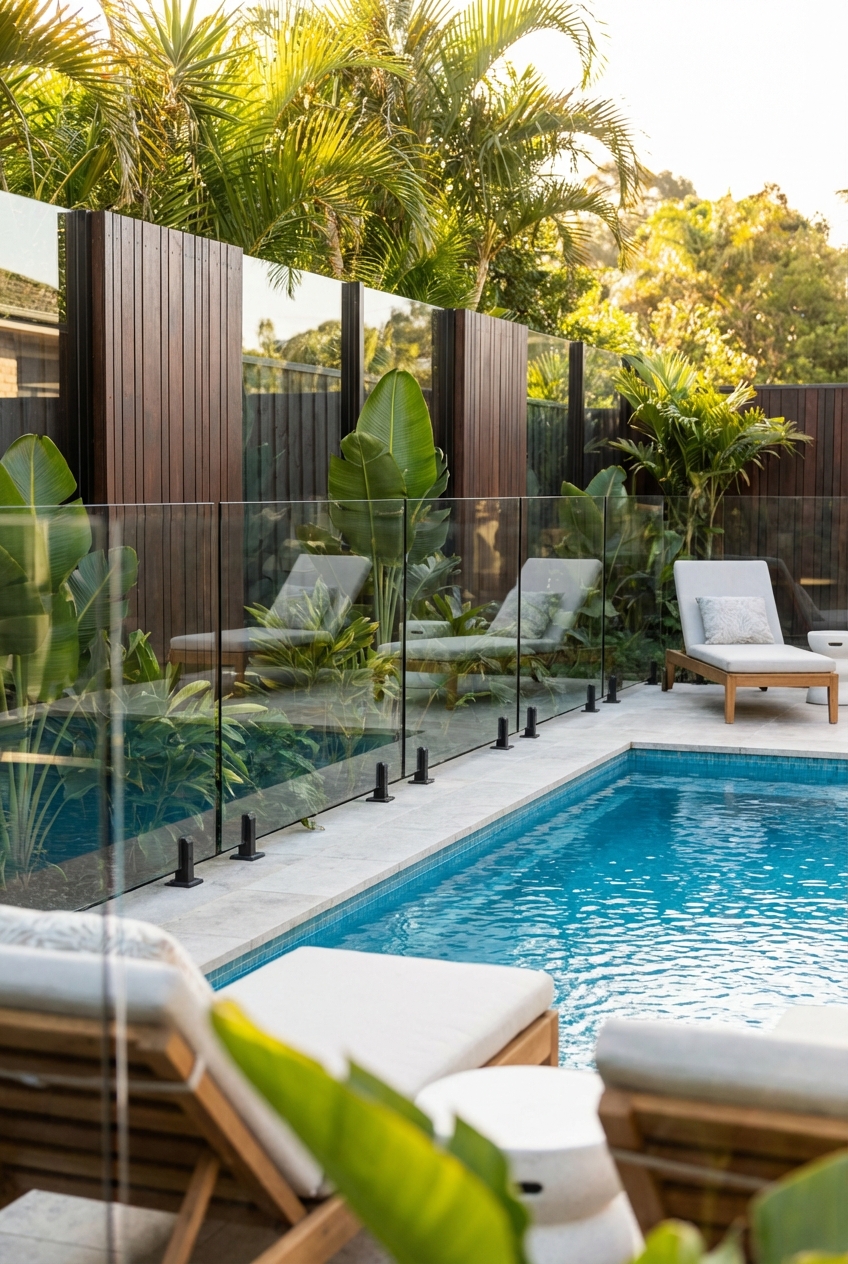
Frameless glass is the gold standard for unobstructed views. It uses 1/2-inch thick tempered safety glass held in place by heavy-duty stainless steel “spigots” or clamps. This allows you to see the water from the house, which is both a safety benefit and a luxury aesthetic.
2. Slim Profile Metal
If glass isn’t in the budget, powder-coated aluminum is the next best choice. Look for “flat top” designs with narrow pickets (usually 5/8-inch square). Avoid ornate finials or scrolls, which can look dated. A matte black finish is usually the best choice because it mimics the shadows in the foliage behind it, making the fence less noticeable.
3. Horizontal Orientation
In modern landscape design, horizontal lines are preferred over vertical ones. Horizontal wood slats (using Ipe, Cedar, or Teak) create a high-end, resort-like feel. To meet safety codes, these slats must be spaced very closely together (usually less than 1/2 inch) or be installed on the outside of the posts to prevent them from becoming a ladder for children.
4. Laser-Cut Metal Panels
For a truly unique look, consider laser-cut aluminum or Corten steel panels. These can feature geometric patterns or organic leaf motifs. They provide excellent privacy while still allowing some light and air to pass through. These are perfect for one side of the pool that might face a neighbor’s driveway or a busy street.
5. Lighting Integration
Don’t forget the “fifth element” of design: lighting. Low-voltage LED strip lighting can be tucked under the top rail of a fence or installed at the base of glass panels. This not only highlights the perimeter for safety at night but also creates a glowing, ethereal effect across the water.
Layout & Proportions (Designer Rules of Thumb)
When I start a pool project, I always begin with the “Rule of 48.” Most municipalities require a pool fence to be at least 48 inches (4 feet) high. However, if your budget and local codes allow, I often recommend going to 54 or 60 inches. A slightly taller fence can actually look more proportional in a large yard and offers better security.
Spacing and Gaps:
The “4-inch sphere rule” is the industry standard. This means that a 4-inch ball should not be able to pass through any part of the fence. For a designer look, I prefer to keep gaps between 3 and 3.5 inches. This tighter spacing feels more substantial and prevents small pets from squeezing through.
Gate Placement:
The gate is the most used part of the fence. It should always swing away from the pool. This ensures that if a child leans against a gate that isn’t fully latched, they aren’t pushed into the water. The latch itself should be placed at least 54 to 60 inches from the ground so it is out of reach for toddlers.
Clearance and Decking:
Leave at least 30 to 36 inches of “walkable” space between the edge of the pool and the fence. This allows for safe passage and room for a person to walk around the perimeter without feeling cramped. If you plan on placing lounge chairs, you will need a minimum of 6 to 8 feet of clearance between the water and the fence to avoid a cluttered look.
What I’d do in a real project:
- I always specify matte black for metal fences. Glossy finishes reflect the sun and make the fence stand out; matte finishes absorb light and blend in.
- I prefer to hide the bottom rail of the fence behind low-growing boxwoods or grasses. This makes the pickets look like they are growing directly out of the garden.
- I always include a “mag-latch” with a visual indicator (red/green) so parents can see from a distance if the gate is securely closed.
- If the budget allows, I integrate the pool fence into a larger “outdoor room” concept by using matching materials for a nearby pergola or privacy screen.
FAQs
Q: Can I use a hedge as a pool fence?
A: Generally, no. Most building codes require a “rigid” barrier that cannot be pushed through or crawled under. While you can plant a hedge behind or in front of a fence, the fence itself must be a structural material like metal, wood, or glass.
Q: How do I keep my glass pool fence clean?
A: The biggest challenge with glass is water spots and fingerprints. I recommend treating the glass with a specialized hydrophobic coating (similar to Rain-X for windshields). This makes water bead off and prevents mineral buildup from pool chemicals. For regular cleaning, a simple squeegee after a swim is the best tool.
Q: Is wood safe enough for a pool fence?
A: Yes, wood is perfectly safe as long as it is designed correctly. The main safety issue with wood is the “climbability.” You must ensure that the horizontal supports are not on the outside (the side a child would approach from) or that the slats are close enough together that a foot cannot find purchase.
Q: What is the best height for a pool fence?
A: While 48 inches is the legal minimum in most US jurisdictions, I find that 54 inches is the “sweet spot” for aesthetics and security. It feels high enough to be a real deterrent but not so high that it feels like a prison wall.
Q: Do I need a fence if I have an automatic pool cover?
A: In many areas, a certified “power safety cover” can be used in place of a fence, or it can reduce the fencing requirements. However, you must check your local laws. Many inspectors still require a physical perimeter fence regardless of whether you have a cover.
Conclusion
Refreshing your pool fence is one of the most impactful upgrades you can make to your backyard. By shifting your perspective from “safety requirement” to “design opportunity,” you can create a space that feels expansive, luxurious, and secure. Whether you choose the invisible elegance of frameless glass or the modern warmth of horizontal wood, the key is in the details.
Remember to prioritize sightlines, select finishes that complement your home’s architecture, and never compromise on the technical safety requirements. A beautiful pool is only as good as the peace of mind it provides. With the right layout and materials, your new fence will not just protect your family—it will transform your backyard into a cohesive, resort-style retreat.


