
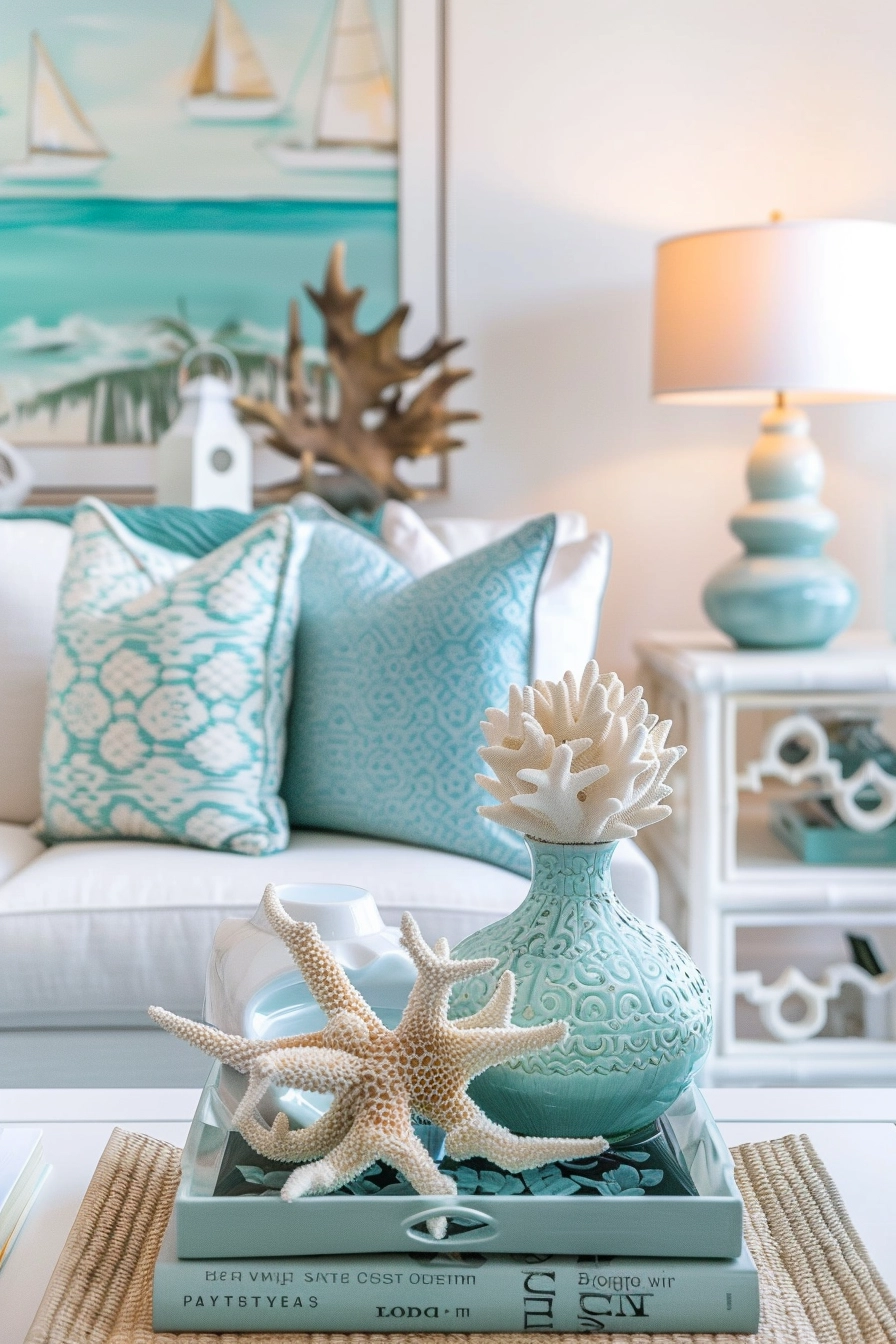
Coastal Living Room Decor: Soothing Tips & Ideas
There is a distinct difference between a room that feels coastal and a room that feels like a seaside souvenir shop. True coastal design is not about hanging a wooden sign that says “Beach” or filling a jar with seashells. It is about capturing the sensory experience of the coast—the light, the breezy airflow, and the organic textures found in nature.
I recently worked with a client who bought a beautiful waterfront property but felt her living room was too dark and formal. She had heavy velvet drapes and dark cherry furniture that fought against the view outside. We stripped everything back, focused on a palette of sandy beiges and crisp whites, and suddenly the room felt twice as big. If you want to see examples of transformations like this, please note that a comprehensive Picture Gallery is included at the end of this blog post.
This guide will walk you through the practical steps of achieving that effortless, airy look. We will cover layout mechanics, material durability for sandy feet, and how to layer textures so your room feels warm, not sterile.
1. Establishing the Palette: Beyond Blue and White
Many people assume coastal decor requires a strict regimen of navy blue and bright white. While classic, this high-contrast look can sometimes feel a bit nautical or preppy rather than soothing. Modern coastal design relies heavily on warm neutrals that mimic the sand, driftwood, and dune grass.
Start with a foundation of warm whites or soft greiges. Pure white can feel clinical if your room does not get overwhelming natural light. I often recommend paints with an LRV (Light Reflectance Value) between 60 and 75 to bounce light around without blinding you.
Once your walls and large furniture pieces are neutral, layer in your colors. Look for “dusty” or “washed” versions of colors rather than primary shades. Think sea glass green, faded denim blue, or even a soft coral. These muted tones recede visually, making the space feel expansive.
Designer’s Note: The 60-30-10 Rule
When balancing your coastal palette, stick to this formula to avoid chaos:
- 60% Dominant Color: This is your wall color, rug, and sofa. Keep this neutral (sand, cream, oatmeal).
- 30% Secondary Color: This provides depth. Use soft blues, greys, or muted greens in curtains, accent chairs, or a painted sideboard.
- 10% Accent Color: This is where you can be bolder. A navy throw pillow, a brass lamp, or a piece of abstract art adds the necessary contrast.
2. Furniture Selection: Scale, Comfort, and Material
Coastal living rooms prioritize lounging. This is not the place for stiff, upright seating or fragile antiques. You want furniture that invites people to flop down and relax.
When selecting a sofa, prioritize deep seating. A standard sofa depth is about 36 inches, but for a coastal lounge vibe, I recommend looking for a depth of 40 to 42 inches. This allows for that “sink-in” feeling. Slipcovered sofas are a staple in this design style for a reason. They offer a relaxed silhouette and are incredibly practical.
If you have kids or pets, or if you actually live near the beach where sand is an issue, opt for performance fabrics. Brands like Crypton or Sunbrella offer white and cream fabrics that are bleach-cleanable and stain-resistant. You do not have to sacrifice the light look for durability.
Wood Tones Matter
Avoid red-toned woods like mahogany or cherry, as they tend to look traditional and heavy. Instead, mix these lighter options:
- White oak
- Bleached walnut
- Driftwood finishes
- Rattan or bamboo
Common Mistake: The Matchy-Matchy Set
Buying a matching coffee table, side table, and TV stand set makes a room feel like a catalogue.
The Fix: Mix your materials. If you have a linen sofa and a wood coffee table, try a woven wicker side table or a ceramic garden stool. The variation in materials creates the organic, collected feel central to coastal design.
3. Layering Textures for Warmth
Because the color palette is subdued, texture is the secret weapon that prevents the room from feeling flat. Without texture, a room full of beige and white just looks boring. You need to create visual friction.
Rug Selection and Sizing
Natural fiber rugs are the foundation of coastal decor. Jute, sisal, and seagrass add instant earthiness. However, they can be rough on bare feet.
- The Look: A chunky loop jute rug offers incredible texture.
- The Compromise: If you want softness, use a large jute rug as your base layer. Then, place a smaller, softer wool or vintage-style rug on top.
- The Sizing Rule: Ensure your rug is large enough. The front legs of all furniture should sit on the rug. In a typical living room, an 8×10 or 9×12 rug is usually required. Leave about 12 to 18 inches of bare floor visible around the perimeter of the room.
Woven Accents
Incorporate woven elements at eye level to draw the texture up from the floor. This could be a rattan pendant light, a woven wall hanging, or basket storage for blankets.
Designer’s Note: The “Scratch Test”
If you choose a natural fiber rug, always do a “scratch test” with the back of your hand before buying. If it feels scratchy to your hand, it will be miserable to sit on. Look for jute mixed with chenille or wool for a softer touch that still looks rustic.
4. Maximizing Light and Window Treatments
Lighting is perhaps the most critical element. Coastal interiors should feel bright and airy during the day and warm and cozy at night.
Window Treatments
Heavy drapery has no place here. You want to maximize the amount of glass visible.
- Mount High and Wide: Install your curtain rod at least 4 to 6 inches above the window frame (or all the way to the ceiling) and extend the rod 10 to 12 inches past the frame on either side. This allows the curtains to “stack back” against the wall, leaving the glass completely uncovered when open.
- Fabric Choice: Semi-sheer linen is ideal. It filters harsh sunlight but allows a glow to permeate the room. If you need privacy or blackout capabilities, line the linen with a white cotton backing rather than a heavy thermal material.
Artificial Lighting Strategy
Do not rely on a single overhead fixture. You need layers of light to create ambiance.
- Color Temperature: Use bulbs with a Kelvin rating between 2700K (warm white) and 3000K (soft white). Anything higher (4000K+) will look blue and clinical, destroying the cozy vibe.
- Table Lamps: Use large-scale ceramic or glass lamps. The transparency of glass lamps (often in clear or sea glass tones) keeps visual clutter low.
- Floor Lamps: A brass pharmacy lamp adds a nice metallic touch and works well for reading nooks.
5. Styling and Accessories: The “No Kitsch” Rule
This is where many DIY projects go wrong. Restraint is key. You want to evoke the ocean, not replicate it literally.
Avoid signs with words. Avoid motif prints (fabric with little anchors or lighthouses on it). Instead, use objects that suggest the coast through shape and material.
Organic Shapes
Look for imperfect, organic forms. A piece of driftwood on a stack of books is better than a wooden statue of a whale. A large glass bowl filled with sea glass is better than a jar of fake shells.
Art Selection
Large-scale photography of the horizon or abstract paintings in coastal colors work best.
- Scale Tip: One large piece of art (e.g., 40×60 inches) above the sofa makes a bigger impact and feels more upscale than a gallery wall of small, disjointed frames.
- Framing: Use thin gallery frames in white or light wood to keep the focus on the art.
Greenery
Plants breathe life into the neutral palette. Large palms (like a Majesty Palm or Bird of Paradise) add height and that tropical feel. If you lack a green thumb, high-quality faux olive branches in a tall vase provide height and color without the maintenance.
Final Checklist: What I’d Do in a Real Project
If I were designing your living room tomorrow, this is the exact mental checklist I would run through to ensure success:
- Layout Check: Is there a clear path of travel (30-36 inches wide) through the room? Is the coffee table 14-18 inches from the sofa edge?
- Palette Check: Do I have at least three different shades of “white/beige” to prevent a flat look?
- Texture Audit: Do I have wood, glass, metal, and fabric represented in the room?
- Lighting Audit: Do I have at least three sources of light (e.g., overhead, floor lamp, table lamp) forming a triangle around the room?
- Durability Test: Can the rug hide sand? Can the sofa fabric be spot-cleaned?
- Edit: Have I removed at least one accessory that felt too “cluttered”?
FAQs
Can I use black in a coastal living room?
Yes, absolutely. In fact, small touches of black (like a thin picture frame, a curtain rod, or the legs of a side chair) act as “eyeliner” for the room. It grounds the airy colors and adds modern sophistication. Just keep it minimal.
How do I make a coastal room feel cozy in the winter?
Coastal decor can feel chilly in colder months. To fix this, swap out lightweight linen throws for chunky cable-knit blankets. Add a few velvet pillows in deeper tones of your accent color (like deep indigo or moss green). The darker textures add immediate warmth without changing the room’s identity.
Is leather furniture okay for this style?
Yes, but the color matters. Avoid black or dark espresso leather. Look for cognac, camel, or caramel-colored leather. A caramel leather ottoman or armchair looks stunning against blue and white fabrics and adds a rich, natural element.
Conclusion
Creating a soothing coastal living room is about restraint and material honesty. It is about choosing linen because it breathes, wood because it warms, and colors that reflect the natural environment outside your door.
Focus on how the room feels to sit in, not just how it looks in a photo. Prioritize deep sofas, soft lighting, and durable materials that let you live worry-free. When you strip away the clutter and focus on the light, you create a space that feels like a vacation every day.
Picture Gallery


