
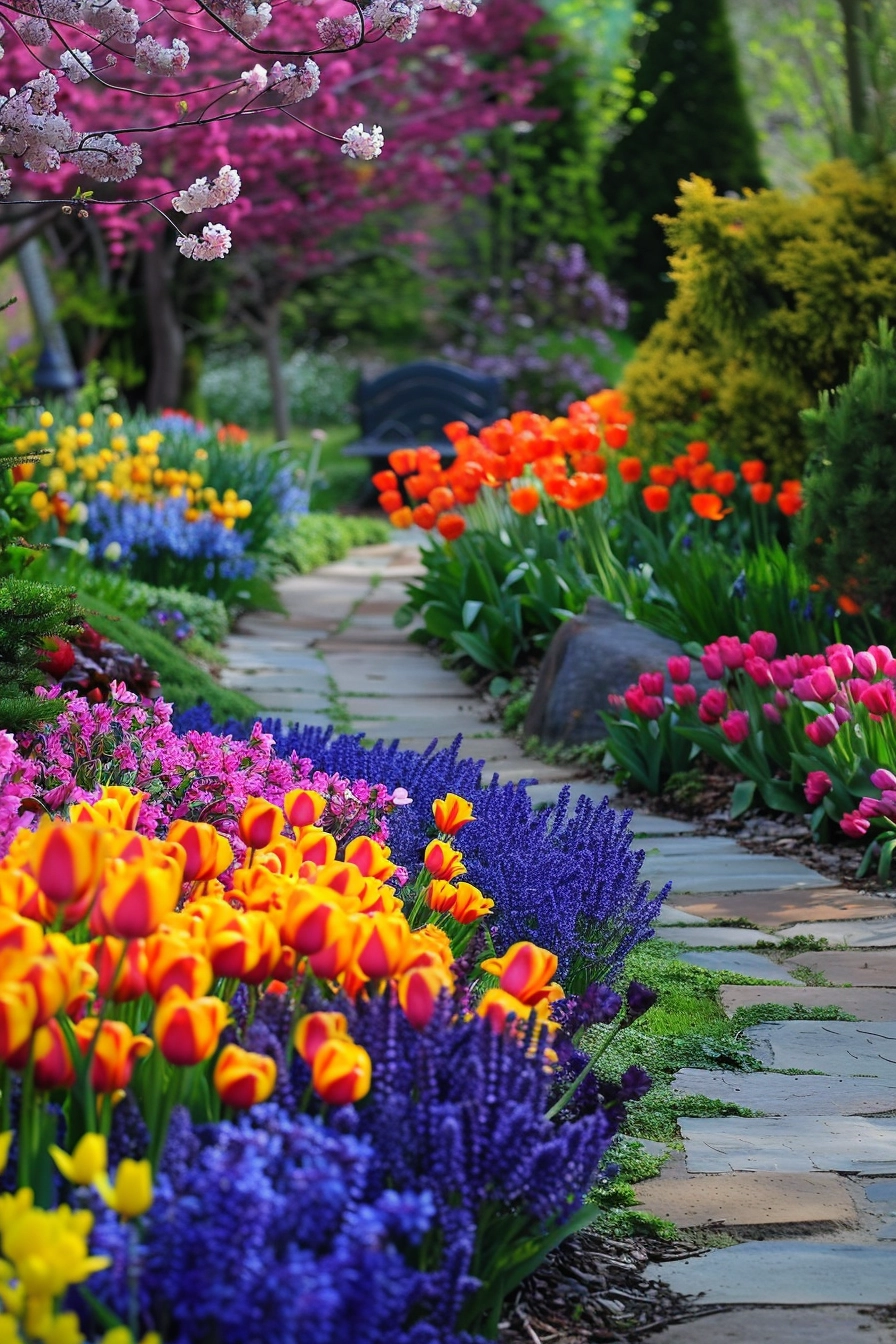
The Best Plants for Adding Color to Your Backyard
When I walk into a client’s backyard for an initial consultation, the most common issue I see is the “green box” effect. The lawn is manicured and the hedges are trimmed, yet the space feels sterile and uninviting because it lacks the depth and personality that only color can provide. Just as we use throw pillows, rugs, and art to liven up a neutral living room, your landscape needs layers of color to feel like a finished home.
Adding color isn’t just about picking pretty flowers at the nursery; it is about understanding timing, texture, and placement. You want a backyard that offers visual interest from the first frost of spring all the way through late autumn. For some serious inspiration on how to combine these elements, be sure to scroll to the very bottom where I have curated a Picture Gallery of my favorite colorful backyard transformations.
In this guide, I will walk you through the specific plants I use in my designs to create vibrant outdoor living spaces. We will cover the structural shrubs that anchor the look, the perennials that return year after year, and the annuals that provide instant gratification. Whether you are working with a sprawling estate or a small urban patio, these selections will help you curate a palette that feels professional and cohesive.
1. The Foundation: Flowering Shrubs and Bushes
In interior design, we start with the sofa and the rug before we choose the accessories; in landscape design, shrubs are that furniture. They provide the “bones” of the garden. If you rely solely on small flowers, your yard will look flat. You need shrubs to provide height, volume, and color at eye level.
Hydrangeas: The Designer’s Favorite
Hydrangeas are the workhorses of a colorful backyard. They offer massive blooms that last for months, and they dry beautifully on the stem for late-season interest.
- Varieties to know: Hydrangea paniculata (like ‘Limelight’) are easiest for beginners because they bloom on new wood and tolerate sun. Hydrangea macrophylla (Mopheads) give you those classic blues and pinks but require more shade and water.
- Placement: Use these to soften the corners of your house or to create a mid-height hedge along a fence line.
- Spacing rule: A common mistake is planting these too close together. A standard hydrangea needs a 4-foot radius. Plant them 3 to 4 feet apart (center to center) to create a seamless hedge once they mature.
Re-Blooming Azaleas
Traditional azaleas are beautiful for two weeks in spring and then disappear into the background. For my clients, I almost exclusively specify re-blooming varieties (like the Encore series). These provide a massive explosion of color in spring, a lull in mid-summer, and a second bloom in autumn.
- Design tip: Azaleas love acidic soil. If you are planting them near a concrete foundation, the lime leaching from the concrete might yellow their leaves. Keep them at least 3 feet away from the foundation.
- Color coordination: I love using white or hot pink azaleas against dark brick or grey siding. It creates a high-contrast, modern look.
Rose of Sharon (Hibiscus syriacus)
If you need height and vertical color, this is your best option. It creates a tropical look but is hardy in many temperate zones.
- Scale: These can get tall (8–12 feet), making them perfect for privacy screening without the bulk of an evergreen wall.
- Bloom time: They bloom late in the summer when most other shrubs have finished, bridging the gap between July heat and September cool.
Designer’s Note: The “Rule of Three”
When planting shrubs, avoid the “soldier row” look where you plant one of this and one of that. Always plant in odd numbers—groups of three, five, or seven. This trick forces the eye to move around the group, creating a sense of natural abundance rather than a rigid line.
2. The Drama: Perennials for Seasonal Interest
Perennials are plants that come back every year. They are the investment pieces of your garden. The key to a colorful backyard is “succession planting,” which simply means ensuring that as one plant fades, another is just starting to bloom.
Peonies: The Spring Showstopper
Peonies offer the most luxurious, high-end look of any flower. They are essentially the silk drapes of the garden.
- Constraint: They only bloom for a short window in late spring.
- The Fix: Plant them alongside later-blooming perennials so the foliage provides a green backdrop for summer flowers.
- Support: Peony blooms are heavy. Install circular grow-through supports in early spring before the plant gets more than a few inches tall. Once they bloom, it’s too late to stake them invisible.
Coneflowers (Echinacea): The Summer Staple
Native to many areas, coneflowers are drought-tolerant and practically indestructible. While purple is the classic color, modern cultivars come in oranges, yellows, and deep reds.
- Wildlife bonus: If you leave the seed heads on during winter, goldfinches will flock to your yard.
- Height: These usually stand about 24–30 inches tall. Place them in the middle of your border, behind low-growing plants but in front of your shrubs.
Russian Sage: The Texture Element
Color isn’t just about petals; it’s about the haze of color. Russian Sage provides a mist of lavender-blue that softens the look of a yard.
- Why I use it: It pairs incredibly well with hardscaping. The silvery foliage looks stunning against stone patios or concrete pavers.
- Maintenance: It creates a very architectural, modern look but can flop over if not in full sun. It needs at least 6–8 hours of direct light.
3. The Highlights: Annuals for Instant Gratification
Annuals complete their life cycle in one season. You have to replant them every year, but the trade-off is that they bloom non-stop from planting until frost. I use annuals like throw pillows—they are easy to swap out if you want to change your color scheme next year.
Impatiens and Begonias: Solving the Shade Problem
Many homeowners think a shady backyard means a green-only backyard. Not true.
- New Guinea Impatiens: These offer large, vibrant flowers and can handle a bit more sun than traditional impatiens. They are perfect for brightening up dark corners under trees.
- Dragon Wing Begonias: These are structural and sculptural. I love using them in large pots flanking a back door. They drape beautifully and offer constant red or pink color.
Petunias and Calibrachoa: The Container Kings
If you are a renter or have a patio-heavy backyard, containers are your best friend.
- Superbells (Calibrachoa): These look like tiny petunias but don’t require “deadheading” (picking off dead flowers). They are self-cleaning.
- The “Thriller, Filler, Spiller” formula: When designing a pot, use a tall plant in the center (Thriller), mounding plants around it (Filler), and vines like Calibrachoa trailing over the edge (Spiller).
Common Mistakes + Fixes
Mistake: Buying one of everything at the nursery because it looks pretty in the pot.
Fix: This results in a chaotic, polka-dot look. Buy flats of the same annual and plant them in drifts or ribbons. A sweep of 12 white petunias looks chic; 12 different colored flowers look messy.
Mistake: Underestimating water needs for pots.
Fix: Potted plants dry out much faster than ground plants. In the heat of July, smaller pots (under 12 inches diameter) need water daily. Upgrade to pots that are at least 18–24 inches wide to retain moisture longer.
4. Vertical Color: Climbing Vines and Trellises
In small backyards, you often run out of ground space. The solution is to go vertical. Climbing plants draw the eye up, making a small footprint feel grander and more enclosed.
Clematis
Clematis is the queen of climbers. It comes in varieties that bloom at different times, so you can mix two types on one trellis for extended color.
- The “Hot Feet, Cool Head” rule: Clematis loves sun on its leaves but hates heat on its roots. Plant shallow-rooted perennials or place a large rock at the base of the vine to shade the soil.
- Structure: Unlike heavy woody vines, Clematis is lightweight. It can grow up a simple wire trellis or even a lamp post without causing damage.
Climbing Hydrangea
While slow to establish, this is a showstopper for shady walls. It produces lace-cap white flowers and has beautiful peeling bark for winter interest.
- Surface caution: This plant attaches via aerial rootlets. It is safe for brick and stone but avoid letting it climb directly on wood clapboard or vinyl siding, as it can trap moisture and damage the finish.
5. Foliage and Texture: Color Without Blooms
The biggest secret in landscape design is that flowers are fleeting, but foliage is forever (or at least, for the season). A truly colorful backyard relies on leaf color just as much as flower petals.
Coral Bells (Heuchera)
If I could only choose one plant for a shady border, this would be it.
- Palette: They come in deep purples (“Obsidian”), bright limes (“Lime Rickey”), and burnt oranges (“Caramel”).
- Usage: Plant these along the edge of a walkway. They stay low (12 inches) and form a neat mound that doesn’t need trimming.
Japanese Maples
For a focal point, a Japanese Maple adds a sculptural element and profound color.
- Bloodgood: Deep burgundy leaves that turn fire-engine red in fall.
- Coral Bark: Bright green leaves in summer, but the bark turns a shocking neon coral color in winter, providing color against the snow.
- Sizing: Pay attention to the mature size. A lace-leaf maple stays low and weeping (good for near patios), while upright varieties can reach 20 feet.
Hostas
While often thought of as just green, Hostas come in “blue” and variegated white/cream varieties.
- Design tip: Pair “blue” hostas (which have a waxy coating) with purple Heuchera for a moody, sophisticated palette.
- Pest control: Deer love Hostas. If you have deer pressure, you must spray repellent or choose a different plant like Hellebores or Ferns.
What I’d Do in a Real Project: A Mini-Checklist
If I were designing your backyard today, here is the exact order of operations I would follow to ensure the color scheme works:
1. Map the Sun
Before buying a single plant, I watch the yard for a day. “Full Sun” means 6+ hours of direct light. “Part Shade” is 3–6 hours. “Shade” is less than 3. You cannot cheat this; a sun-loving flower in the shade will not bloom.
2. Choose a Temperature
I decide on a “Hot” or “Cool” palette.
- Cool Palette: Blues, purples, pinks, and whites. This makes a small yard feel larger and more serene.
- Hot Palette: Reds, oranges, yellows, and lime greens. This makes a large space feel more intimate and energetic.
3. Layer by Height
I draw a cross-section.
- Back row (or center of island): Shrubs (Hydrangea, Hibiscus).
- Middle row: Tall perennials (Coneflower, Russian Sage).
- Front row: Low mounding plants (Heuchera, creeping phlox) or annuals.
4. Check the Water Access
I never place a thirsty plant (like a Hydrangea) more than 50 feet from a hose bib unless there is irrigation installed. Carrying watering cans is the quickest way to kill your gardening enthusiasm.
FAQs
What if I have a dog that digs?
If you have pets, avoid leaving bare soil. Dogs dig in dirt, not usually in dense plants. Plant ground covers like creeping thyme or sedum heavily between your larger plants. Also, avoid toxic plants like Azaleas or Foxgloves if your dog is a chewer.
Do I need to test my soil?
Yes. It costs very little and saves you hundreds in dead plants. If your soil is heavy clay, you need to amend it with compost to improve drainage. If it is sandy, you need organic matter to hold water. Most color-heavy plants prefer a neutral to slightly acidic pH (6.0–7.0).
I rent my home. What can I do?
Invest in large pots. You can take them with you when you move. Focus on “tropicals” like Canna Lilies, Hibiscus, or Palms in pots for the summer. They give massive impact for a few months and don’t require digging up the landlord’s yard.
How do I keep weeds from ruining the color?
Mulch is non-negotiable. A 2-to-3-inch layer of shredded hardwood mulch suppresses weeds and retains moisture. It also provides a dark, uniform background that makes your plant colors pop. Apply it in late spring after the soil has warmed up.
Conclusion
Adding color to your backyard is about more than just aesthetics; it is about creating an environment that draws you outside. A well-planted garden changes every week, offering new blooms, changing leaf colors, and evolving textures.
Start with your structural shrubs, fill in with reliable perennials, and have fun with annuals. Remember the rules of scale and odd numbers, and don’t be afraid to experiment. If a plant doesn’t work in a specific spot, you can usually move it in the fall. Gardening is an iterative design process, much like decorating a home. It takes time to get the layers right, but the result—a personal sanctuary filled with life and color—is always worth the effort.
Picture Gallery


